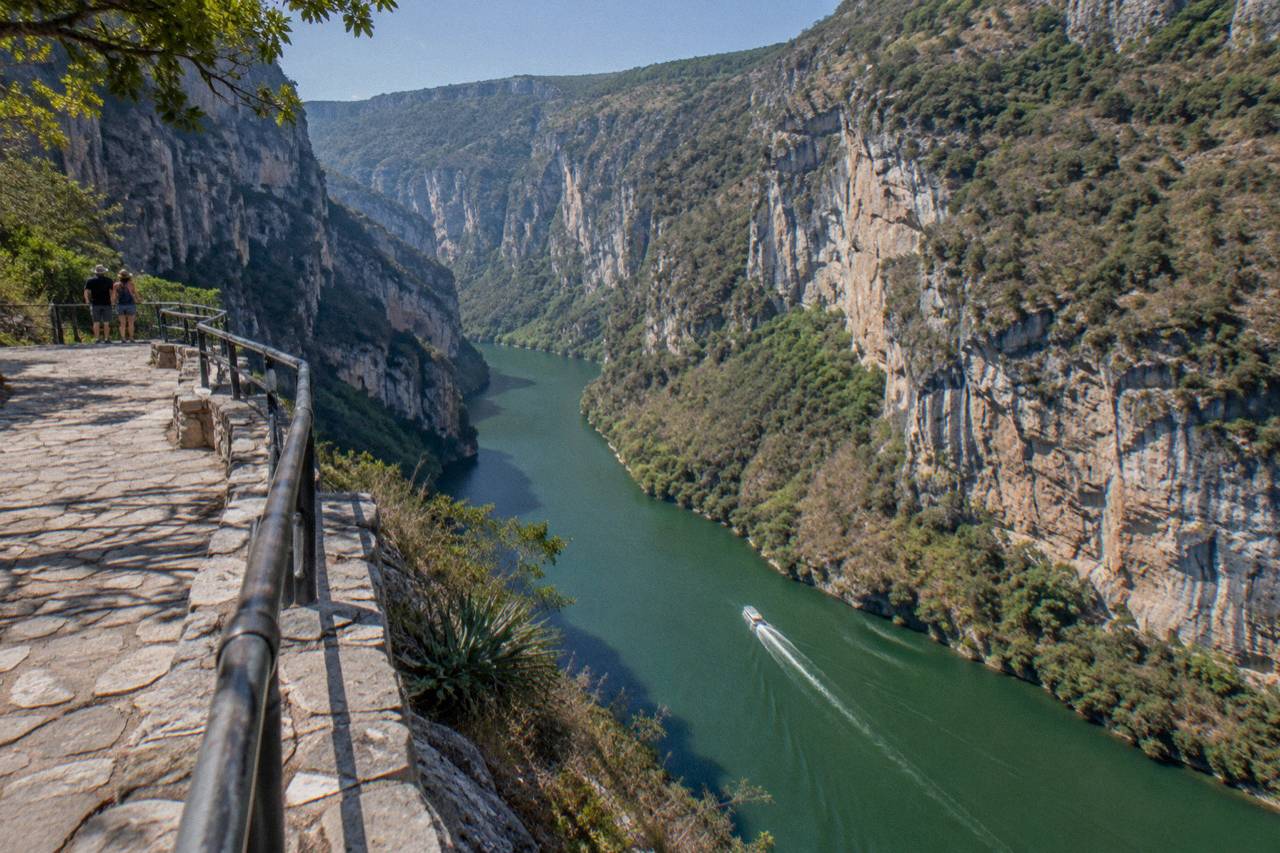
Best Time Of Day For The Sumidero Canyon Boat Ride: Morning Departures
The Sumidero Canyon boat ride runs every day, but not every hour of the day is equal. Here is how ticket hours, the last full departure, light on the walls, heat and wind stack up, and which departure slot fits each day trip on this site.
Short answer
The national park is open 8:00 to 17:00, and boats leave when full, roughly 8:00 to 16:00. The last full two-hour trip departs around 14:00. Morning, before about 9:30, gives the best light, calmer air and cooler walls.
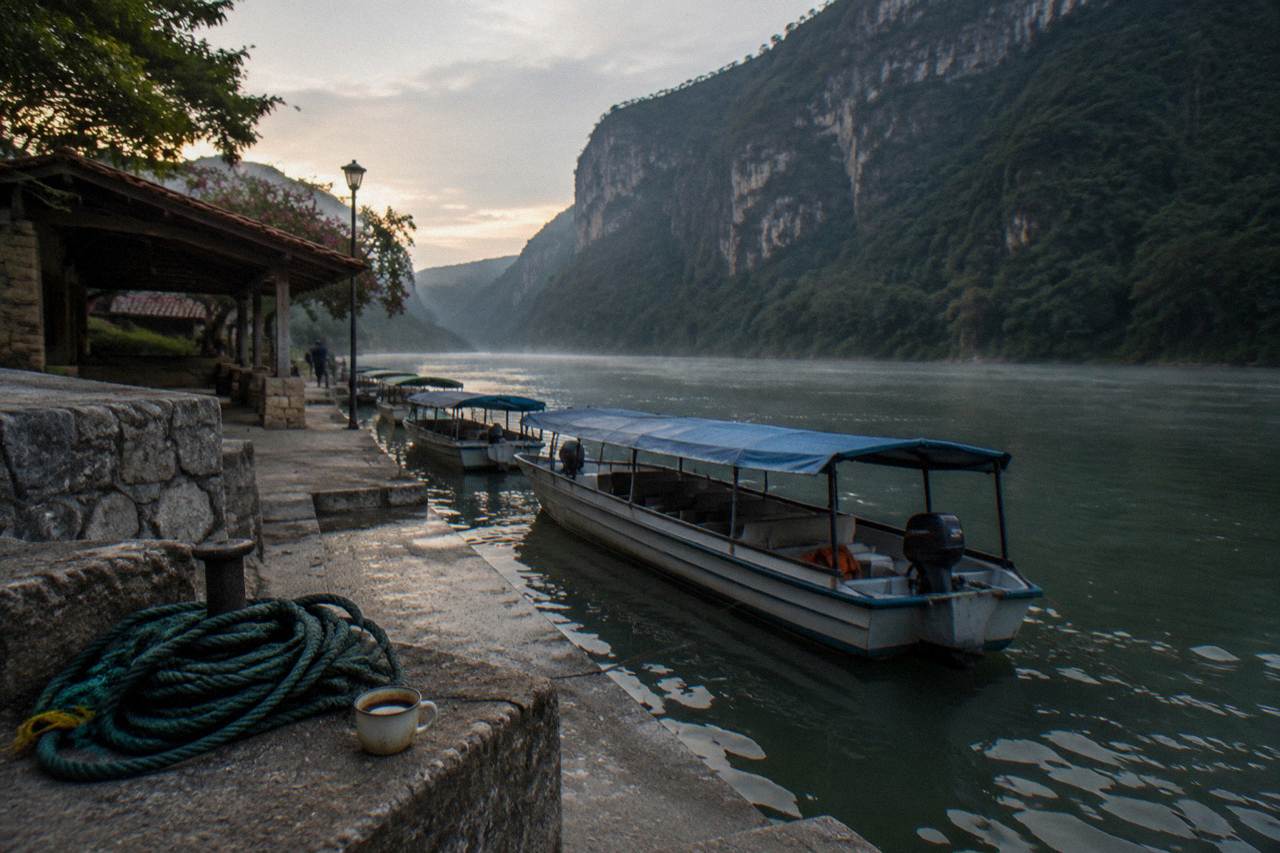
The boats on the Grijalva do not run to a printed timetable. They run to a simple rule the lancha cooperatives have used for years: the boat leaves when it is full, from the Chiapa de Corzo embarcadero or the Cahuare dock, from opening until mid afternoon. That makes the question of timing less about catching a specific departure and more about choosing a window of the day, and the window you choose changes the light on the walls, the heat in the boat and how much of the canyon you actually see. If the canyon is just one stop on a longer trip, the guide to day trips from San Cristobal de las Casas ranks how this boat ride stacks up against the other options within easy reach of the city.
The official frame comes from the CONANP park page: the park is open 8:00 to 17:00, water access every day, land access to the miradores road Wednesday to Monday. Reports on the cooperatives add the working detail: the last departure for the full trip to the Chicoasén dam wall around 14:00, with later boats turning back earlier. This guide walks through all of it, hour by hour, and matches it to the real day trips here, from the Jalapeño full day out of San Cristobal to the five-hour Tuxtla pickup run. For the wider month-by-month picture, see the companion page on the best season for visiting the canyon.
What Time Do Boats Leave For Sumidero Canyon?
Boats load and leave continuously from about 8:00 until late afternoon, roughly 8:00 to 16:00, because shared lanchas at Chiapa de Corzo and Cahuare depart when full rather than on a fixed schedule. The last departure for the full roughly two-hour round trip to the dam wall is around 14:00, so anything after that is a shortened ride.
The cooperative system rewards early arrival. A shared boat holds a group of strangers, and the crew waits until enough seats are sold. On a busy morning in the dry season that gap can be minutes. On a quiet Tuesday in September it can stretch, which is why travelers who show up at 8:00 rarely wait long, while people arriving at 15:00 may find only the short version of the ride on offer, turning back at the Árbol de Navidad waterfall rather than running the full distance to the dam.
Two fares sit on top of each other at the dock. The cooperative boat fare for 2026 is 460 MXN for foreign visitors, 400 MXN for Mexican nationals, 340 MXN for children and older adults with INAPAM credential, and 290 MXN for children under 2. Separately, the CONANP park entry fee is 125 MXN per person per day, charged separately from the boat fare, and the visitor wears the conservation wristband. A foreign tourist booking independently pays the full 125 MXN; discounts exist for students, teachers, Mexican nationals and foreign residents with official ID, and children under 12 are exempt. For everything else involved, from picking a departure city to going independently to the docks, our step-by-step guide to visiting Canon del Sumidero walks you through the whole process.
| Time window | What typically happens at the dock |
|---|---|
| 8:00 to 9:00 | Ticket windows open, first boats fill fast, light still low and soft on the water |
| 9:00 to 11:30 | Steadiest turnover of full boats, best balance of light and crowd |
| 11:30 to 14:00 | Full trips still running, heat building, more boats on the water |
| 14:00 onward | Last full-trip departure passes; later boats run shortened routes |
| 16:00 to 17:00 | Short trips only, park closes 17:00 |
This is also why the organized day trips on this site mostly sidestep the problem entirely. The Selva Azul premium boat day from San Cristobal, from $155 per person, includes hotel pickup and a 90-minute canyon run with the park entrance fee stated as included; the operator controls the arrival window, not you. If you are going alone, the equivalent guide is getting to the canyon from Chiapa de Corzo.
Why Do Morning Departures Work Better At The Canyon?
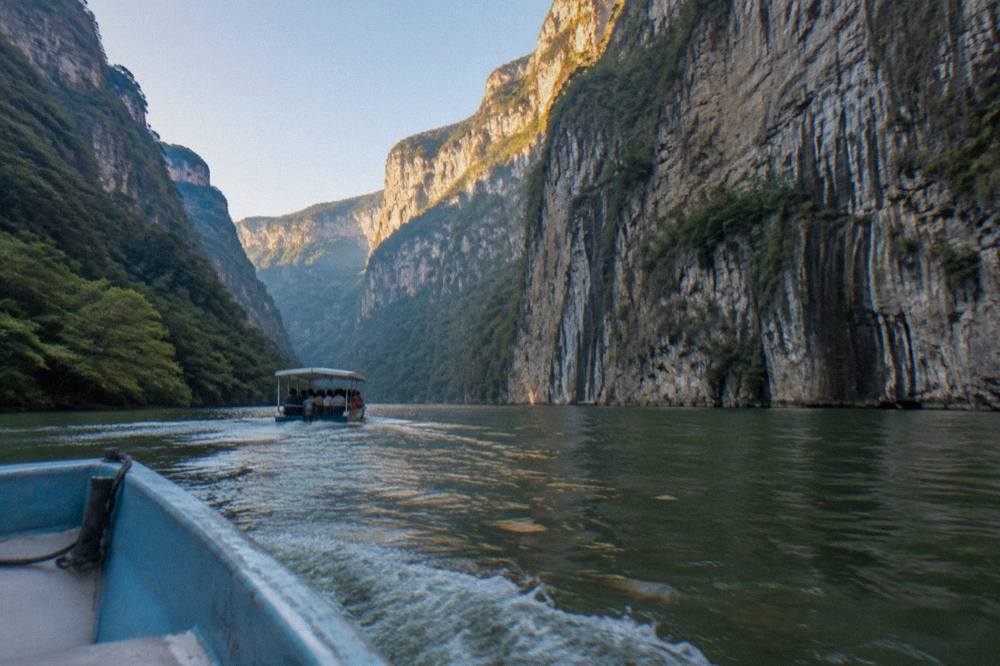
Guides and photographers consistently point to the 7:30 to 9:30 window as the strongest departure time: the light strikes the walls at a low angle, the air is calmer before midday wind picks up, animals are more often described as active, and there are fewer boats clustered at the photo stops. None of that is guaranteed, but every reported pattern favors early.
Light is the big one. The canyon runs roughly south to north toward the dam, with walls commonly cited above 1,000 meters, so the sun enters the gorge late and leaves early. A boat that starts around 9:00 gets angled light raking across the limestone, which is what gives Cueva de Colores and the Belisario Domínguez bridge their depth in photographs. By early afternoon the upper walls are harshly lit while the water sits in shadow, and the contrast is harder to shoot.
Heat follows the same curve. Tuxtla Gutiérrez is one of Mexico's hottest cities, and the CONAGUA climate normals for the Tuxtla station put average daily maximums at 33.9°C in March and 35.9°C in April, with the rainy-season months of June through September still averaging above 31°C. A covered lancha moves and catches some breeze, but a two-hour ride that starts at noon is a different thermal experience from one that starts at 9:00. CONANP's own suggestion list, long sleeves, hat, sunscreen, comfortable clothes, reads like advice for the midday boats.
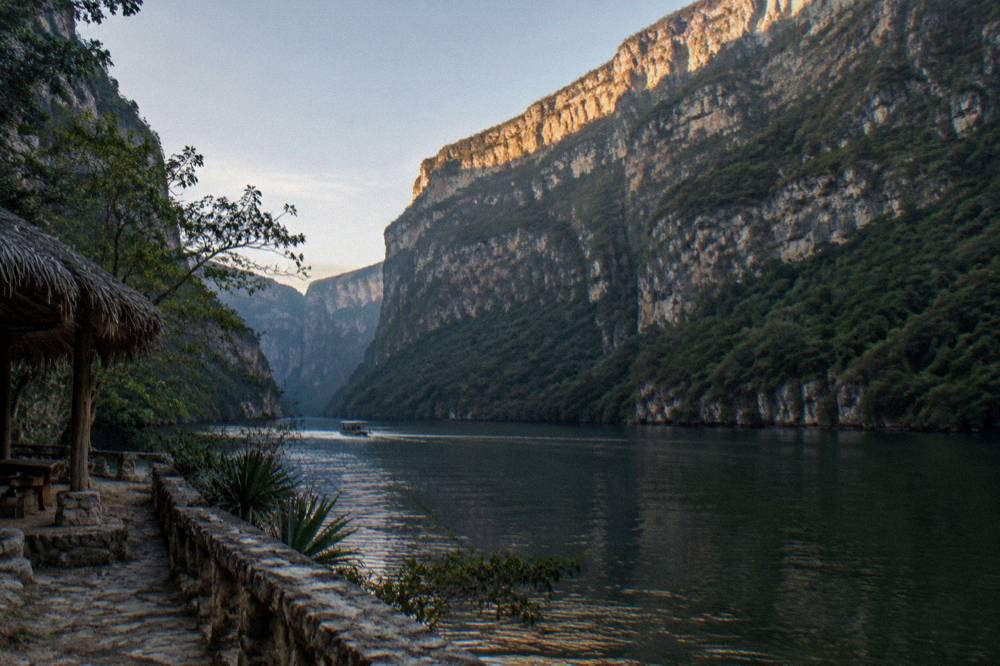
The pattern holds across the seasons. In the dry season, roughly November to April, mornings tend to come with clearer skies and the river at a lower, greener level. In the rainy season, May to mid October, afternoon convection is common, and operators report occasional preventive navigation restrictions at the embarcaderos when conditions demand, as the rainy-season reporting notes. A morning slot simply leaves more of the day as a buffer.
The listings on this site map most directly onto this question: the Jalapeño full day from San Cristobal, from $85 per person and rated 4.6 from 268 reviews, the most reviewed listing on the site; the Apasionado Tuxtla day at from $53 per person, 4.7 from 175 reviews; and the Ecoexperiencias boat-and-viewpoints day from San Cristobal at from $79 per person with hotel pickup listed. All three run early by design, so the departure-slot decision is made for you.
Which Departure Slot Fits A Day Trip From San Cristobal Or Tuxtla?
If you are booking an organized day trip rather than going independently, the slot is baked into the itinerary: tours from San Cristobal run six to nine hours and from Tuxtla five to ten, all built around a morning arrival at the dock. Your real choice is which city you start from and how much free time the itinerary allows, not which hour the boat leaves. To see how a day like this actually plays out from the boat ride through Chiapa de Corzo and back to San Cristobal, our one day in Chiapas itinerary walks through the full sequence with real tour timings, costs, and what to skip.
The San Cristobal listings share a shape: van down the mountain, roughly an hour by road to the dock area, boat, then free time in Chiapa de Corzo before the return. The differences are in the details. The Jalapeño full day, the site's featured listing here, spends about 1 hour 45 minutes on the boat in the canyon and 75 minutes in Chiapa de Corzo. The OTISA budget fare at from $46 per person does the ride in Spanish with 80 minutes of free time in town. The EcoExperiencias six-hour bilingual option at from $135 per person is the shortest San Cristobal day. If you're flying into the region, our guide on getting from Tuxtla Gutierrez airport to San Cristobal covers taxis, shuttles, colectivos, and how to slot a canyon boat ride into the drive up.
| Listing | Starts from | Duration | Price |
|---|---|---|---|
| Jalapeño full day, canyon and viewpoints | San Cristobal | 8-9 hours | from $85 per person |
| OTISA budget day trip | San Cristobal | 9 hours | from $46 per person |
| EcoExperiencias bilingual tour | San Cristobal | 6 hours | from $135 per person |
| Apasionado views and town tour | Tuxtla | 9-10 hours | from $53 per person |
| Chiapas Family Tours river day | Tuxtla | 5 hours | from $102 per person |
| EcoExperiencias Tuxtla day tour | Tuxtla | 6 hours | from $99 per person |
The featured Jalapeño day deserves its spot at the top of that table for reasons beyond the review count, though 268 reviews is the deepest pool on the site. Its itinerary puts the boat in the middle of the morning and gives the viewpoints their own scenic-drive stop, which matters if you want both the water-level view and the rim-level view in one day. Park and entrance fees are stated as included in the listing.
The Tuxtla side is shorter on road time and lighter on total hours. The five-hour Chiapas Family Tours day, from $102 per person, rated 5 from 15 reviews, includes hotel or bus-terminal pickup, a two-hour shared boat run, the park entrance, bottled water in a cooler, and an hour in Chiapa de Corzo, and it does it all inside a morning-plus-lunch window.
Booking rather than self-driving is what converts the timing question into a solved one. Free cancellation is stated on nearly every listing, including the featured Jalapeño day, so an early-morning commitment carries less risk than it sounds like it does.
How Does The Light Change On The Canyon Walls Through The Day?
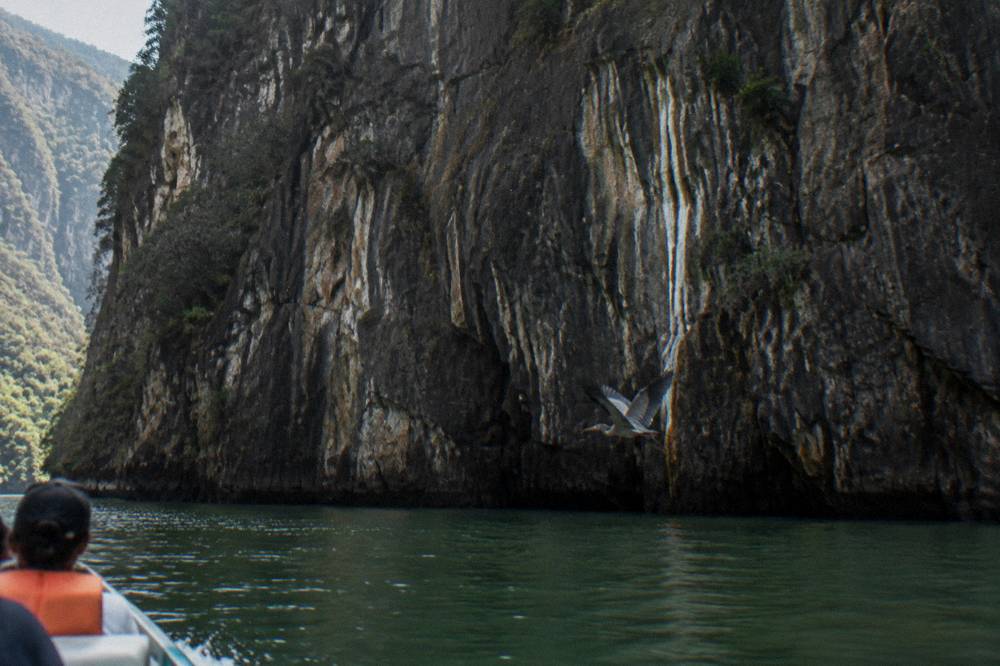
The walls run over 1,000 meters in the sections guides cite most, so the gorge works like a deep slot: low morning light angles across the limestone and lights the caves, midday sun only reaches the upper walls and leaves the water in shade, and late afternoon reverses the morning effect on the other side. Photographers broadly favor departure before about 9:30.
The named stops each have their own best hour. Cueva de Colores, the mineral-stained cave with the Virgen de Guadalupe shrine, and the Velo de Novia and Árbol de Navidad waterfalls all sit at water level, where direct sun arrives late and briefly. The Árbol de Navidad is a moss-covered limestone formation that acts as a seasonal waterfall: in the rainy season the flow strengthens and can soak passing boats, while in the dry months it drops to a trickle but the structure itself stays visible. Timing changes the water, the season changes the flow.
| Part of the ride | Morning, before 9:30 | Midday | Late afternoon |
|---|---|---|---|
| Upper walls | Soft angled light | Harsh, high contrast | Warm, raking from the west |
| Water surface | Calmer, fewer wakes | Busiest, glare likely | Settling again |
| Caves at water level | Even, cool tone | Deep shadow | Shadow returning |
| Crowds at stops | Fewer boats queued | Peak queueing | Thinning |
| Air temperature | Coolest of the day | Peak heat, 33 to 36°C in hot months | Cooling slowly |
None of this is a promise. Cloud cover, rain and smoke can flatten the whole scheme on any given day, and in the rainy season afternoon buildups are part of the regional pattern. The photography-focused page on canyon photography and drone rules goes deeper, including the outright drone ban inside the park.
When Is Wildlife Most Active On The Grijalva River?
Boat crews and visitor reports describe crocodiles, spider monkeys and water birds as most often seen in the cooler early and late hours, and the listing itineraries for canyon runs explicitly include wildlife viewing, but no hour guarantees anything and no official population counts exist. Book the morning for a better chance, not a certainty.
American crocodiles, spider monkeys, herons, cormorants, pelicans and vultures are all reported along the ride, and the reports are consistent across years of coverage. In October 2026, Profepa released 13 rescued river crocodiles into the park, animals recovered from urban areas between 2022 and 2025, which is the single most concrete wildlife fact of the year on this water. A morning boat shares the river with fewer engines, which is the practical reason crews point to early runs for spotting.
No listing on this site promises a sighting. What the better canyon listings do is give the wildlife its own itinerary line: the Selva Azul premium day lists "Sailing, Wildlife viewing" at the canyon stop, and the Apasionado Tuxtla day lists "Marine life viewing" inside its three-hour canyon block. Those are descriptions of what the trip does, not what you will see.
Weather and season layer on top of the hour. The dry season is repeatedly described as the better viewing window, clearer skies and lower, greener water; the rainy season brings higher flow, more sediment and greener walls, with the trade-off of possible restrictions at the docks. The full picture, including what the Chicoasén dam does to river levels year-round, is in the guide to wildlife on the canyon ride.
What About Midday Heat, Wind And Afternoon Boats?
Midday is the park's most demanding window: Tuxtla's average daily maximums run above 31°C in every month, glare off the water is at its worst, boat traffic peaks, and every departure after roughly 14:00 is a shortened trip that turns back before the dam. Afternoon is workable, but you trade the full canyon and the best light for a later alarm.
The heat numbers are not anecdote, they are station normals. The CONAGUA 1991 to 2020 series for the Tuxtla Gutiérrez station, published by the national weather service, puts April at 35.9°C and 9.7 rainy days, June at 32.8°C and 211.1 mm of rain, and October at 30.7°C and 77 mm. The canyon floor amplifies the feel of it, rock walls radiating back the afternoon sun.
Wind is the quieter factor. Reports from boat operators describe midday and early afternoon as the gustier window on the open stretches of the reservoir, and calmer water in the first hours. For anyone prone to seasickness, or photographing with a long lens, that alone argues for the first departures. The hurricane-season overlap, 1 June to 30 November for the Atlantic and 15 May to 30 November for the Eastern Pacific per NOAA, means a storm system can reshape any afternoon in those months regardless of the forecast you read the night before.
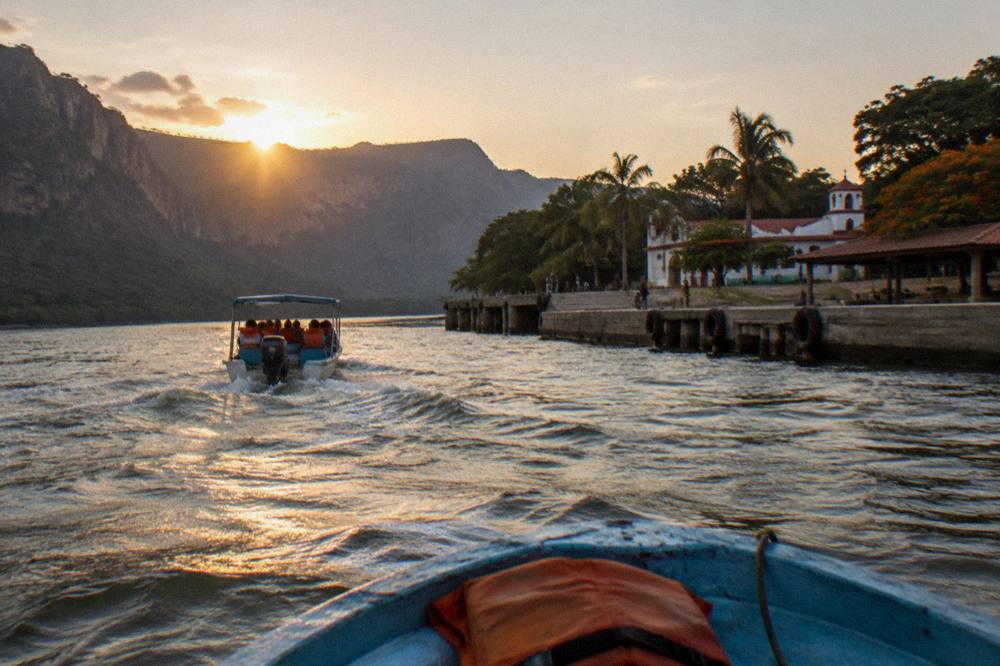
The late-departure trade has one genuine upside: fewer boats, softer queues at the stops and warm low light in the final hour before the 17:00 closing. If a shortened ride fits your day, it is not a bad version of the canyon. Just know it is the short version. The dam wall, the deepest and most photographed reach of the gorge, is the part the late boats skip.
Do The Day Trips Already Depart Early Enough?
Yes, across the board. Every San Cristobal and Tuxtla listing on this site is built as a morning-start itinerary, most around the eight-to-nine-hour mark, which puts its boat on the water in the late morning at the latest. One listing states a reception time explicitly: the Chiapas Viajes miradores trip meets at 8:45 in front of Al Grano Café; others state meeting points without a clock time.
The pattern is structural. A San Cristobal day that includes viewpoints, boat and Chiapa de Corzo free time cannot start at noon and still fit. The Jalapeño full day runs 8 to 9 hours. The OTISA miradores day and the OTISA English-guide day both run 9 hours from Portal 9. The Apasionado Tuxtla itinerary gives the canyon a three-hour block plus a two-hour mirador stop and still closes inside 10 hours. Even the shortest Tuxtla listing, the five-hour Chiapas Family Tours river day, starts its clock in the morning to make the hour in Chiapa de Corzo worthwhile.
For travelers already sleeping in Tuxtla, the six-hour EcoExperiencias day from Tuxtla, from $99 per person, is a clean option: hotel pickup listed, a maximum of 14 travelers, entrance fees stated as included, and even a 30-minute lunch stop in Chiapa de Corzo, with the meal not included and paid by the traveler. It is a shorter, cheaper way to hit the same morning window than the San Cristobal equivalents, if you do not need the mountain town in the itinerary.
The one listing that mentions a time in its meeting text is the Agencia Chiapas Viajes miradores trip, which tells passengers the reception point is in front of the Al Grano Café cafeteria at 8:45 in the morning. Start times matter for good reason: meeting points shift, and operators sometimes adjust pickup order by season. Confirm the time on the live listing after booking rather than treating any printed hour as permanent.
What If You Miss The Last Full Departure To The Dam?
After roughly 14:00 the cooperatives run shortened trips that turn back at the Árbol de Navidad waterfall rather than continuing to the Chicoasén dam wall, and the park closes at 17:00. If you arrive late, you still get a canyon ride, roughly an hour of it, but not the full two-hour run.
The practical defenses are simple. Arrive at the dock by mid morning and the question never arises. Book an organized day, and the operator absorbs the risk. The one-way Jalapeño listing from Tuxtla to San Cristobal, from $51 per person, is built exactly for travelers connecting the two cities: viewpoints, a 105-minute canyon sail, Chiapa de Corzo, and a finish at Portal 9 in San Cristobal, with no return leg to plan.
Two closing cautions belong on any timing page for this canyon. The miradores road, the land side of the park, is closed Tuesdays, so a Tuesday plan that assumed viewpoints plus boat loses half its content. And the Tuxtla to San Cristobal highway saw CNTE blockades reported in October 2026, on top of a 29.2 km widening finished in late 2025; reported, not permanent, but worth a road check on the morning of travel. On the site's own timing pages, the deeper comparisons live in the boat ride options guide and on Sumidero Canyon Tours itself.
Common Questions About The Best Time Of Day For The Sumidero Canyon Boat Ride
What Time Do Sumidero Canyon Boats Start Running?
Shared boats load from about 8:00, when the embarcadero ticket windows open, and leave when full rather than on a timetable. The park itself is open 8:00 to 17:00, and water access runs every day of the week.
What Is The Last Departure For The Full Boat Ride?
Reports on the cooperatives put the last full trip, the roughly two-hour round trip to the Chicoasén dam wall, at around 14:00, within park hours of 8:00 to 17:00. Later departures run shortened routes that turn back at the Árbol de Navidad waterfall.
Is Morning Really The Best Time For The Boat Ride?
Every reported pattern favors it: angled light on the walls before about 9:30, calmer air, cooler temperatures, fewer boats queued at the stops, and wildlife more often described as active. None of it is guaranteed, but no factor points to a better hour.
Do Day Trips From San Cristobal And Tuxtla Leave Early?
Yes. The San Cristobal tours run six to nine hours and the Tuxtla tours five to ten, all built as morning starts that reach the dock by late morning at the latest. Booking one removes the departure-slot decision entirely.
How Long Is The Boat Ride Itself?
About two hours round trip for the full route, from the Chiapa de Corzo embarcadero up the Grijalva to the dam wall and back. Some organized tours use a 90-minute canyon run instead, as their itineraries state.
Can I Ride In The Afternoon If I Arrive Late?
Yes, boats keep departing into the late afternoon, but after roughly 14:00 you get the shortened trip, and you take it in the day's peak heat and glare. It is a real canyon ride, just not the full one.