Sumidero Canyon From Chiapa De Corzo: Boarding In The Town Dock
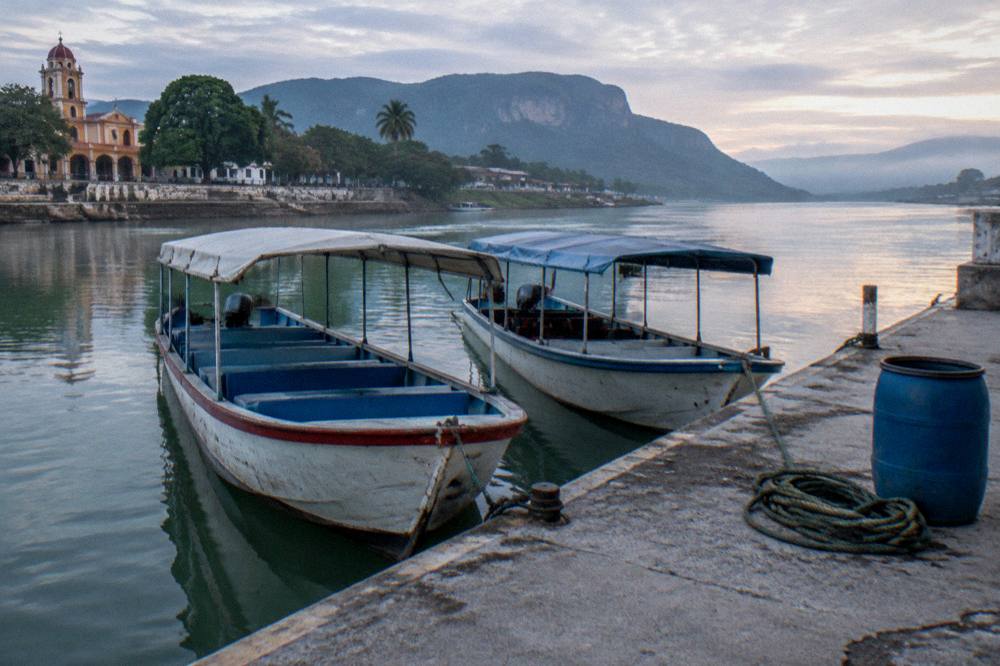
Chiapa de Corzo is the town on the river. Its waterfront embarcadero is where the cooperative lanchas push off up the Grijalva into the canyon, and it is the one dock you can comfortably reach on foot from a colonial plaza.
Short answer
The Chiapa de Corzo embarcadero sits on the Grijalva waterfront, about one to two blocks from the central plaza. Boats leave when full, 8:00 to 17:00, and the ride to the Chicoasen dam wall and back takes about two hours. 2026 shared fares run 290 to 460 MXN per person plus the 125 MXN park fee.
Chiapa de Corzo is the natural gateway to the canyon that sits just north of it. The Grijalva River widens here into its navigable reach, and the town's waterfront embarcadero is where the cooperative lanchas, the shared long-tail boats, load passengers and push off downstream toward the Chicoasen dam wall. Most visitors arrive by tour van from San Cristobal or Tuxtla Gutierrez, but the dock is one of the few launch points in Mexican canyon country you can walk to from a plaza, a fountain and a lunch table.
This guide covers the dock itself: where it is, what the 2026 fares are, when boats actually leave, what the ride shows you, and how boarding in town compares with the alternatives. The Chiapas: Sumidero Canyon boat tour and Chiapa de Corzo day, from $48 per person and rated 3.6 from 15 reviews, is the only listing here with a Chiapa de Corzo departure area, and it anchors the tour options further down. And if the canyon leaves you curious about what else the state offers, our guide to what Chiapas is best known for covers the other highlights worth building a trip around.
Where Is The Embarcadero In Chiapa De Corzo?
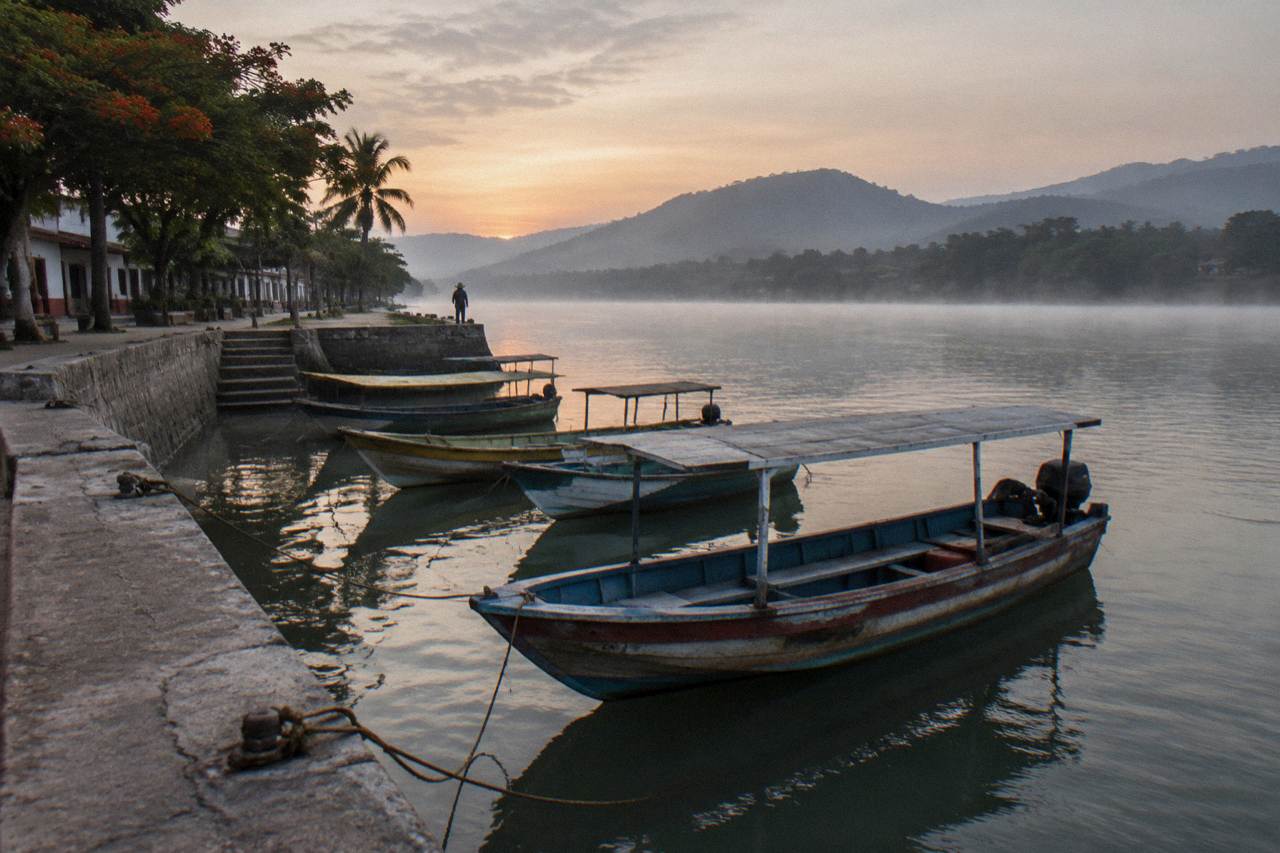
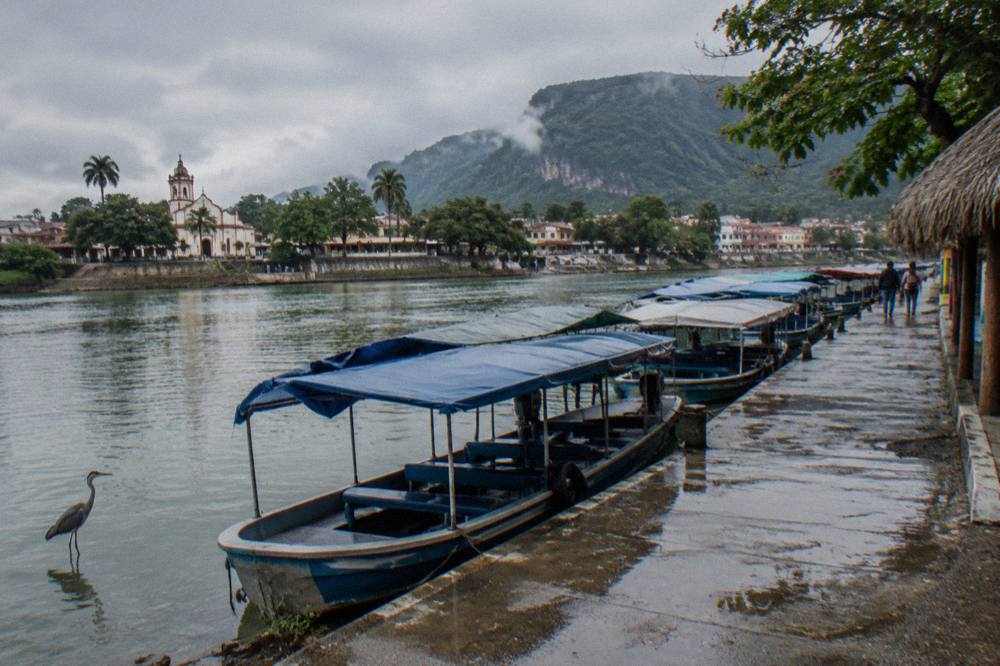
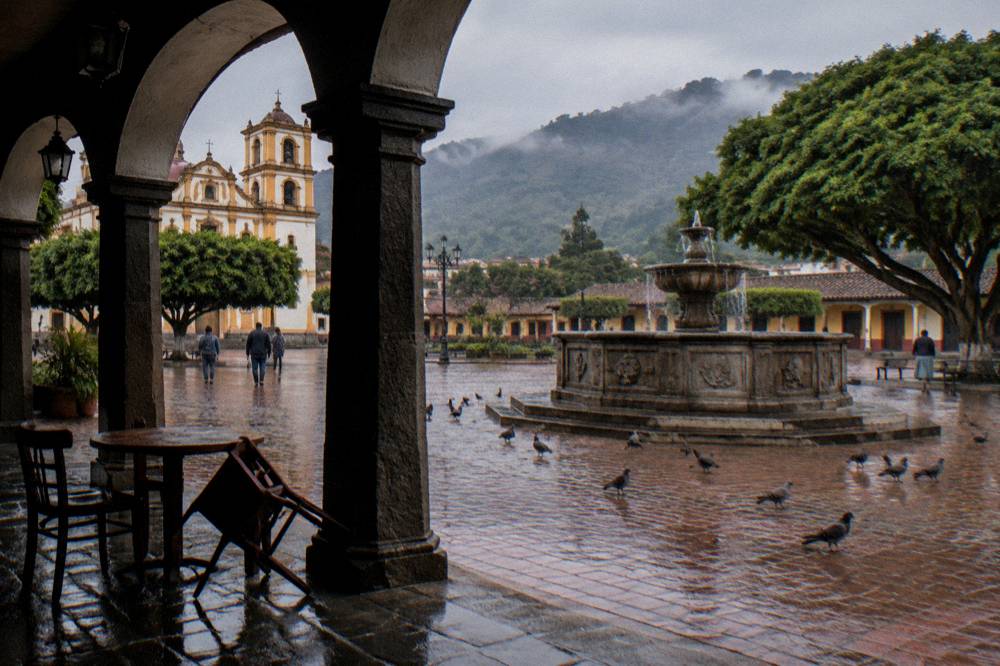
The embarcadero is on the town waterfront of Chiapa de Corzo, on the Grijalva River roughly one to two blocks from the central park, the Plaza de Armas. From the plaza you walk downhill past La Pila, the 1562 mudéjar brick fountain, to the tree-lined riverbank where the cooperative boats are moored. No transport is needed.
The walk takes only a few minutes, which is the dock's main practical advantage over Cahuare, the highway embarcadero outside town. Everything in central Chiapa de Corzo clusters around the plaza: the fountain, the Santo Domingo church complex, the lacquer museum in the old convent, and a ring of simple restaurants serving the local dish, pepita con tasajo. You can have lunch, walk to the dock, buy a ticket at the cooperative window and be on the water within the hour, provided the boats are filling.
The setting matters too. The embarcadero looks across the wide, slow Grijalva toward low hills, with the Belisario Dominguez bridge, the modern suspension crossing, in view. This is the calm, dam-backed reach of the river, not the narrow gorge; the canyon walls close in only after the boat has run downstream for a while. Arrive early and the waterfront is quiet, with herons working the shallows near the moored boats, a commonly reported sight rather than a promise.
If you are staying in San Cristobal or Tuxtla and driving yourself, the town dock is about an hour by road from San Cristobal and fifteen to thirty minutes from central Tuxtla. The embarcadero comparison guide weighs this dock against Cahuare in detail.
How Much Does The Boat Cost From Chiapa De Corzo?
2026 shared fares at the cooperative are 460 MXN for foreign visitors, 400 MXN for Mexican nationals, 340 MXN for older adults with an INAPAM credential and for children, and 290 MXN for children under 2. The CONANP park entry fee is separate, 125 MXN per person per day, though many guided tours state it is included in their price.
The boat fare and the park fee are two different charges, and mixing them up is the most common budgeting error on this route. The fare is set by the lancha cooperatives, not by the park, and the cooperatives can change it without notice; the current figures rose by 5 pesos in a late-2025 adjustment that local reporting noted was applied without prior official notice. The park fee is federal, charged under the protected-area entry rules, and a foreign tourist pays it in full.
| Who | Shared lancha fare 2026 | Park entry fee (CONANP) |
|---|---|---|
| Foreign visitors | 460 MXN | 125 MXN full rate |
| Mexican nationals | 400 MXN | 50 percent off with official ID |
| Students and teachers | 460 MXN foreign visitors, 400 MXN Mexican nationals | 75 percent off the 125 MXN park fee with credential |
| Older adults (INAPAM) and children | 340 MXN | exempt with credential, under 12 exempt |
| Children under 2 | 290 MXN | exempt |
Discounts on the park side require a valid credential shown at entry; exemptions cover older adults, pensioners and retirees, people with disabilities and children under 12. The official CONANP page for the park lists the fee, the hours and the visitor rules, and it is the source to check if anything here shifts. A ticket window at the embarcadero handles the cooperative fare, and the conservation wristband, the brazalete, is part of the routine. Our cost and tickets guide covers the arithmetic for families and groups.
Guided days change that arithmetic. Every tour on this site that runs the boat states its own fee position on its listing: most San Cristobal and Tuxtla days include the park fee in the price, while the private car day lists the boat ticket and the miradores reserve admission as optional extras paid at the desk. The Jalapeño full day from San Cristobal, from $85 per person and rated 4.6 from 268 reviews, the most reviewed listing on this site, states national park fees as included.
When Do Boats Leave From The Chiapa De Corzo Dock?
Boats leave when they are full, not on a fixed timetable. Ticket sales and departures run 8:00 to 17:00 daily, with the last full canyon trip leaving around 14:00; later departures run shorter, turning back at the Arbol de Navidad waterfall rather than the dam wall. High season means short waits, midweek low season can mean longer.
The fill-and-go rhythm is the single thing that surprises most independent travelers. You buy a ticket, you wait at the shaded jetty, and the boat goes when the last seat is sold. In the dry-season high season, roughly November to April, boats fill steadily through the morning and waits are short. On a quiet midweek day in the rainy season you might wait for another party to arrive, and the cooperative may offer a shorter run rather than hold the boat.
Early morning is the strongest slot, and local guides consistently recommend it: the light lands better on the walls, there are fewer boats clustered at the caves, and wildlife is more active. Park hours are 8:00 to 17:00, with water access every day but land access to the miradores road closed on Tuesdays, a detail that matters if you are pairing the boat with the viewpoints on the same bracelet day. Our best time of day guide works through the clock in detail.
| Time block | What to expect at the dock |
|---|---|
| 8:00 to 9:30 | First departures, fewest boats on the river, best light on the east wall |
| 9:30 to 12:00 | Steadiest filling rhythm, tour vans from San Cristobal arrive |
| 12:00 to 14:00 | Still reliable for the full trip, more traffic at the caves |
| 14:00 to 17:00 | Shorter runs, typically to Arbol de Navidad and back |
| Tuesdays | Boats run as normal; only the miradores road is closed |
A guided day removes the queue question entirely, which is exactly why many travelers book one even from a base in Chiapa de Corzo itself. The 5-hour Tuxtla tour with hotel pickup, from $102 per person and rated 5 from 15 reviews, runs a two-hour shared boat cruise with the park entrance included, then gives you an hour of free time in town, a compact version of the same loop.
What Do You See On The Canyon Boat Ride From Chiapa De Corzo?
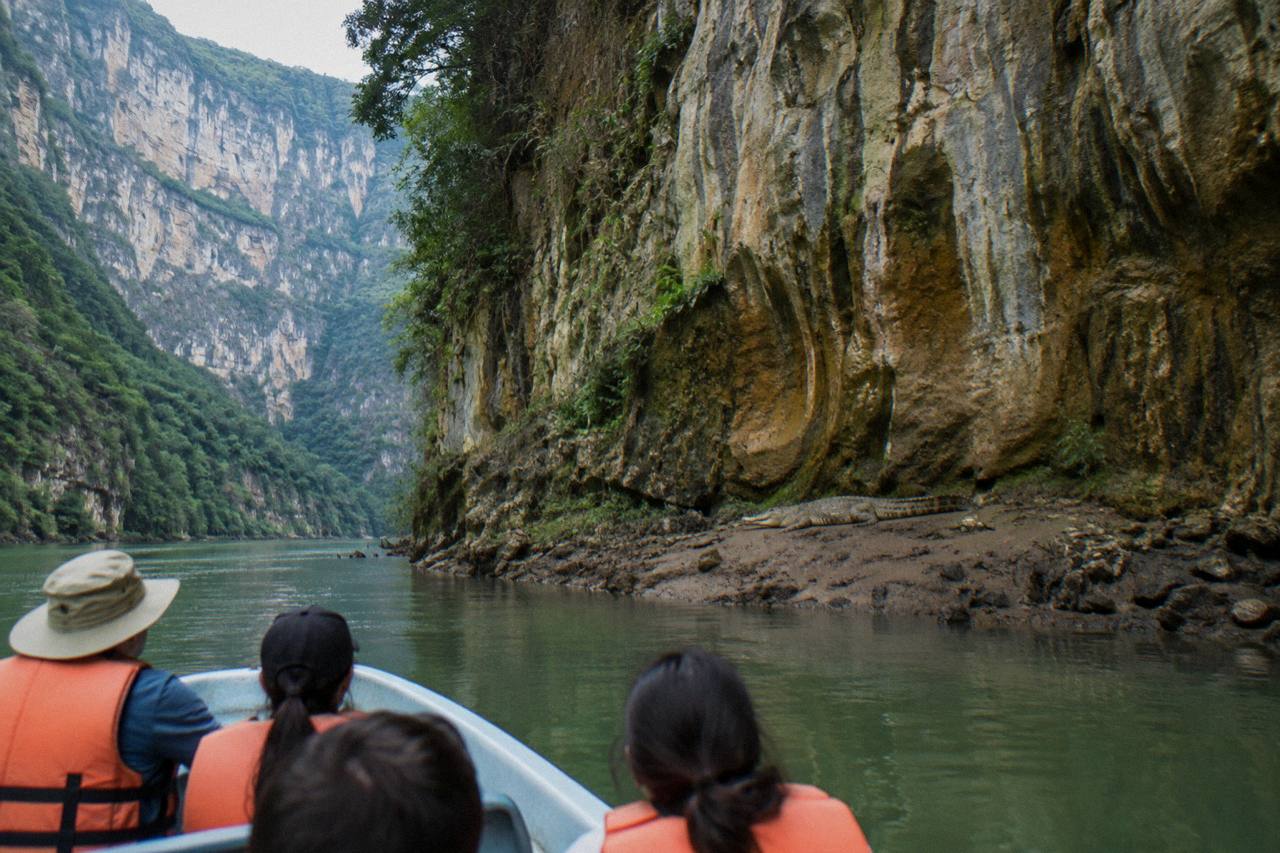
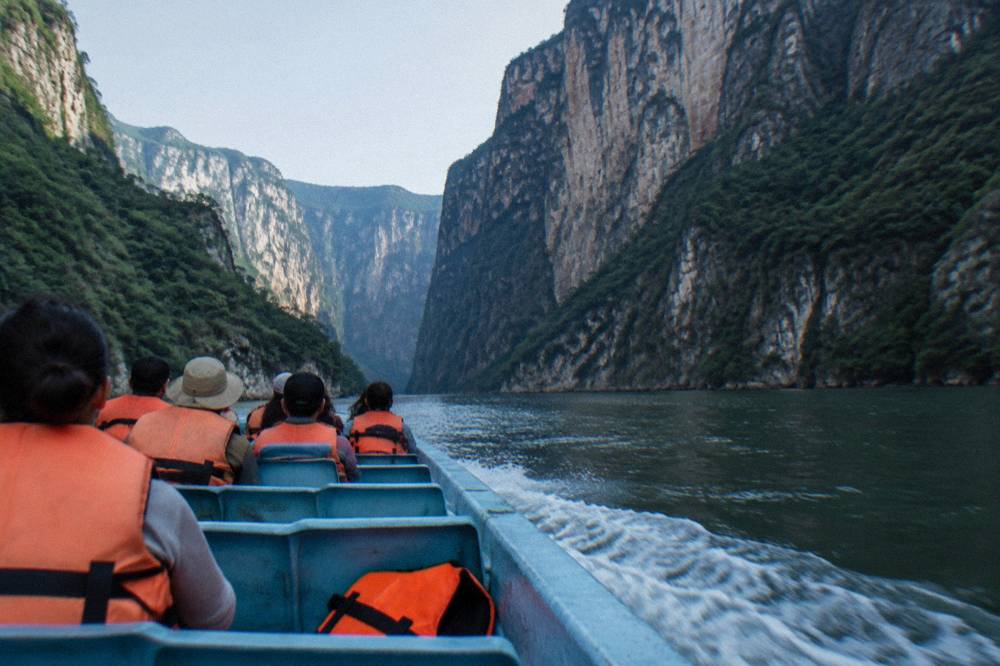
The run goes up the Grijalva to the Chicoasen dam wall and back, about two hours round trip, past the Belisario Dominguez bridge, the Caballito de Mar rock, the river bend that mirrors the Chiapas coat of arms, the Cueva de Colores with its shrine, and the Velo de Novia and Arbol de Navidad waterfalls, with crocodiles, spider monkeys and herons commonly reported along the banks.
The canyon itself is the headline. The national park was decreed on 8 December 1980 and spans 21,789.41 hectares; the navigable gorge runs about 30 to 33 kilometers, with walls commonly cited above 1,000 meters, one 2026 source giving about 1,200 meters at the El Roblar mirador, and a river depth over 250 meters from an older but consistently cited figure. The limestone walls are Mesozoic marine sediments, and the whole gorge formed along a tectonic fault that the river then deepened. No sighting is ever guaranteed, and none should be; the boat captains point at what is there that day.
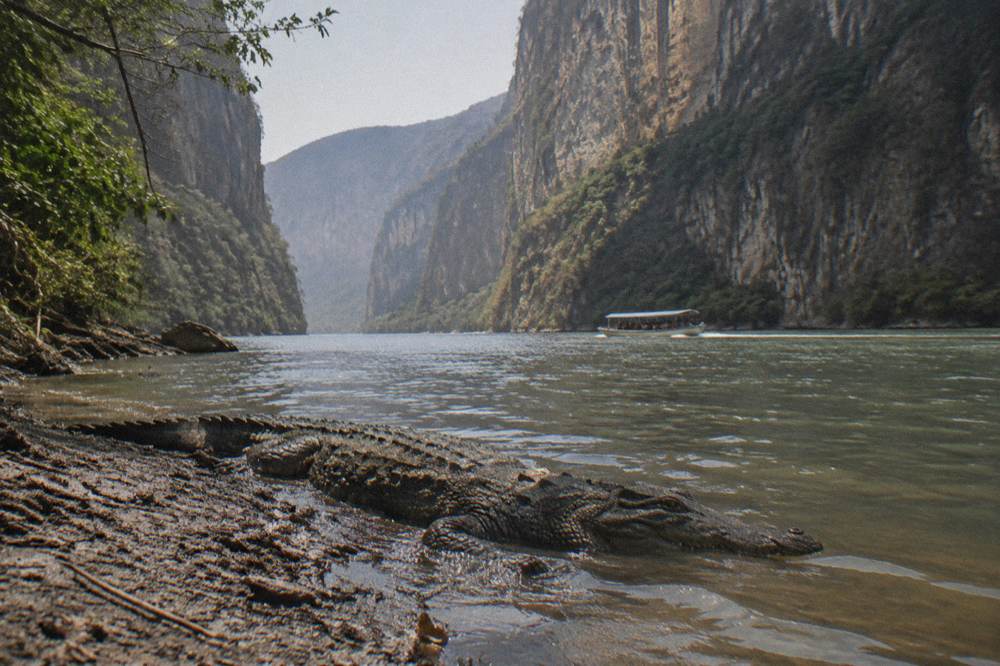
Wildlife is the reason to keep your eyes off the walls sometimes. American crocodiles bask on the mud banks in the lower reach, spider monkeys work the trees on the steeper slopes, and herons, cormorants, pelicans and vultures are all reported on the ride. In October 2026 Profepa released 13 rescued river crocodiles into the park, a reminder that this is a managed, living protected area rather than a theme-park set.
The Arbol de Navidad, the Christmas Tree, deserves its reputation: a moss-covered mineral cascade that resembles a fir tree, strongest in the rainy season when boats sometimes take spray, reduced to a trickle in the dry months but structurally the same sight. The what you see on the ride guide names every stop.
On the water, rules are enforced: life jacket mandatory, hands out of the water, no glass containers, no alcohol brought in, no smoking, no pets, no drones, do not leave the boats, and wear the conservation wristband. The captain of the shared boat gives the commentary in Spanish on most departures; the listing for the Jaguar Negro boat day states the explanation comes from the boat captain.
Chiapa De Corzo Dock Or Cahuare Embarcadero?
Cahuare, also spelled Cahuaré, is the highway embarcadero outside town, about 7 kilometers from Tuxtla's ring road and a short drive from the Tuxtla to San Cristobal highway. The town dock in Chiapa de Corzo is walkable from the plaza and pairs naturally with a day in the pueblo magico; Cahuare is faster from Tuxtla and from the airport side but has nothing around it but the river.
The fares are reported as the same at both, though the Cahuare figure should be treated as similar rather than identical. What genuinely differs is the surrounding day. Boarding in town gives you La Pila, the 1562 fountain that is unique in the Americas, the free-entry archaeological zone on the edge of town, an INAH site open 8:00 to 17:00, and a real lunch stop. Boarding at Cahuare gives you a faster launch and a shorter detour if you are coming from Tuxtla or the airport; which dock a tour uses is not stated in the listings.
| Factor | Chiapa de Corzo town dock | Cahuare embarcadero |
|---|---|---|
| Location | Waterfront, 1 to 2 blocks from the plaza | Highway side, near km 1078 of the Tuxtla road |
| From Tuxtla center | 15 to 30 minutes | About 6 minutes from the Libramiento Sur |
| From San Cristobal | About 1 hour | About 1 hour to 1 hour 20 |
| Around the dock | Colonial town, fountain, museum, restaurants | Riverbank only |
| Fares | 460 MXN foreign visitors | Reported similar, not confirmed from a primary source |
| Best for | Independent travelers, town-and-boat days | Fast launches, airport-side arrivals |
Most guided day trips stop in Chiapa de Corzo for 30 to 100 minutes of free time, which is enough for the fountain, the plaza and a snack. The budget boat day with viewpoints, from $40 per person and rated 4.0 from 80 reviews, is the cheapest shared day on the site and includes the entrance fees plus the boat.
Which Tours Use Chiapa De Corzo As Their Base?
One listing here is based here: the Jaguar Negro boat day from $48 per person, rated 3.6 from 15 reviews, with transport in Chiapas, the boat and insurance included. The other 30 listings depart from San Cristobal, Tuxtla or the airport, but nearly all of them include Chiapa de Corzo free time after the cruise, so the town is on almost every itinerary in some form.
That asymmetry is worth understanding before you book. A tour that departs San Cristobal spends about an hour in the van, runs the boat, then hands you 60 to 100 minutes in town before the drive back. A tour that departs Tuxtla reaches the water in half the time. If your priority is the town itself, the Parachicos festival in January, the fountain at golden hour, a proper lunch, then a Tuxtla departure or an independent day at the town dock serves you better than a long San Cristobal loop.
| Tour | Departs | Price | Rating | Chiapa de Corzo time |
|---|---|---|---|---|
| Chiapas: Sumidero Canyon Boat Tour | Chiapa de Corzo area | from $48 per person | 3.6 from 15 reviews | base of the tour |
| From Tuxtla Gutierrez: Sumidero Views & Chiapa de Corzo | Tuxtla | from $53 per person | 4.7 from 175 reviews | 30 minutes, optional |
| Tuxtla Gutierrez: Sumidero Canyon River and Chiapa de Corzo | Tuxtla | from $102 per person | 5 from 15 reviews | 1 hour |
| From San Cristobal: Sumidero Canyon to Chiapa de Corzo | San Cristobal | from $46 per person | 4.6 from 104 reviews | 80 minutes free time |
| San Cristobal: Sumidero Canyon & Chiapa de Corzo Boat Tour | San Cristobal | from $155 per person | 4.6 from 136 reviews | 1 hour |
The Tuxtla departure family is the natural fit for this page's reader. The Apasionado views day from Tuxtla, from $53 per person and rated 4.7 from 175 reviews, the strongest rating on a large review pool in the Tuxtla group, includes reception at your hotel, the boat, entrance fees and basic traveler's insurance across 9 to 10 hours. Travelers landing at Tuxtla airport can go straight to the water on the airport-to-canyon day, from $130 per person, rated 4.2 from 8 reviews, which starts at the terminal and can finish in San Cristobal.
San Cristobal departures make sense when the town is your base and you want the viewpoints folded into one day. The OTISA viewpoint day from $86 per person, rated 4.6 from 44 reviews, and its English-guide sibling at the same price, rated 4.5 from 15 reviews, are separate listings from the same operator, the difference being the bilingual driver-guide on the latter.
What Should You Know Before Walking To The Dock?
Bring cash in pesos, small bills if possible, because the cooperative window and the park fee are both paid at the dock; wear sun protection and a hat because the boats are open with a canopy; keep the wristband on for the day; and check conditions on arrival, since rainy-season river levels occasionally trigger navigation restrictions that are decided day to day.
The cash point matters more than people expect. The fares are in pesos, the wristband system is physical, and card payment at the window is not confirmed. CONANP itself suggests comfortable clothes, sneakers, long sleeves, a hat, sunscreen and repellent.
Two practical caveats from the current reporting. First, the Tuxtla to San Cristobal highway, widened to three lanes in a modernization completed around December 2025, has seen CNTE road blockades and closures reported in October 2026; nothing here promises any route is open, so confirm locally on travel day, and the same goes for river conditions. Second, the season shapes the whole experience: the dry season, roughly November to April, brings the clearer green water and stable skies most photographers want, while the rainy season from May to mid-October, peaking in June and September, brings higher flow, greener walls and the stronger waterfalls. Tuxtla's climate normals show the shift plainly, from 1.8 millimeters of rain in February to 216.6 in August.
If January travel is on the table, the town becomes a destination in its own right: the Fiesta Grande and its Parachicos processions run 4 to 23 January, and a boat day slots neatly between events. Whatever the month, Sumidero Canyon Tours keeps every departure city, price and fee position in one place for comparison.
Common Questions About The Chiapa De Corzo Embarcadero
Where Is The Embarcadero In Chiapa De Corzo?
On the Grijalva waterfront, about one to two blocks downhill from the central plaza and La Pila fountain. It is an easy walk from anywhere in the historic center; no taxi or colectivo is needed.
How Much Does The Boat Ride Cost From Chiapa De Corzo?
2026 shared fares are 460 MXN for foreign visitors, 400 MXN for Mexican nationals, 340 MXN for older adults with an INAPAM credential and children, and 290 MXN for children under 2. The CONANP park entry fee of 125 MXN per person per day is separate, with discounts and exemptions for credentialed visitors.
Do The Boats Leave On A Schedule?
No. Boats depart when full, within park hours of 8:00 to 17:00 daily, with the last full trip to the Chicoasen dam wall around 14:00. Later departures run shorter, typically turning back at the Arbol de Navidad waterfall.
How Long Is The Boat Ride From Chiapa De Corzo?
About two hours round trip, from the town embarcadero up the Grijalva to the Chicoasen dam wall and back, passing the Cueva de Colores, the Velo de Novia and the Arbol de Navidad along the way.
Is The Town Dock Or Cahuare Better?
The town dock pairs the ride with a walkable colonial center and is the better choice if the town matters to your day. Cahuare, the highway embarcadero, is faster from Tuxtla and the airport side but sits on its own by the river. Fares are reported as similar, though the Cahuare figure is not confirmed from a primary source.
Do Tours From San Cristobal Stop In Chiapa De Corzo?
Almost all of them do. Nearly every San Cristobal and Tuxtla day trip here includes 30 minutes to 100 minutes of free time in town after the cruise, so you get the embarcadero, the fountain and the plaza even on a guided day.