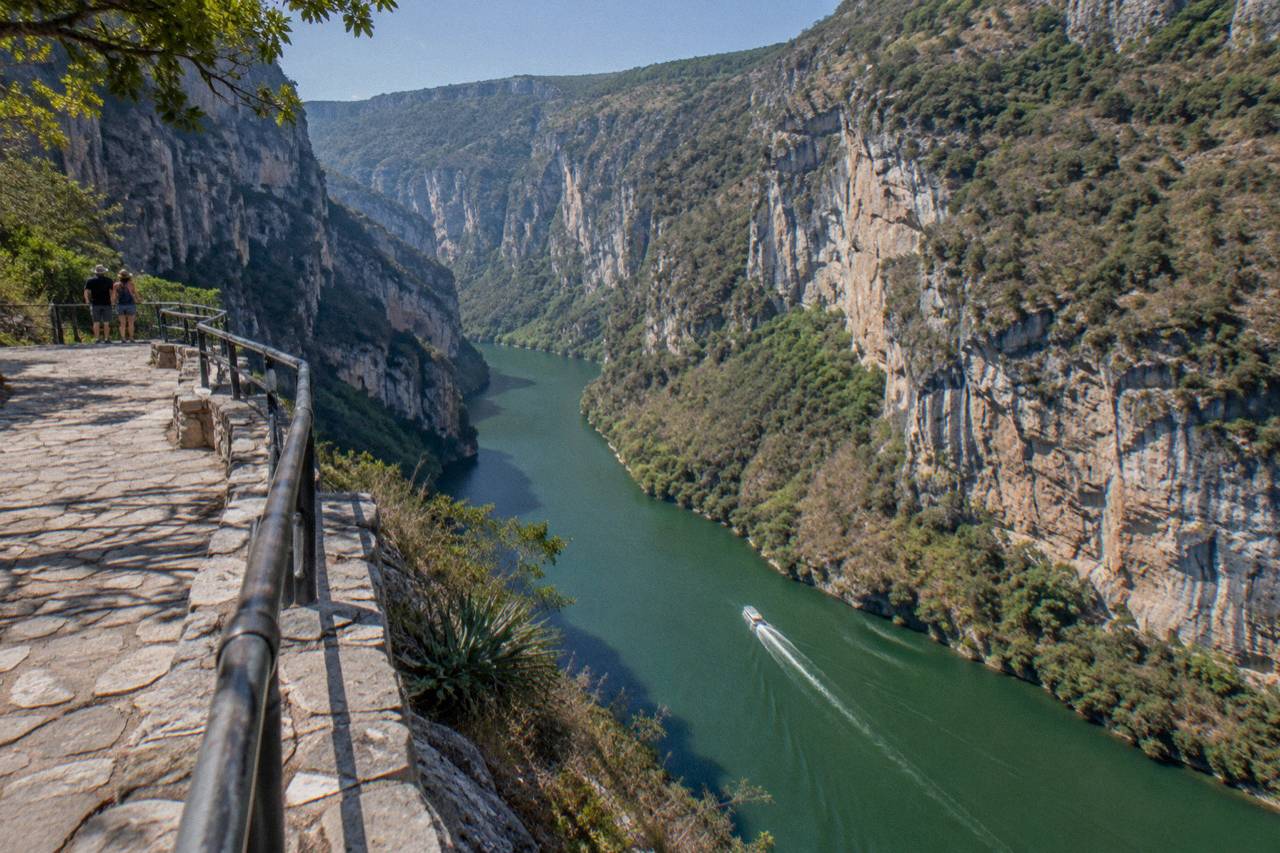
Sumidero Canyon Photography: Best Light, Seats And The Drone Ban
Sumidero Canyon rewards photographers who plan around light, water and the park's rules. Here is what is confirmed, what is only reported advice, and which boat rides and viewpoint day trips fit a camera bag.
Short answer
Drones are prohibited in Sumidero Canyon National Park under the cooperative and CONANP visitor rules, and life jackets are mandatory on the water. The two hour shared boat ride from Chiapa de Corzo costs 460 MXN for foreign visitors in 2026 plus the 125 MXN park fee. Photographer-friendly listings run from $56 per person for a viewpoints day trip to $89 per person for a kayak crossing.
The cliff walls inside Sumidero Canyon are commonly cited at over 1,000 meters, and a camera pointed up them from a moving boat has about two hours of shooting time on the standard shared ride from the Chiapa de Corzo embarcadero to the Chicoasén dam wall and back. That is a short window with a lot of variables: which side of the boat faces the walls, how much spray the Árbol de Navidad waterfall throws, whether the light has reached the lower canyon, and what the park's rules allow you to carry and fly. This guide separates the official rules, which come from the CONANP park page and the boat cooperatives, from the reported advice on light and seating that circulates in guides and guest accounts and cannot be promised to any visitor.
The practical core for photographers is simple. Drones are banned, life jackets are mandatory, hands stay out of the water, and you cannot leave the boat. Everything else, seats, hours of light, spray, is planning advice rather than guarantee. The listings on this site give you three shooting situations to choose from: a shared lancha ride bundled into a day trip such as the Jalapeño full day from San Cristobal (4.6 from 268 reviews, from $85 per person), a viewpoints-focused day like the Cañon Del Sumidero miradores trip from San Cristobal (4.5 from 85 reviews, from $56 per person), and a water-level double kayak crossing from Tuxtla (5 from 2 reviews, from $89 per person). Which one fits depends on what you are trying to shoot, and the sections below work through each question in turn.
When Is The Best Light For Sumidero Canyon Photography?
Reported advice from guides and operators consistently favors early morning departures, roughly between 7:30 and 10:00, when the sun has not yet filled the canyon floor, fewer boats crowd the water, and wildlife is described as more active. This is general reported advice rather than a guarantee, since no official lighting schedule for the canyon is published.
The reasoning behind the morning advice is physical. The canyon is deep and the boat runs roughly south to north from Chiapa de Corzo to the Chicoasén dam, so the walls shade the water for much of the early day and high-contrast glare dominates midday. Guides that recommend morning departures cite softer light on the walls, calmer air before wind picks up, and fewer boats crowding the narrow sections. None of that is a promise: clouds, haze from seasonal burning in the region, and river mist can change the picture entirely, and in rainy season from May to mid-October the sky can close in by late morning regardless of when you launch.
The season matters as much as the hour. In dry season, roughly November to April, regional guides describe lower river levels and clearer, green-toned water with better visibility across the canyon. In rainy season the river carries more sediment and the walls carry more seasonal waterfalls, including stronger flow at the Árbol de Navidad, which is a photographic subject in itself even when it soaks passing boats. Tropical storm overlap runs 1 June to 30 November in the Atlantic basin and 15 May to 30 November in the Eastern Pacific, and preventive tour suspensions at the embarcaderos are reported in rainy season, so confirm conditions on arrival. The best time of day for the boat ride and the rainy season guide go deeper on both questions.
If your whole trip is built around photographs, the monthly rainfall picture is the single most useful planning number. The official climate normals for the Tuxtla Gutierrez station put June at 211.1 mm and September at 208.7 mm of rain, against 1 mm in January and 1.8 mm in February. The dry months from November through April give the best odds of the clear, high-contrast light that makes the walls readable in a single frame.
| Month | Avg. max temp | Rainfall | Photography read |
|---|---|---|---|
| January | 29.5 C | 1 mm | Clear skies, dry air, strongest odds of clean light |
| April | 35.9 C | 9.7 mm | Hot and mostly clear, haze possible late month |
| June | 32.8 C | 211.1 mm | Peak rain, dramatic skies, suspension risk |
| September | 31.6 C | 208.7 mm | Peak rain, seasonal waterfalls at fullest |
| November | 29.6 C | 16.7 mm | Rains taper, light returns |
Which Side Of The Boat Gives The Best Shots On The Canyon Ride?
Because the boat travels up one side of the Grijalva and back down the other, both sides of the boat get their turn facing the canyon walls over the round trip, so the real factor is your seat rather than your side: rows away from the engine give cleaner sightlines and less vibration.
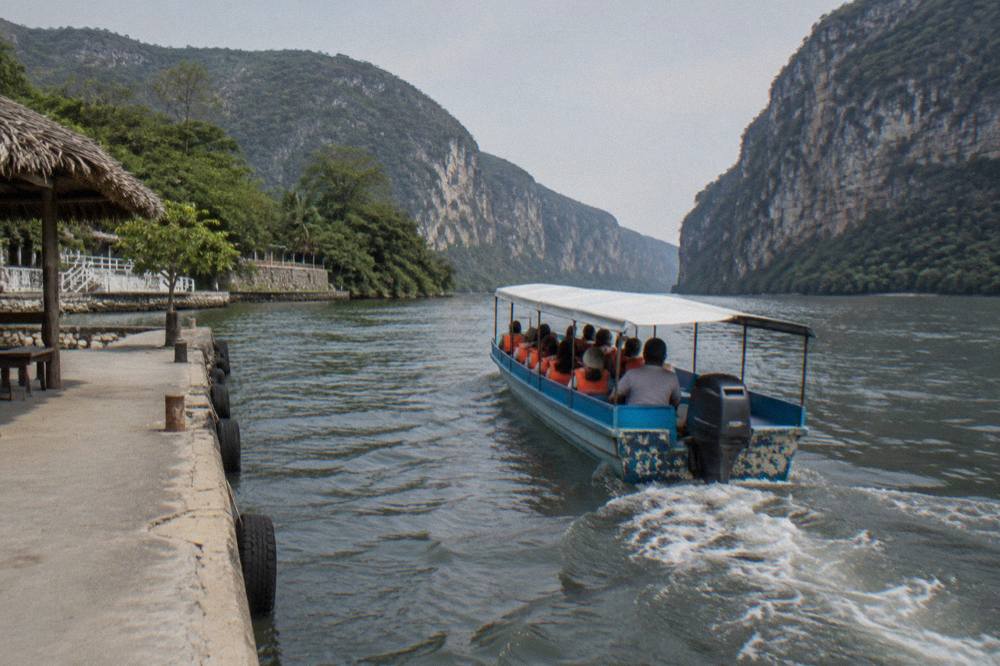
The route itself explains why. The embarcadero at Chiapa de Corzo sits roughly one to two blocks from the town's central park, and the lanchas run up the river past the Belisario Domínguez bridge, Cueva de Colores, the Velo de Novia and Árbol de Navidad waterfalls to the Chicoasén dam wall and back, about two hours round trip. On the outbound leg one side faces the cliff, on the return the other side does. Photographers who want flexibility describe standing slightly and shooting over heads, or asking staff at boarding, politely, whether a middle row is free. Seating is ultimately the cooperative's call, and boats depart when full, typically between 8:00 and 16:00.
Spray is the other variable worth planning for. The Árbol de Navidad waterfall flows hardest in the rainy months and can soak boats that pass close, which is dramatic to photograph and risky for gear. A weather-sealed camera, a lens cloth, and a dry bag are cheap insurance. The visitor rules add one hard constraint: hands stay out of the water, so no trailing a phone or GoPro over the side for a water-level shot. The kayaking option solves that differently, sitting you centimeters above the surface legitimately, and is covered below.
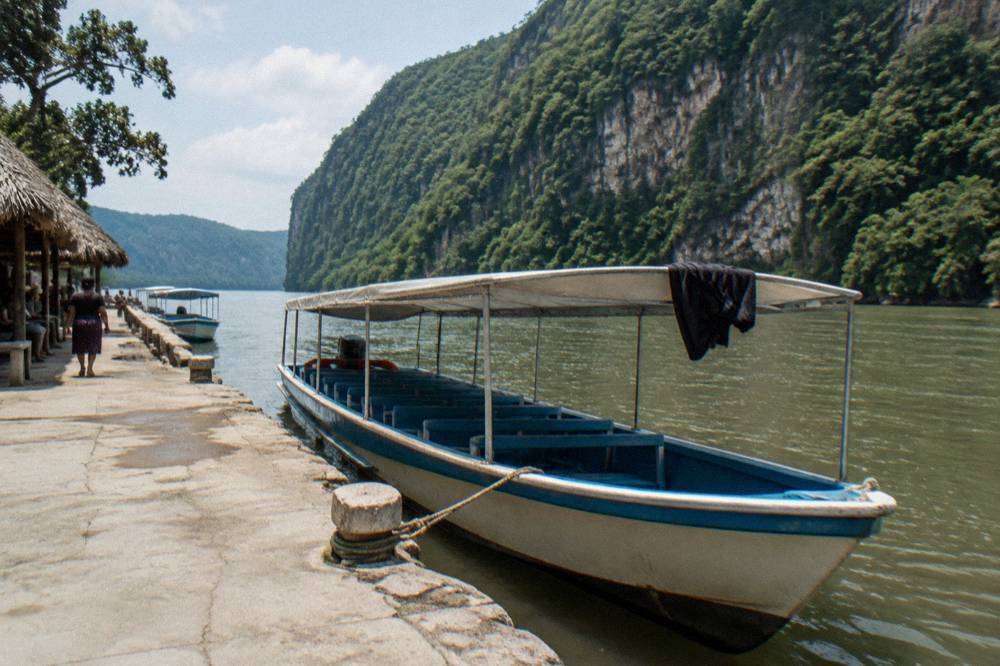
For photographers comparing the shared boat against other ways of seeing the canyon, the tradeoffs look like this.
| Shooting platform | Water time | Price basis | What it gives a camera |
|---|---|---|---|
| Shared lancha from Chiapa de Corzo | About 2 hours | 460 MXN foreign visitors, plus 125 MXN park fee | High walls, caves, dam wall, wildlife from deck height |
| Day trip with viewpoints from San Cristobal (Jalapeño) | 110 minutes canyon walk plus viewpoints | From $85 per person | Boat plus land vantage points in one day |
| Miradores day trip (Jalapeno Tours) | 2 hours in the park | From $56 per person | Viewpoint panoramas and boat ride bundled |
| Double kayak crossing from Tuxtla | 6 hours total | From $89 per person | Water-level angle, small-craft mobility |
The Jalapeño full day from San Cristobal is the most reviewed tour on this site at 268 reviews, rated 4.6, and its itinerary pairs a 110 minute canyon stretch with a scenic viewpoint drive and free time in Chiapa de Corzo. For a photographer who wants both the water angle and the above-the-rim angle in a single outing without arranging anything independently, it is the straightforward pick.
The other cards here serve different briefs. The miradores day trip spends its two park hours on the water and its shorter stops on land, which suits photographers who care more about the wide canyon panorama than about town wandering. The kayak crossing is the specialist's choice and gets its own section below.
Are Drones Allowed In Sumidero Canyon National Park?
No. Drones are banned on the boat ride under the cooperatives' rules, reported in January 2026, alongside mandatory life jackets and the ban on glass containers and pets. CONANP's nine-point visitor regulation does not list drones. There is no recreational drone permit scheme advertised for the park, and the national park is a protected natural area decreed in December 1980 covering 21,789.41 hectares. Leave the drone at your hotel; flying it at the embarcadero or the viewpoints is the same violation.
The ban sits in the same family of rules as the conservation wristband every visitor must wear and the prohibition on leaving the boats. CONANP enforced the visitor code publicly in 2025, filing a complaint against a visitor who broke the conduct rules at a mirador, which signals that the rules are applied, not decorative. A drone is also the single most confiscation-prone item you could carry onto a cooperative lancha: the crew is within its rights to refuse boarding, and the official CONANP page for the park is the authority to check before any trip in case rules change.
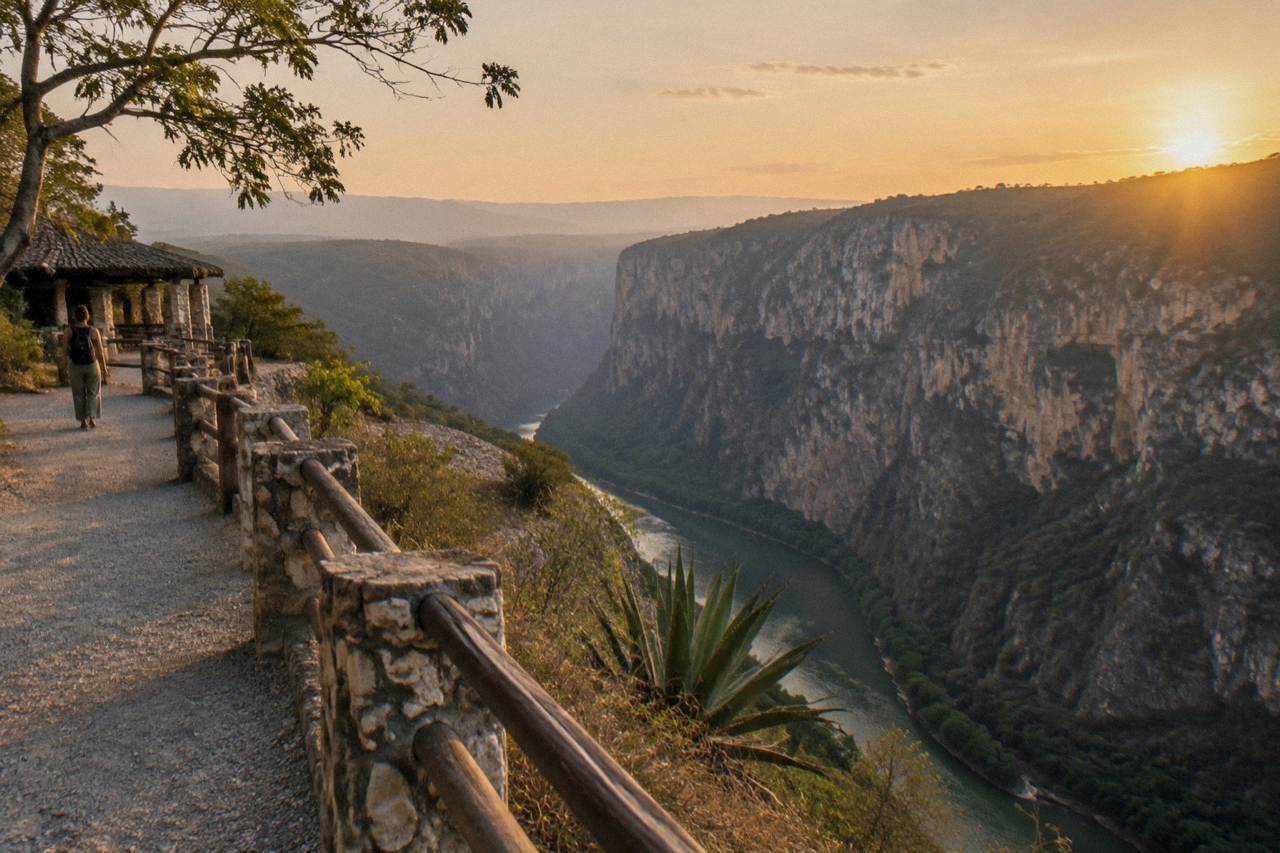
What replaces the aerial shot is the miradores road. The five viewpoints, La Ceiba, La Coyota, El Roblar, Los Chiapa and El Tepehuaje, sit on the canyon rim reached by the Calzada al Sumidero from Tuxtla Gutierrez, and they deliver the wide, high panorama that a drone would otherwise chase. Land access runs Wednesday to Monday, 8:00 to 17:00, closed Tuesdays, under the same 125 MXN per person daily park fee, and the same wristband from a morning boat ride is valid the same day. Planning a Tuesday arrival means the viewpoints are off the table, which matters when the whole point is the rim shot. The dedicated viewpoints guide covers each lookout in detail.
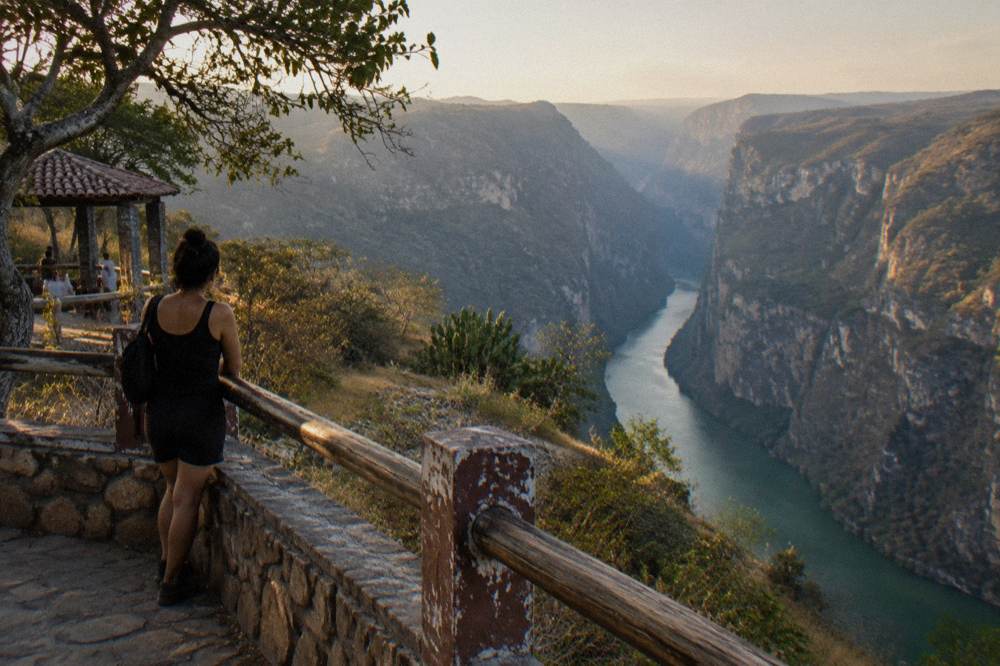
The nine-rule visitor regulation, official from CONANP, reads as follows in plain terms.
| Rule | What it means for a photographer |
|---|---|
| Stay on trails | No scrambling to an open ledge at the miradores |
| Do not climb retaining walls | Railings at viewpoints are the limit |
| No alcoholic drinks brought in | Not part of a photo picnic |
| No smoking | No smoke effects, obviously |
| No campfires | No after-dark fire shoots |
| Do not remove flora or fauna | Nothing leaves, including props |
| Do not leave the boats | No stepping out on rocks for an angle |
| Control solid waste | Pack out every battery and card wrapper |
| Wear the conservation wristband | Keep it visible; it is your proof of the fee |
For photographers the binding ones are staying in the boat and keeping hands out of the water, both of which close off the low, dramatic angle from a lancha. That constraint is exactly why the kayak listing exists and why it appeals to camera carriers.
The Sumidero Canyon Tours featured pick for photography planning is the Jalapeno Tours miradores day trip, because its itinerary is weighted toward exactly the two platforms that matter here: two hours inside the national park on the water and a stop at the Miradores Canon del Sumidero, with the park fees included in the from $56 per person fare. Its listing rates 4.5 from 85 reviews. Its one limit for some travelers is that the operator's service is listed in Spanish, so an English-speaking group should weigh the Jalapeño full day, which lists Spanish and English with a Spanish-speaking driver and no guide, before booking.
What Does The Kayak Crossing Offer A Camera That The Boats Do Not?
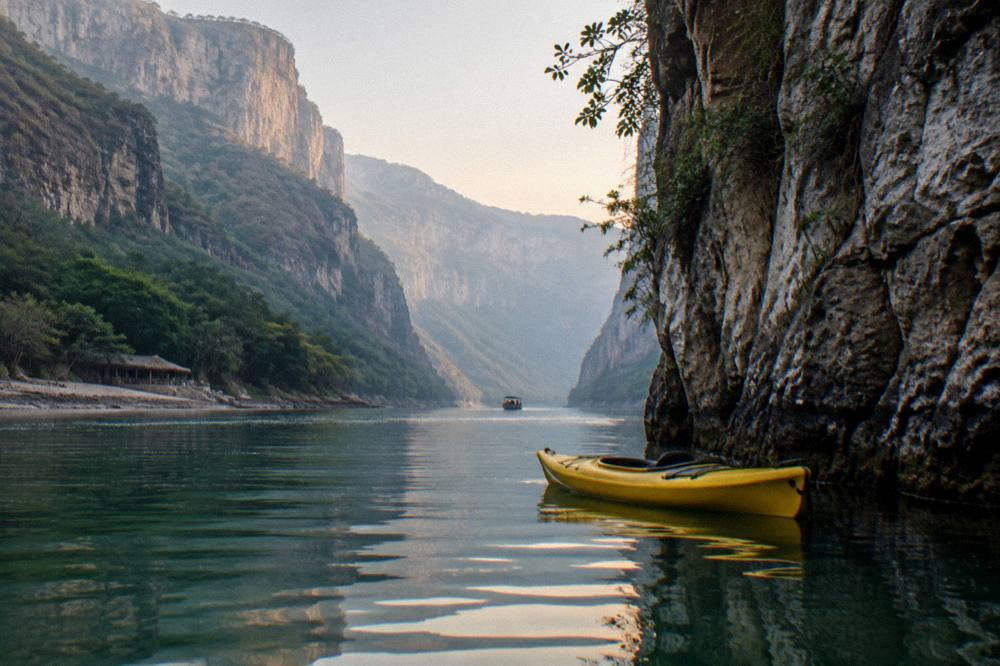
The double crossing kayak experience, from $89 per person for a 6 hour outing from Tuxtla, puts a photographer at water level with a stable two-person craft and a stated route that crosses the canyon rather than riding its full length. It rates 5 from a small pool of 2 reviews, so treat that score as early feedback rather than a proven track record. It includes the park access bracelet and the Chicoasén jetty entry fee.
Water level is a genuinely different photograph. From a lancha deck the walls tower, which is the classic postcard; from a kayak the camera sits close enough to the surface to catch reflections and the texture of the rock at eye level, and there is no engine vibration to blur a long lens. The listing states round transportation from the meeting point in Tuxtla is private, and the meeting point is a specific AutoZone parking lot on the Carrera Panamericana, so this is a self-navigated start rather than a hotel pickup. Free cancellation is listed.
The tradeoff is coverage. Two hours on a shared lancha covers the full run to the dam wall and back with a captain narrating, while the kayak is a slower, closer, more physical six hours. Wildlife behaves differently around small craft too: American crocodiles, spider monkeys and birds including herons, cormorants, pelicans and vultures are reported along the ride, with no official population counts, and no sighting can be promised from either platform. In October 2026 Profepa released 13 rescued river crocodiles into the park, which tells you the crocodile population is actively managed, not how many you will see.
If the kayak sounds right, book it around the dry season months for the calmest water and the clearest light, and pack everything waterproofed. If it sounds like more paddling than your gear insurance covers, the shared boat bundled into a day trip remains the reliable default.
Which Tours From San Cristobal Suit A Photography Day?
Three listings stand out for camera-focused days from San Cristobal: the Jalapeño full day at from $85 per person (4.6 from 268 reviews, Spanish-speaking driver, no guide), the Jalapeno Tours miradores trip at from $56 per person (4.5 from 85 reviews), and the Selva Azul premium boat tour at from $155 per person (4.6 from 136 reviews) with hotel pickup and a 90 minute canyon run. All three state park fees included and free cancellation.
The difference between them is structure, and structure is what determines your light. The Jalapeño day runs 8 to 9 hours and sequences a viewpoint scenic drive, a 110 minute canyon walk, and 75 minutes in Chiapa de Corzo, which spreads a photographer across water, rim and town. The miradores trip compresses the land stops and gives the park two hours. The Selva Azul premium day is the pickup-and-guiding option: hotel pickup and drop-off listed, English-speaking guide in the private option, a 40 minute photo stop at a mirador and 90 minutes sailing in the canyon, at the top of the shared-tour price range.
One planning note that affects every one of these: the Tuxtla to San Cristobal highway saw CNTE road blockades reported in October 2026, including closures around kilometers 41 to 46, with the free alternate road advised in local reporting. The same road was widened to three lanes with a modernization completed around December 2025. None of this means your van will be stopped, and no blockade can be predicted, but it is one more argument for a morning departure with buffer time, and for checking with the operator the day before. The how to get there guide maps the routes and the embarcadero choice.
What Should Photographers Know About Shooting In Chiapa De Corzo?
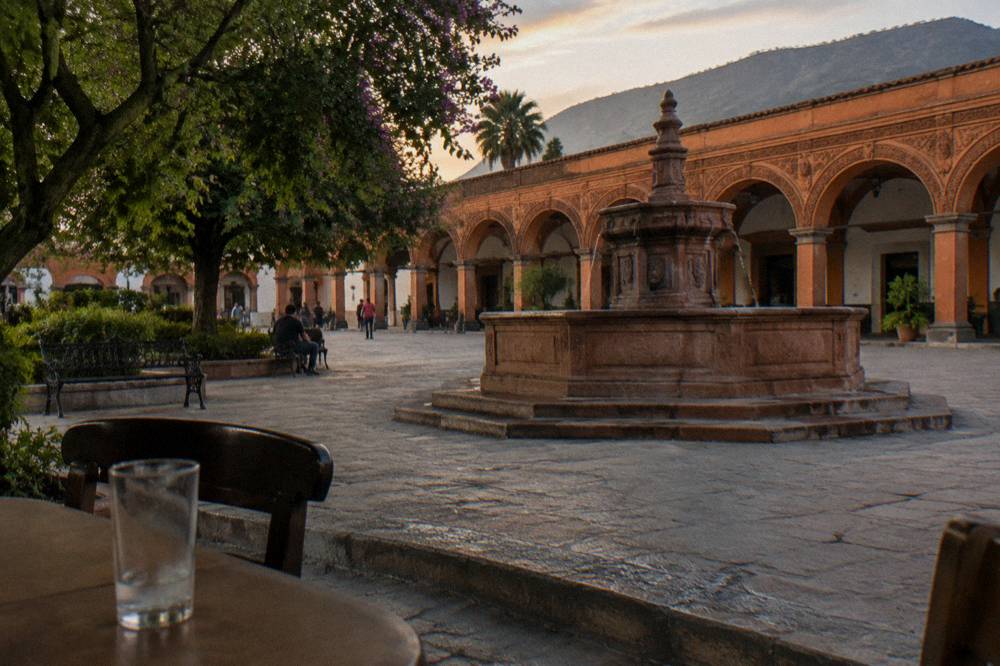
Photographers should treat Chiapa de Corzo as a free-time stop of roughly 75 to 100 minutes, depending on the listing, where the best subjects cost nothing: shoot the 1562 mudéjar brick La Pila fountain on the main plaza, the Santo Domingo church exterior, and the archaeological zone, free per the INAH site and open daily 8:00 to 17:00, making this the color-and-people half of a day otherwise devoted to geology.
The town is a Pueblo Mágico, and the Parachicos festival in January fills it with one of the most photographed traditions in Mexico; the Fiesta Grande runs 4 to 23 January, with the main Parachicos processions clustered on set dates. If your trip can be moved into that window, the combination of festival street work and canyon landscape in one location is hard to beat, though accommodation books out and crowds are real. The Fiesta Grande guide has the full calendar.
Practical shooting notes: the plaza and fountain are walkable from where the vans stop, the lancha embarcadero is one to two blocks from the central park, and midday in Tuxtla-adjacent lowlands runs hot, with April climate normals averaging a 35.9 C maximum. Shoot the town in the softer hour your itinerary gives you and let the canyon have the morning. The what you see on the boat ride guide lists each named stop on the water route so you can pre-plan frames.
What Gear And Settings Work In The Canyon Environment?
Plan for high dynamic range and movement: deep shade against bright sky above the rim, a moving boat, and possible spray at the seasonal waterfalls. General reported advice from canyon shooters favors a fast zoom over primes, a polarizer to cut water glare, burst mode for wildlife, and a dry bag at all times in rainy season. No official source publishes photography guidance, so treat settings advice as peer experience, and test before the boat leaves the dock.
The exposure problem is the story of the place. Walls over 1,000 meters, commonly cited, mean the bottom of the canyon sits in shadow while the sky above is tropical bright, and a single frame often cannot hold both. Bracketing or shooting raw with recovery in mind solves most of it. Movement is the second problem: lanchas cruise steadily but vibrate, and there is no stopping mid-route for a composition, so higher shutter speeds than you would normally choose are the safe call for anything handheld. The kayak platform moves differently, with paddle spray to budget for.
Two environmental factors deserve a mention without exaggeration. The river carries floating debris after heavy rain, and a permanent cleaning operation removed over 2,393 tons of solid waste from the system in 2026 as of early October, so water surface conditions vary week to week and no clarity can be promised. And in dry season the green-toned water that guides describe is at its most photogenic, which is one more nudge toward the November to April window if the trip exists for the pictures.
Common Questions About Sumidero Canyon Photography
Can I Fly A Drone At Sumidero Canyon?
No. Drones are prohibited under the park's visitor rules and the boat cooperatives' on-water guidance. There is no recreational permit scheme advertised. Use the miradores road for high panoramas instead, open Wednesday to Monday.
Which Side Of The Boat Is Best For Photos At Sumidero Canyon?
Reported advice says both sides get their turn because the boat travels up one side and back down the other. Aim for a row away from the engine and stay flexible; seating is assigned by cooperative staff.
What Time Of Day Has The Best Light In The Canyon?
General reported advice favors departures between roughly 7:30 and 10:00 for softer light, fewer boats and described wildlife activity. It is not a guarantee; the ticket offices open at 8:00 and the last full trip leaves around 14:00.
Can I Bring A Camera On The Kayak Crossing?
Yes, at your own risk. The double crossing kayak experience lists from $89 per person and includes the park bracelet, but everything should be waterproofed; the same rules apply, life jacket mandatory and hands out of the water.
Do I Have To Wear A Life Jacket On The Boat Ride?
Yes, life jackets are mandatory on the water, provided with the ride. They are bulky over a camera strap, so adjust your harness before boarding.
Are The Viewpoints Open Every Day?
No. Land access to the miradores road runs Wednesday to Monday, 8:00 to 17:00, and it is closed on Tuesdays. Water access by boat runs every day.
Before the FAQ closes the page, a final placement note: photographers choosing between platforms can compare the rim-focused day trip, the full Jalapeño loop and the kayak crossing once more, and check live availability on each operator's listing before locking a date.