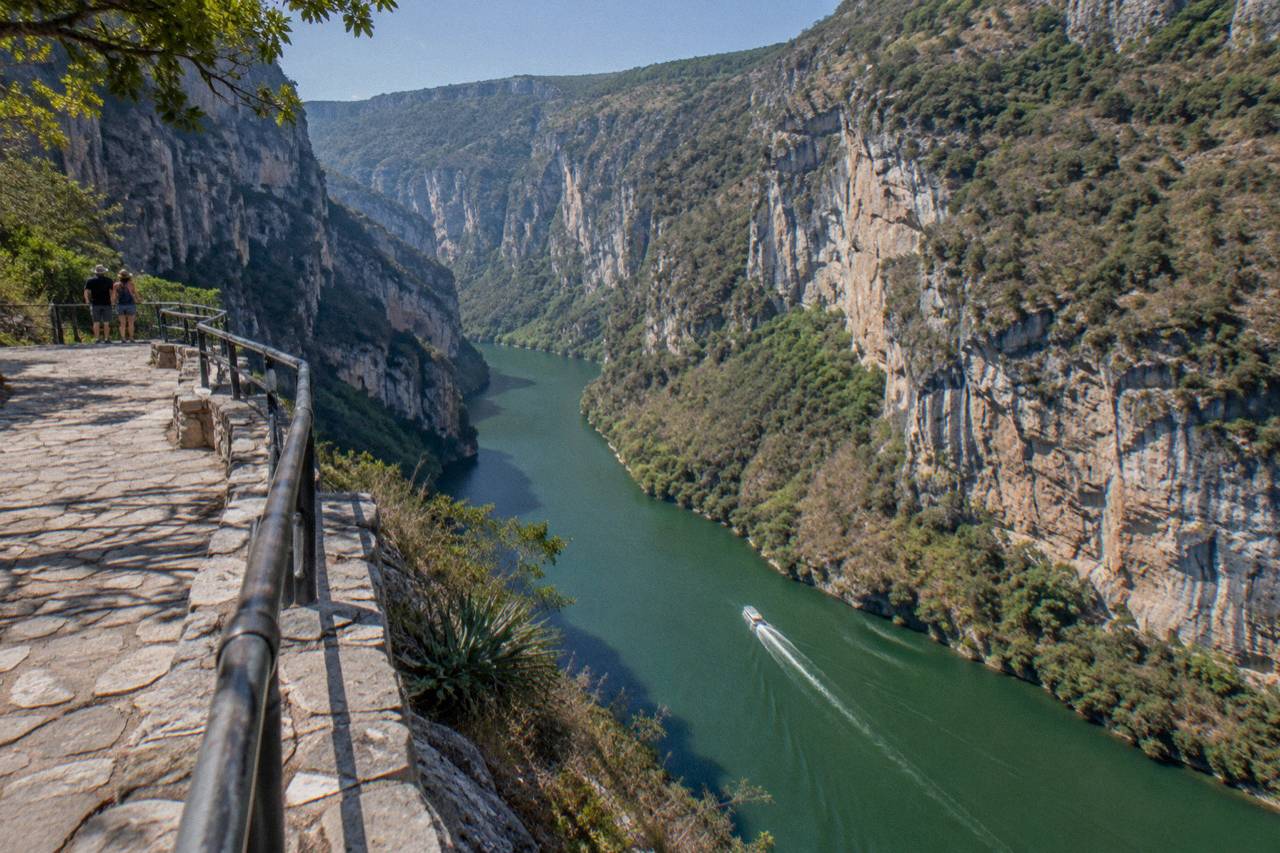
Sumidero Canyon In Rainy Season: Waterfalls, Suspensions And Safety
The rainy season changes Sumidero Canyon more than any other stretch of the Chiapas calendar: the Árbol de Navidad waterfall runs hard, the Grijalva rises and browns, and boat cooperatives occasionally suspend departures outright.
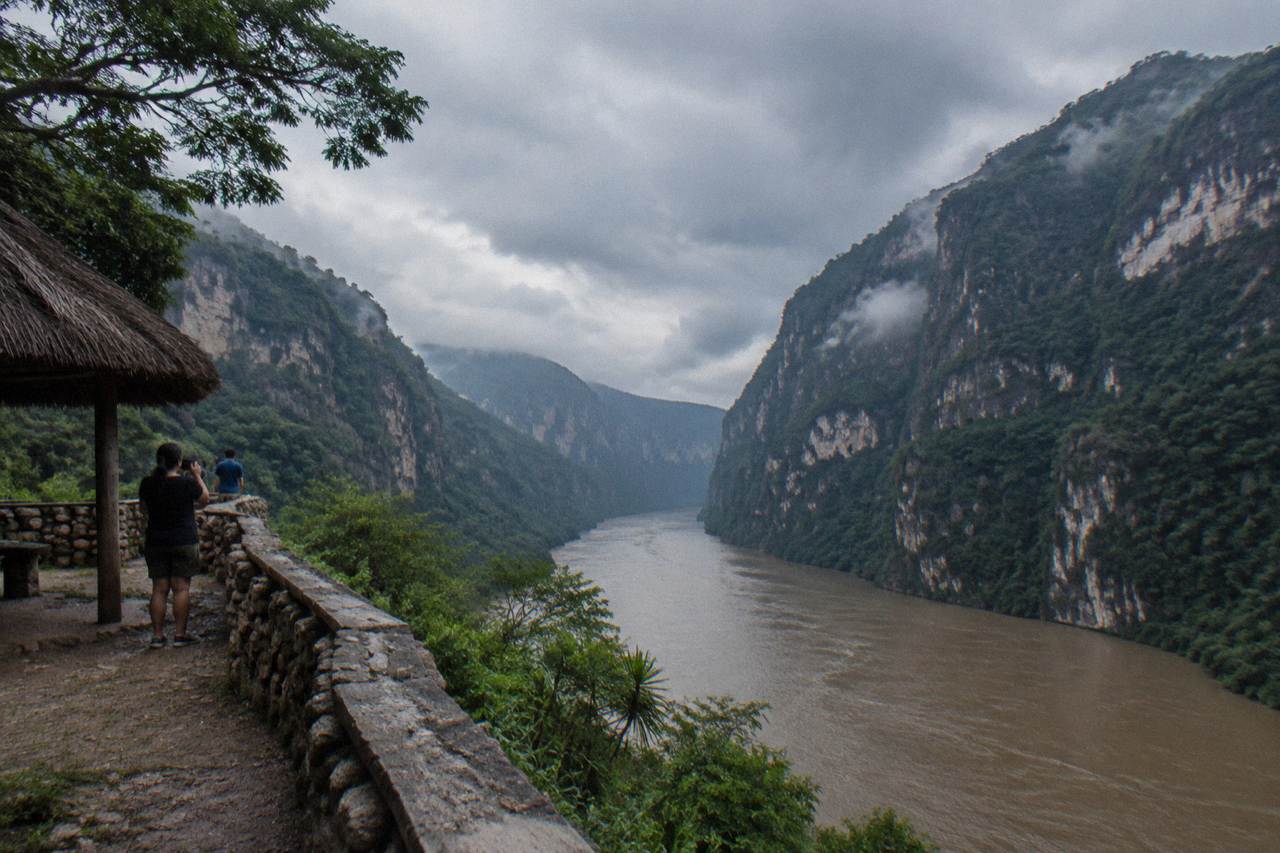
Short answer
The rainy season at Sumidero Canyon runs roughly May to mid-October, peaking in June and September with over 200 mm of rain each month in Tuxtla Gutierrez. Boats run all year, but storm-related suspensions are reported at the embarcaderos, and the miradores road closes every Tuesday. Most listings offer free cancellation.
The Grijalva River does not stop for rain. Between May and mid-October, the official rainy season for this part of Chiapas, the river that carved Sumidero Canyon runs higher and often carries more sediment, the seasonal waterfalls that hang dry on the limestone walls for half the year switch on, and the boat cooperatives at Chiapa de Corzo occasionally suspend departures altogether when conditions on the water look wrong. None of that is a reason to cancel a trip. It is a reason to book the right listing, understand what a storm day does to it, and know exactly what your money back looks like. Whatever the river decides to do on the day you visit, the canyon itself remains the draw, and a quick look at what makes Sumidero's walls, caves, and wildlife remarkable explains why people keep coming back in any season.
The trade is real. A dry-season visit in, say, February typically pairs lower water and clearer views with a canyon that is quieter on the waterfall front. A September visit trades some of that clarity for the Árbol de Navidad waterfall in full flow, greener walls and far fewer fellow visitors. The Jalapeño full day from San Cristobal, the most reviewed listing on these tours with 4.6 from 268 reviews, runs its 8 to 9 hour itinerary in both seasons; the budget OTISA boat day from San Cristobal runs year-round too. What changes is the water, the light and the odds of a weather disruption, and this guide walks through each of those in turn.
What Is The Rainy Season At Sumidero Canyon?
The rainy season in the Sumidero Canyon region runs roughly from May to mid-October, with rainfall peaking in June and September, when Tuxtla Gutierrez records over 200 mm of rain per month against under 3 mm in February. Boats operate all year, so the season changes conditions on the water, not whether the canyon is open. If you're still weighing which month suits your trip, our month-by-month breakdown of the best time to visit Chiapas compares dry and rainy seasons, canyon boat conditions, and the January Fiesta Grande.
Mexico's national weather service places the normal rainy season for this region from May through mid-October, with the heaviest months in June and September. The canyon sits at the edge of Tuxtla Gutierrez, one of the hottest cities in Mexico, and the climate pattern is classic tropical savanna: a long, fiercely dry winter and a summer dominated by afternoon and evening thunderstorms rather than all-day drizzle. A rainy-season day very often still delivers a hot, bright morning. The rain tends to arrive in the afternoon, which is one reason early boat departures are consistently recommended for light, calmer winds and more active wildlife.
Two overlapping hurricane seasons add a layer of risk worth naming: the Atlantic basin season runs from 1 June to 30 November and the Eastern Pacific season from 15 May to 30 November, both according to NOAA. Chiapas sits close enough to both basins that a tropical storm anywhere in the region can push heavy rain inland, raise the Grijalva, and trigger the preventive tour suspensions that local reports describe during the wet months. For a full month-by-month comparison, the best time to visit guide covers the whole year, and the boat ride options guide explains how the seasons affect what a lancha trip actually looks like.
How Much Rain Falls On Sumidero Canyon Each Month?
Tuxtla Gutierrez climate normals show the extremes clearly: February averages just 1.8 mm of rain, while June averages 211.1 mm and September 208.7 mm. May jumps to 88.5 mm, October falls back to 77 mm, and the canyon's shoulder months, April and November, sit at 9.7 mm and 16.7 mm respectively.
The figures below come from the CONAGUA climate normals for the Tuxtla Gutierrez station, covering the 1991 to 2020 period. They are the best available proxy for what falls on the canyon and on the road down from San Cristobal, which matters as much as the river itself when you are planning a day trip.
| Month | Avg max temp | Rainfall (mm) | Rainy days | Season |
|---|---|---|---|---|
| January | 29.5 | 1.0 | 0.8 | Dry |
| February | 31.8 | 1.8 | 0.5 | Dry |
| March | 33.9 | 2.6 | 0.6 | Dry |
| April | 35.9 | 9.7 | 1.9 | Dry |
| May | 35.4 | 88.5 | 9.1 | Rainy begins |
| June | 32.8 | 211.1 | 17.7 | Rainy peak |
| July | 32.4 | 164.5 | 16.6 | Rainy |
| August | 32.4 | 216.6 | 16.7 | Rainy peak |
| September | 31.6 | 208.7 | 18.4 | Rainy peak |
| October | 30.7 | 77.0 | 10.0 | Rainy tails off |
| November | 29.6 | 16.7 | 3.0 | Dry returns |
| December | 29.5 | 2.6 | 1.2 | Dry |
Read the rainy-days column rather than the totals if you are deciding between two wet months. June, August and September each average roughly 17 to 18 days with rain, but that describes days with measurable precipitation, not days washed out. Most of it falls in bursts. The full dataset is published by the national weather service at SMN climate normals for Tuxtla Gutierrez.
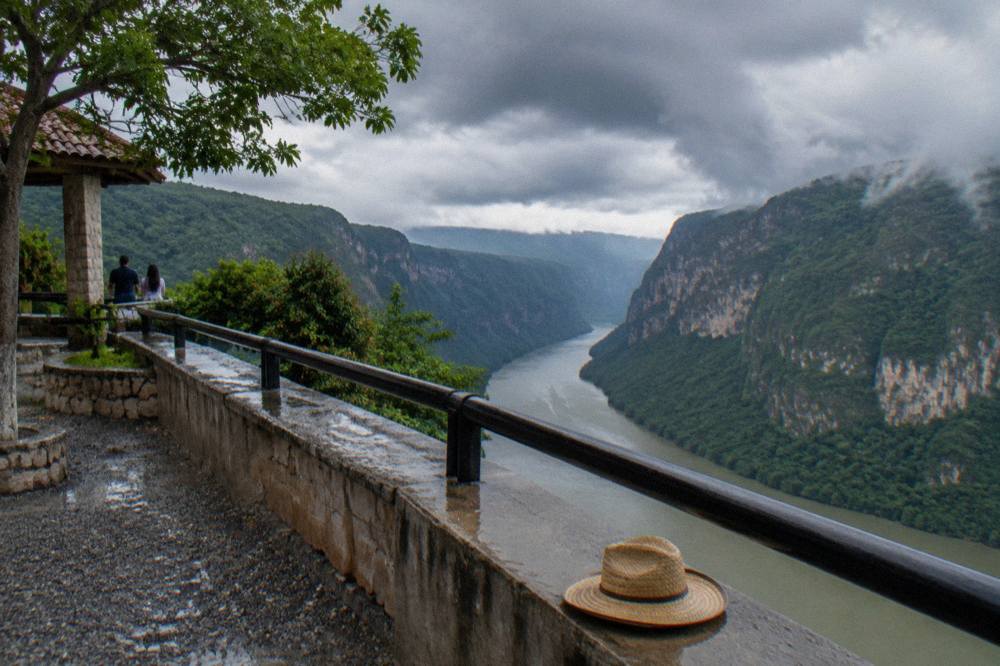
Those numbers translate into two practical planning rules. First, the shoulder edges of the season, early May and especially October, often deliver the best of both worlds: waterfall flow from the preceding rains and a falling number of wet days. Second, if you travel in the peak months, book the earliest departure you can, because an 8:00 start from the embarcadero usually beats the afternoon build-up of thunderheads, and the viewpoints road closes at 17:00 regardless.
That said, a guided day trip removes most of the guesswork, because the operator watches the forecast and the river for you. These are the listings this site would shortlist for a wet-season visit from San Cristobal, from the most reviewed full day to a budget fare and a premium pickup option.
Can The Sumidero Canyon Boat Ride Be Suspended For Weather?
Yes. Rainy-season navigation restrictions and cancellations at the embarcaderos, including Cahuare, are reported in local sources, and boat departures run only when the cooperatives judge the river safe. No closure of the canyon itself was reported in official sources through October 2026, but a storm day can still stop individual trips.
The distinction matters. The national park, officially Parque Nacional Cañón del Sumidero, decreed in December 1980 and covering 21,789.41 hectares according to CONANP, does not shut for rain; the official page lists hours of 8:00 to 17:00, water access every day, and land access to the miradores road Wednesday to Monday, so Tuesdays are the one fixed closure on the calendar. What can stop is your specific boat. The cooperatives that run the lanchas from Chiapa de Corzo set their own operations, and 2025 and 2026 local reports describe rainy-season suspensions and restrictions at Cahuare and other points as a preventive safety measure, alongside official patrols and monitoring at the embarcaderos.
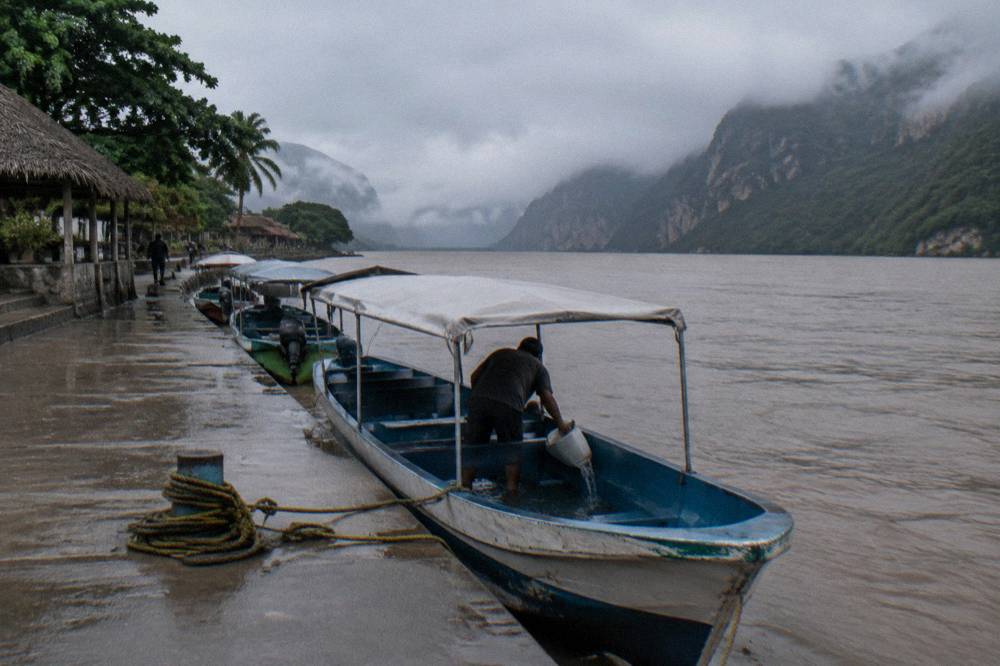
CONANP's visitor regulation applies in every season: stay on trails, do not climb the retaining walls, no alcohol brought in, no smoking, no campfires, do not remove flora or fauna, do not leave the boats, control solid waste, and wear the conservation wristband throughout. CONANP publishes the full regulation on its official page for the park. The boat cooperatives add their own guidance on the water: a mandatory life jacket, hands kept out of the water, no glass containers, no pets and no drones.
For a traveler, the practical response to suspension risk is a cancellable booking, not a different canyon. Every listing discussed in this guide states free cancellation except where noted, so the weather decision stays with you and the operator rather than becoming a lost fare. If the forecast looks threatening, the featured Jalapeño day trip is a sound anchor choice: it states park and entrance fees included, transport by air-conditioned minivan, and a shared boat service in the canyon, and it carries the deepest review pool, 4.6 from 268 reviews, at from $85 per person.
Is The Árbol De Navidad Waterfall Better In The Rains?
Reported descriptions say yes: the Árbol de Navidad waterfall, the moss-covered limestone formation shaped like a Christmas tree on the canyon wall, flows hardest in the rainy season and can soak passing boats, while in the dry months it slows to a trickle. The rock formation itself stays visible year-round, so the wet season adds force, not existence.
This is the single biggest argument for visiting Sumidero Canyon between May and October. The boat route from Chiapa de Corzo to the Chicoasen dam wall and back, about two hours round trip, passes a sequence of named sights: the Belisario Domínguez bridge, Cueva de Colores with its shrine to the Virgen de Guadalupe, the Velo de Novia falls and the Árbol de Navidad. In the dry season, the Árbol de Navidad is a striking mineral-stained shape on the wall. In the rains, water pours down its branches, and reports from travelers describe boats taking spray at close range. Pack a dry bag or a ziplock for phones and cameras if you are going in June through September. More of these guides are collected on Sumidero Canyon Tours.
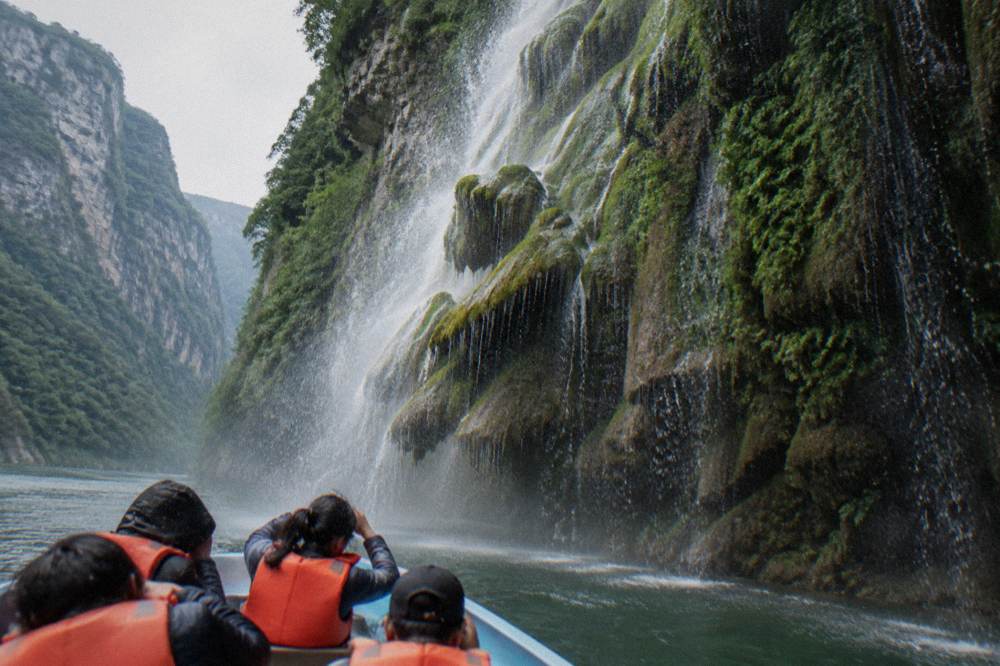
The wider season trade looks like this:
| Factor | Dry season (Nov to Apr) | Rainy season (May to mid-Oct) |
|---|---|---|
| River level and color | Lower, commonly described as clearer green | Higher, more sediment possible |
| Seasonal waterfalls | Reduced to a trickle | At full flow, Árbol de Navidad included |
| Vegetation on the walls | Drier, sparser | Greener, denser |
| Weather risk | Minimal rain | Afternoon storms, possible suspensions |
| Crowds | High season, busiest months | Noticeably thinner |
| Photography light | Stable, predictable | Dramatic clouds, changeable |
Wildlife watching also shifts with the season rather than disappearing. American crocodiles, spider monkeys and birds including herons, cormorants and vultures are all reported along the ride, and no sighting is ever promised in any month. Cooler, overcast wet-season mornings can mean more visible fauna, as several guides note, but that is a tendency, not a guarantee. The wildlife guide covers what you can actually see.
Which Day Trips Run To The Canyon In The Wet Months?
All the major listing types run year-round, including the San Cristobal full days, the Tuxtla pickup tours and the private car day. The practical differences in the rainy season are group size, language, whether hotel pickup is listed, and the cancellation terms, all of which vary listing by listing rather than by season.
There are 31 bookable products, and the wet-weather shortlist below focuses on the ones where the listing details matter most when the forecast is uncertain. A small point on roads: blockades on the Tuxtla to San Cristobal highway were reported in October 2026, so anyone traveling between the two cities in the wet months should build slack into the day and confirm conditions locally; a guided tour with an operator watching the route is one way to hand that problem to someone else.
| Listing | Operator | Price | Rating | Cancellation | Wet-season note |
|---|---|---|---|---|---|
| San Cristobal full day, 8-9 hours | Jalapeño | from $85 per person | 4.6, 268 reviews | Free cancellation | Most reviewed; park fees included |
| Budget fare, 9-hour day trip | OTISA VIAJES | from $46 per person | 4.6, 104 reviews | Free cancellation | Spanish-language service; entrance fees included |
| Premium boat tour, hotel pickup | Selva Azul Chiapas | from $155 per person | 4.6, 136 reviews | Free cancellation | Hotel pickup listed; 90-minute boat, park fee included |
| Tuxtla 9-10 hour views tour | Apasionado x Chiapas | from $53 per person | 4.7, 175 reviews | Free cancellation | Hotel reception and transfer listed |
| 5-hour Tuxtla tour, bilingual | Chiapas Family Tours | from $102 per person | 5.0 from 15 reviews | Free cancellation | Hotel or terminal pickup; bottled water in cooler |
The Apasionado day from Tuxtla Gutierrez deserves a special mention for wet-season travel: it has the highest rating among listings with a large review pool, 4.7 from 175 reviews, it lists reception at your hotel and transfer back, and its itinerary spends a full three hours at the canyon plus two hours at a mirador, which spreads the weather risk across a longer window rather than concentrating it in one departure slot. At from $53 per person with entrance fees included and basic traveler's insurance listed, it is also one of the stronger values on the Tuxtla side. One caution on ratings: the Chiapas Family Tours figure of 5.0 comes from only 15 reviews, a small pool, so treat it as encouraging rather than decisive.
If you are starting in Tuxtla with limited time, the 5-hour Chiapas Family Tours option compresses the same core elements into a half day: a 2-hour shared boat cruise, the park entrance fee, a visit to Chiapa de Corzo, bottled water in a cooler and travel insurance, all listed as included, from $102 per person. A shorter day is not automatically a safer bet in the rains, but it does mean less time on the road if the weather turns.
What Happens To Your Booking If A Storm Hits?
Most listings here state free cancellation, several describing a full refund when you cancel up to 24 hours before departure, so a storm forecast normally costs you nothing if you act in time. If the operator cancels for river conditions, refunds are handled through the listing you booked; check the cancellation line on your specific product before relying on it.
This is where the rainy season becomes a booking question rather than a weather question. The table below quotes the cancellation line per listing, because these terms differ and they are the difference between a free rebook and a lost fare. Note the one listing with cancellation not stated, and treat that gap as a reason to read the live listing carefully before paying.
| Listing | Cancellation as listed | Park fee as listed |
|---|---|---|
| San Cristobal full day (Jalapeño) | Free cancellation | Park/entrance fees included |
| Budget fare 9-hour (OTISA) | Free cancellation | Entrance fees included |
| Premium boat tour (Selva Azul) | Free cancellation | Park fee included |
| Boat ride and viewpoints (Ecoexperiencias) | Not stated | Park fees included |
| Tuxtla 5-hour (Chiapas Family Tours) | Free cancellation | Park entrance included |
| Private car day (Rincones Viajeros) | Free cancellation | Park fee NOT included; boat and reserve paid at the desk |
A practical storm-day sequence looks like this. Watch the forecast from 48 hours out. If a named storm or a solid day of rain is forecast for your travel day, cancel or move the booking inside the free window rather than gambling on the operator doing it for you. On the day itself, if departures are running, go early: the cooperatives' boats generally depart when full through the day, with the last full-trip departure around 14:00, and later trips may run shortened routes. And if the operator cancels before departure, keep every message; the refund path is the booking page, and a documented operator cancellation is the simplest case.
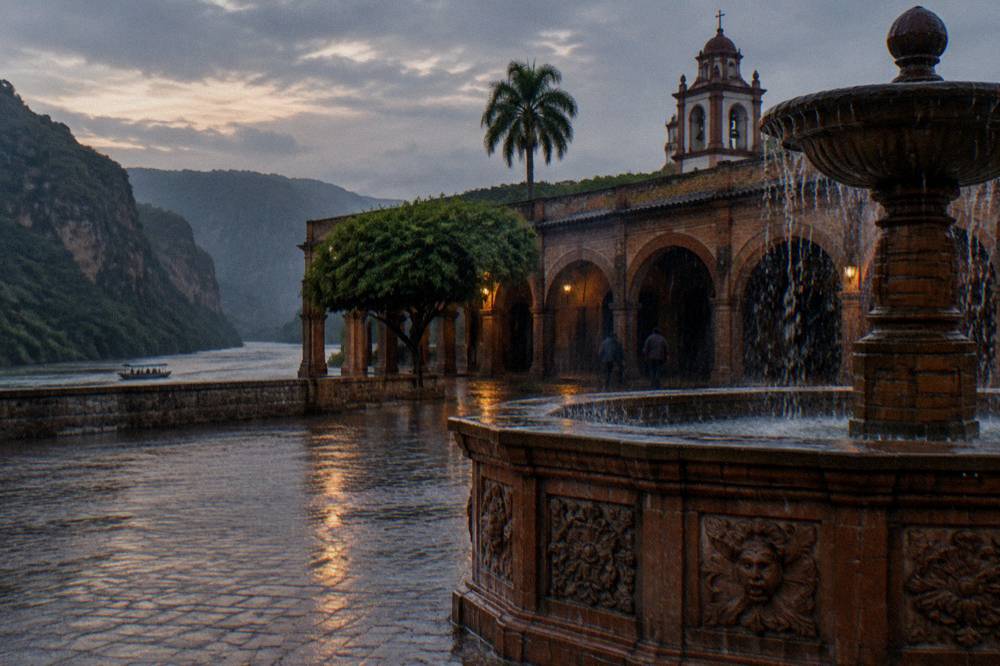
Rain in Chiapa de Corzo itself is rarely a day-killer either, because the town's highlights are compact and partly covered: the 1562 La Pila fountain on the main plaza, the Santo Domingo complex and the Grijalva riverfront are all a short walk from where tour vans park. The what to do in Chiapa de Corzo guide lays out a full spare afternoon, and the free and cheap guide covers the sights that cost nothing at all.
Is The Rainy Season Still Worth It For Sumidero Canyon?
For many travelers, yes. The rainy season pairs the canyon's best waterfall display with green walls, thinner crowds and lower accommodation pressure, at the cost of possible river sediment and a small chance of a suspended departure. If the Árbol de Navidad at full flow is a priority, June through September is the window; if clear water matters more, wait for November to April.
This site's comparison of the seasons keeps landing on the same conclusion: the wet months do not make the canyon worse, they make it different. The walls are commonly cited at over 1,000 meters, with one 2026 source giving about 1,200 meters at the El Roblar viewpoint, and a wall that tall loses nothing to an overcast sky. What overcast costs you in postcard blue, it often returns in moody, dramatic light that photographers actively chase. The chance of a crocodile basking on a sandbar is not a dry-season monopoly.
If you decide the trade is worth it, a listing with hotel pickup and a professional guide removes the most weather-sensitive logistics from your plate. The Ecoexperiencias boat ride and viewpoints day from San Cristobal, from $79 per person with hotel pickup and drop-off, national park fees, a professional guide and boat transport all listed as included, is built exactly for that: you step out of your lobby, and someone else watches the river. You can also see the full San Cristobal day trip options for the complete field.
One last reassurance that is grounded rather than cheerful: no park or boat closures were reported in official sources through October 2026, the embarcaderos have had official security patrols since at least 2025, and the cleaning operations on the Grijalva are continuous, with over 2,393 tons of floating waste removed in 2026. The rains are managed here, not ignored. Book early departures, keep the cancellation window open, bring a rain layer, and the wet season becomes an advantage: a louder, greener, quieter canyon than the one the February crowds get.
Common Questions About The Rainy Season At Sumidero Canyon
What Is The Rainy Season At Sumidero Canyon?
The rainy season runs roughly May to mid-October in this part of Chiapas, with rainfall peaking in June and September at over 200 mm per month in Tuxtla Gutierrez. Boats run all year; the season changes conditions, not opening hours.
Can The Sumidero Canyon Boat Ride Be Cancelled For Rain?
Yes. Rainy-season navigation restrictions and suspensions at the embarcaderos, including Cahuare, are reported in local sources. No canyon-wide closure was reported through October 2026, but individual departures can be stopped for river conditions.
Is The Árbol De Navidad Waterfall Flowing In The Rainy Season?
Reported descriptions say it flows hardest from May to October and can soak passing boats, while in the dry season it reduces to a trickle. The moss-covered limestone formation itself stays visible all year.
What Is The Rainiest Month At Sumidero Canyon?
By Tuxtla Gutierrez climate normals, August averages 216.6 mm of rain, June 211.1 mm and September 208.7 mm, making those the three wettest months. February, at 1.8 mm, is the driest.
Do I Lose My Money If A Storm Cancels My Sumidero Canyon Tour?
Most listings here state free cancellation, several describing a full refund up to 24 hours before departure. Check the cancellation line on your specific listing; two San Cristobal listings do not state free cancellation.
Is The Miradores Road Open In The Rainy Season?
Yes, with one fixed exception: land access to the viewpoints runs Wednesday to Monday, 8:00 to 17:00, and the road is closed every Tuesday in every season. The same 125 MXN park fee applies.