What Is The Best Month To Visit Chiapas?
Dry season versus rainy season in Chiapas, month by month, with Tuxtla climate normals, canyon boat conditions, hurricane season dates and the January Fiesta Grande.
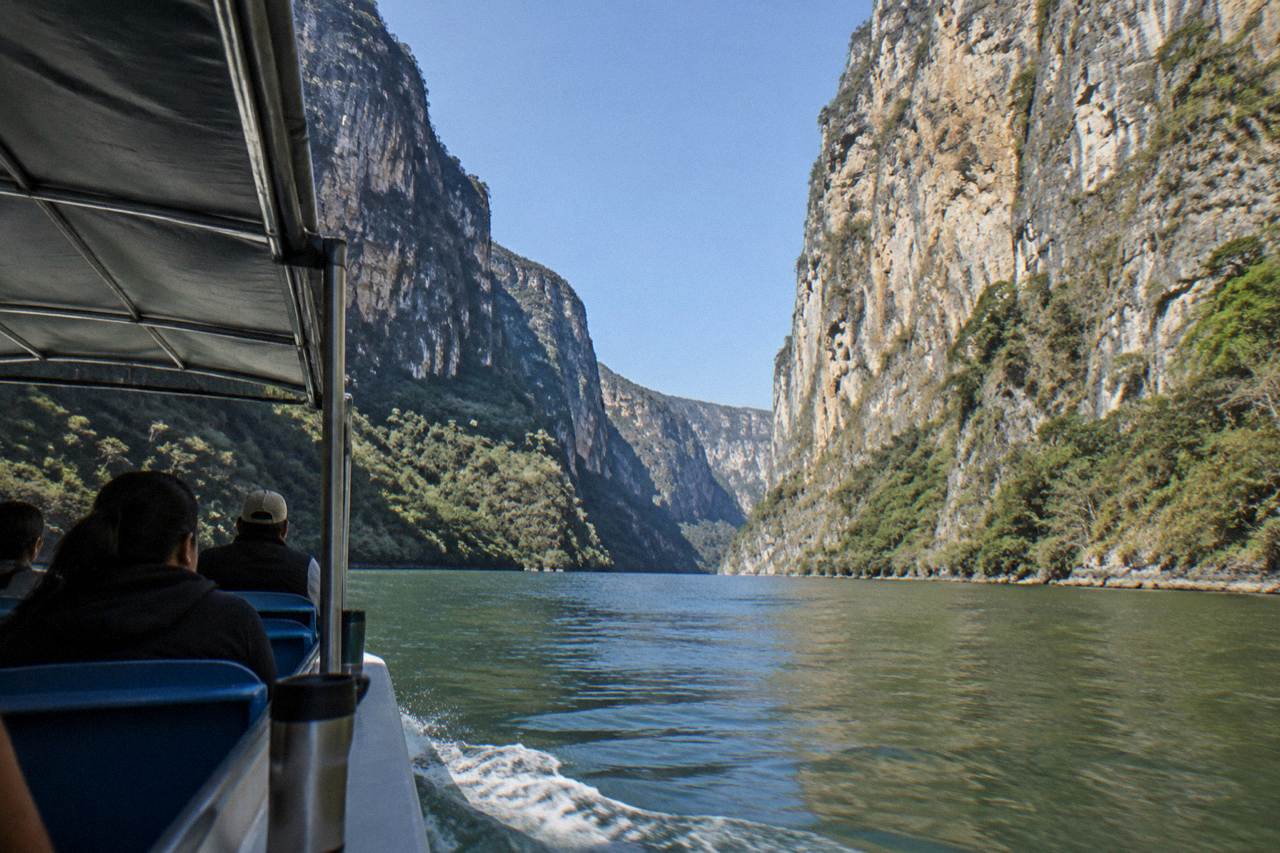
The best months to visit Chiapas are November through April, the dry season, when Tuxtla Gutierrez averages about 1.0 to 16.7 mm of rain per month and canyon boats run on calm, clear water. May to mid October is the rainy season, peaking in June and September with over 200 mm each. January adds the Fiesta Grande in Chiapa de Corzo, which changes the calculus entirely.
Every month of the year has a working canyon boat schedule, so there is no month when the region simply shuts down. What changes is the texture of the trip: the color of the river, the force of the waterfalls, the heat in Tuxtla, the chill in San Cristobal, and the odds that an afternoon downpour rewrites your plans. The choice of month is really a choice between two versions of the same landscape.
One distinction that surprises first-time visitors is that Chiapas is not one climate. Tuxtla Gutierrez, the canyon and Chiapa de Corzo sit at around 543 meters of elevation in a hot tropical savanna, while San Cristobal de las Casas, where most travelers base themselves, sits more than a thousand meters higher in the highlands and runs noticeably cooler in every month. A January day can mean a jacket at breakfast in San Cristobal and sunburn on the canyon floor by noon. Packing for both registers, layers, sun protection and rain gear in the wet half of the year, matters more than picking the perfect month.
The most reviewed listing on this site, the Jalapeño full day from San Cristobal that covers the canyon, the viewpoints and Chiapa de Corzo, departs year round, from $85 per person with the park fee stated as included. Readers weighing a date can also compare it against the Tuxtla pickup day with viewpoints and the hotel-pickup boat ride from San Cristobal; both run in every season. Timing matters, but the listing you pick matters just as much, and the best time to visit the canyon guide breaks the season question down further for the boat ride specifically.
This article walks the calendar month by month, using the official CONAGUA climate normals for the Tuxtla Gutierrez station (1991 to 2020), the federal hurricane season dates, and the January festival calendar, so you can match a month to what you actually want from Chiapas.
Which Months Are Dry Season In Chiapas?
Dry season runs November through April. In those six months the Tuxtla Gutierrez station records between 1.0 and 16.7 mm of rain per month, against up to 216.6 mm in the rainy season. March and April are the hottest stretch, with normal daily maxima of 33.9 and 35.9 degrees. November and December combine low rain with milder heat, near 29.5 degrees.
The dry months are the classic recommendation, and the numbers behind it are stark. Tuxtla in January averages 1 mm of rain across the whole month. February adds 1.8, March 2.6, December 2.6. Even April, technically still dry, only climbs to 9.7 mm. Then the tap opens: May jumps to 88.5 mm, and the three true wet monsters of the calendar are June at 211.1, August at 216.6 and September at 208.7, per the CONAGUA climate normals for the Tuxtla Gutierrez station.
| Month | Normal daily max (C) | Rainfall (mm) | Rain days | Season read |
|---|---|---|---|---|
| January | 29.5 | 1.0 | 0.8 | Peak dry, festival month |
| February | 31.8 | 1.8 | 0.5 | Dry, warming |
| March | 33.9 | 2.6 | 0.6 | Dry, hot, hazy horizon |
| April | 35.9 | 9.7 | 1.9 | Hottest month, first showers |
| May | 35.4 | 88.5 | 9.1 | Rains begin |
| June | 32.8 | 211.1 | 17.7 | Wet peak |
| July | 32.4 | 164.5 | 16.6 | Wet |
| August | 32.4 | 216.6 | 16.7 | Wet peak |
| September | 31.6 | 208.7 | 18.4 | Wet peak, hurricane overlap |
| October | 30.7 | 77.0 | 10.0 | Rains tapering |
| November | 29.6 | 16.7 | 3.0 | Dry returns |
| December | 29.5 | 2.6 | 1.2 | Peak dry |
For the canyon, dry season means the Grijalva commonly runs lower and clearer, with the emerald green water that photographs so well, and navigation is at its most predictable. The trade-off is dust and haze: March and April skies can soften the long views from the miradores above the canyon. If your priority is a stable, low-risk schedule with children or a tight itinerary, a dry month is the safe pick, and the park's own rules of access, 8:00 to 17:00 with the miradores road closed on Tuesdays, hold all year per the official CONANP page.
Within the dry half of the year the months are not interchangeable. November and December are the gentlest: maxima near 29.5 degrees, about four rain days between them, and the landscape still carries some green from the departing rains. February is nearly as dry but a couple of degrees warmer. March and April are the months heat-sensitive travelers should question, because a canyon boat at midday under a 34 or 36 degree sky, with the limestone walls radiating back at you, is a different experience from the same ride in December. If April is your only window, favor listings with early departures and a longer Chiapa de Corzo stop in the shade of the plaza.
High season follows the dry months, so December through March also carries the thinnest availability and the fullest boats. The cooperative lanchas at Chiapa de Corzo leave when full, typically across an 8:00 to 16:00 window, and in peak weeks that means more strangers per boat and longer queues at the ticket desk. Travelers who want quiet walls should look at late October, before the dry-season crowds.
What Is The Rainy Season Like Around The Canyon?
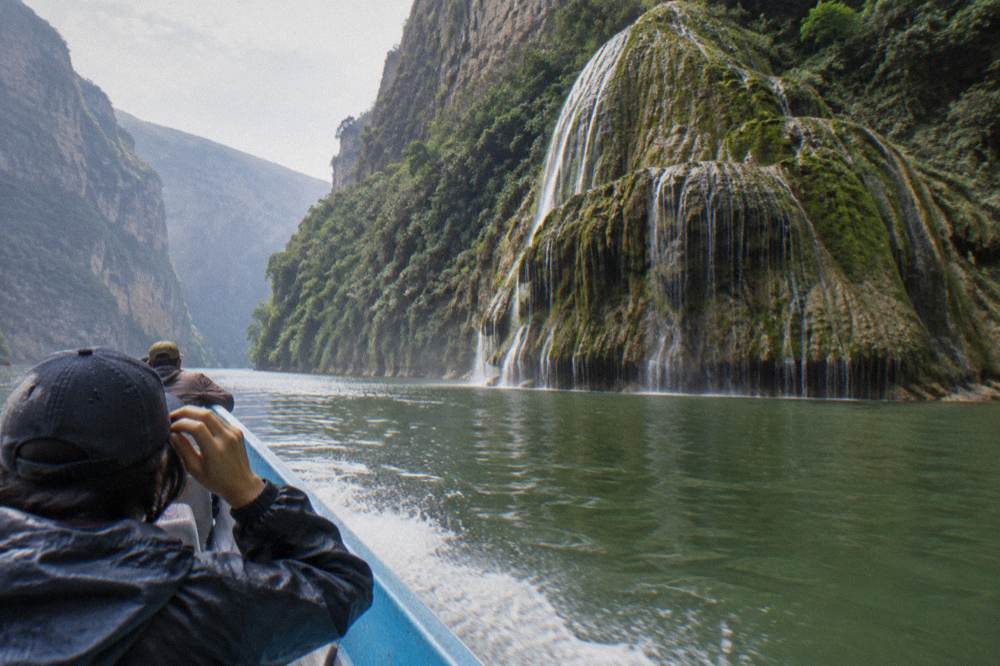
Rainy season runs May to mid October and peaks in June and September. In exchange for 17 or 18 rain days a month, the canyon walls carry seasonal waterfalls, the vegetation goes deep green and the river runs higher. Boat trips continue through the season, with rainy-season navigation restrictions reported at the embarcaderos when conditions demand, so build a spare morning into your plans.
The rains are not an all-day affair in most weeks. The typical pattern is a hot, bright morning followed by heavy afternoon convective downpours, which is why local advice for the boat ride favors early starts: the light on the walls is better, the wind is lower and the wildlife is more active before mid morning. A trip booked for 8:00 will usually beat the weather that a 14:00 departure races against.
The seasonal trade is real. In the rains, the Árbol de Navidad waterfall, the moss-draped limestone formation shaped like a Christmas tree that is one of the signature stops on the two-hour route to the Chicoasen dam wall, can soak boats that pass close, and in the dry months it can reduce to a trickle while the structure itself stays visible. Wildlife does not follow a timetable we can promise: crocodiles, spider monkeys, herons, cormorants, pelicans and vultures are reported along the ride in both seasons, and no sighting is ever assured. October 2026 did add one hard fact to the ledger, when Profepa released 13 rescued river crocodiles into the park.
There is a second, less advertised side to the wet months: the rainy season is low season, so crowds are thinner. The river runs higher and can carry more sediment after heavy rain, so the famous emerald color comes and goes with the week's weather rather than the month's reputation. Travelers who arrive expecting muddy water in September sometimes find it glassy and green; the reverse also happens. Wet-season water color is a lottery drawn weekly, while dry-season clarity is close to a given.
If you travel in the wet months, the Apasionado x Chiapas day from Tuxtla, with viewpoints and Chiapa de Corzo, 4.7 from 175 reviews and from $53 per person, is a good wet-season shape: a long canyon stop, flexible time in town and hotel reception, so a passing shower costs you a coffee stop rather than the day.
The budget boat day with viewpoints from Selva Azul, from $40 per person, runs the same all-year logic for travelers based in San Cristobal who accept a shared Spanish-language outing in exchange for the lowest shared price among these tours. Its listing states park entrance fees and travel insurance are included, and it carries free cancellation, which is the clause that makes a green-season booking low-risk. In the wet months that clause is not fine print; it is the difference between rescheduling a stormy Tuesday and losing the day entirely.
One road note belongs in any wet-season paragraph. The Tuxtla to San Cristobal highway was modernized with a completed widening of a 29.2 km section reported around December 2025, but CNTE blockades on the route were reported repeatedly in October 2026, with temporary full and partial closures. These are political weather, not monsoon weather, and they can strike in any month, but they matter most when rain already has traffic slow. A day trip with a professional driver who monitors the route beats a self-driven rental in both seasons.
When Is Hurricane Season In Chiapas?
Atlantic hurricane season runs 1 June to 30 November and the Eastern Pacific season runs 15 May to 30 November, per NOAA. Chiapas sits between both basins. Direct strikes on Tuxtla are rare, but tropical systems can dump heavy rain inland, raise the Grijalva and trigger preventive tour suspensions at the embarcaderos. September carries the most overlap.
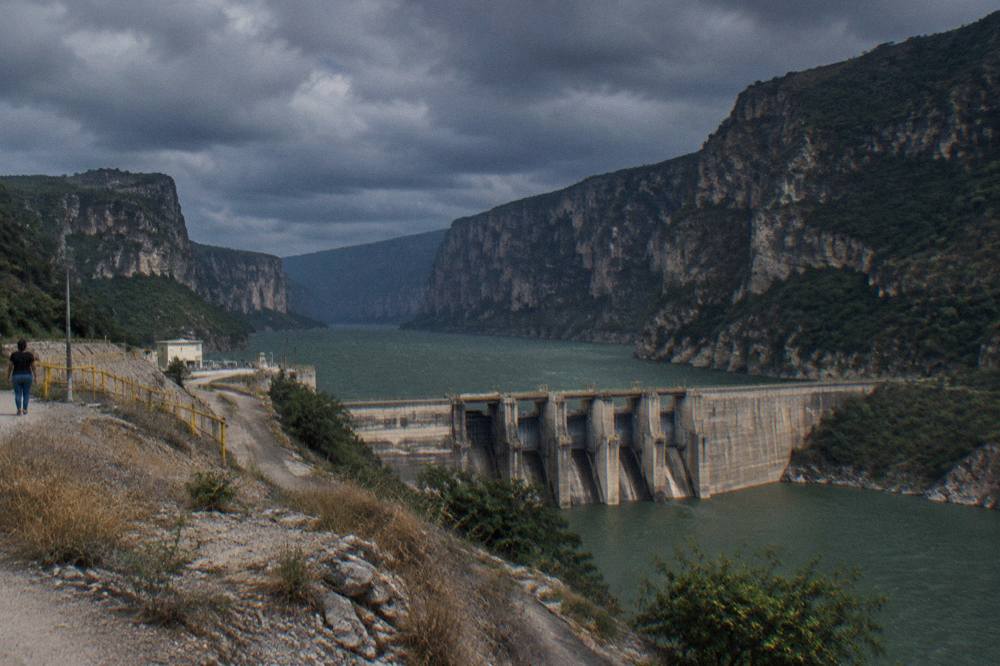
The practical reading of those dates is simple. A June or September trip is not a canceled trip; it is a trip with a weather wildcard, and the rainy-season peaks in the climate normals land in exactly those months. The Chicoasen dam was reported at 99 percent capacity in mid October 2026 with authorities monitoring rains, a reminder that the whole river system is managed, actively dredged and continuously cleared of floating debris, with over 2,393 tons of solid waste removed from the canyon and reservoir system in 2026 as of early October.
Travel insurance and a free-cancellation listing are the two hedges that matter in these months. Most tours on this site, including the Jalapeño full day and the EcoExperiencias national park day, carry free cancellation; one San Cristobal boat-and-viewpoints listing does not state it, so check the operator's live listing before booking a wet-season date. The deeper dive on traveling in the green months is in the canyon in rainy season guide.
It helps to separate the two fears that hurricane dates create. The first, a direct storm strike on Tuxtla, is genuinely rare for this inland-corner geography, though the Pacific coast of Chiapas does take tropical storms; the basin dates are continental, not local. The second, a wet week caused by a distant system in the Pacific or the Gulf, is common enough in September and worth planning around, and it shows up as a swollen river, a suspended afternoon departure or a muddy trail at the miradores, not as danger. The embarcaderos run official patrols with real-time monitoring for rescue and first aid, and the cooperatives do not launch when conditions are judged unsafe, which is the system working as designed. Build one buffer morning into any wet-season itinerary and the wildcard mostly dissolves.
What Makes January Special In Chiapas?
January is peak dry season and festival season at once. The Fiesta Grande de Enero in Chiapa de Corzo ran 4 to 23 January in 2026, with the Parachicos masked dances on multiple dated days, a naval battle on 21 January and concerts through the fortnight. Rain averages 1 mm. Hotels fill early, and every tour day trip lands you beside the party.
The Parachicos tradition, the masked dancers honored as part of Chiapa de Corzo's January festival, is one of the most distinctive cultural events in southern Mexico, and it turns the quiet colonial town at the canyon's mouth into the center of regional attention. The 2026 calendar listed Parachicos processions on 4, 15, 17, 18, 20, 22 and 23 January, with the combat naval on the 21st. If your month-flexible plan can land in January, you get the driest weather on the chart and the biggest festival in the state in the same week.
The catch is capacity. Tour vans still run, but Chiapa de Corzo's free time windows in itineraries, typically 30 to 100 minutes depending on the listing, get livelier, and accommodation in both San Cristobal and Chiapa de Corzo books out around the key dates. Book the canyon day early in your stay rather than on your departure day, so a festival-logistics delay does not cost you the ride. The full festival calendar and what to expect street-level is in the Fiesta Grande and Parachicos guide.
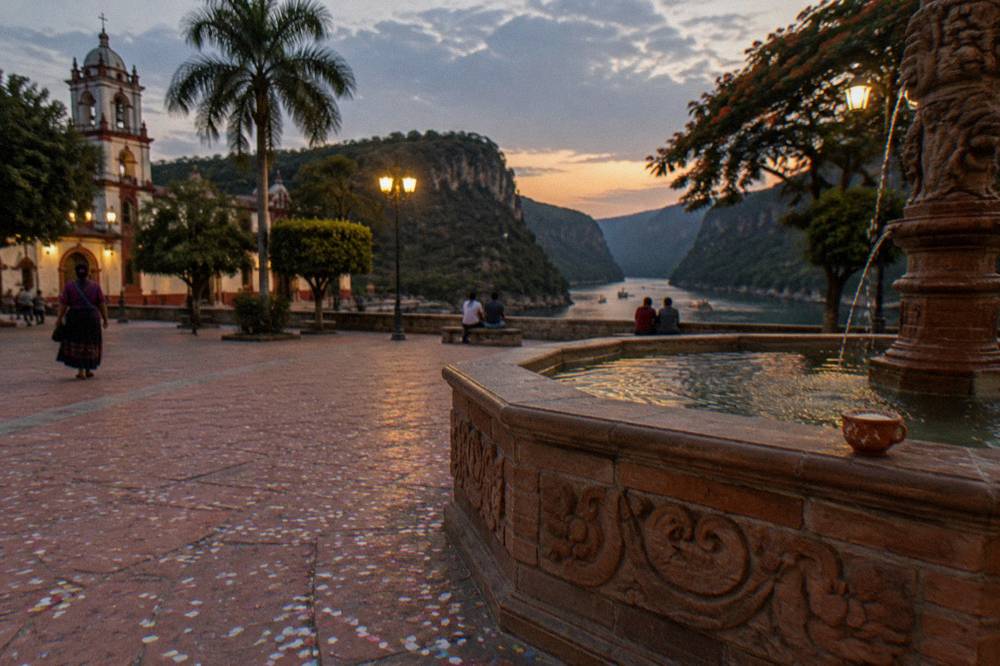
January travelers should also think about what they want from the canyon on a festival day. The plaza is full of music, drummers and families, which is either the highlight of the trip or a crowded distraction depending on temperament. A workable compromise many itineraries allow: take the boat ride and the viewpoints in the morning with your tour group, then use the Chiapa de Corzo free-time block to watch the Parachicos pass rather than to eat lunch quietly. The rain chart, one rain day in the whole month, means you will not be negotiating with the sky.
How Does Your Month Change The Canyon Boat Ride?
The boat ride itself runs year round from the Chiapa de Corzo embarcadero to the Chicoasen dam wall and back, about two hours round trip. Dry months bring clearer water and calmer scheduling; rainy months bring fuller waterfalls, greener walls and a small chance of weather-driven restrictions. The 125 MXN park fee and the cooperative boat fares, 460 MXN for foreign visitors in 2026, apply in every month.
That last point is worth underlining because seasonality questions often carry a pricing assumption. The cooperative fares are set by the boat cooperatives, not by CONANP, and the 2026 tariffs, 460 MXN foreign visitors, 400 MXN Mexican nationals, 340 MXN older adults with INAPAM credential and children, 290 MXN children under 2, do not change with the season. The separate 125 MXN CONANP entry fee, with discounts for students, teachers, Mexican nationals and foreign residents, likewise holds all year. Guided listings that state the park fee is included bundle it into their price in every month equally.
| Factor | Dry season (Nov to Apr) | Rainy season (May to mid Oct) |
|---|---|---|
| Monthly rainfall, Tuxtla normals | 1.0 to 16.7 mm | 77 to 216.6 mm |
| River character | Commonly lower and clearer | Higher flow, more sediment possible |
| Waterfalls | Reduced to a trickle possible | Fuller, seasonal falls on the walls |
| Scheduling risk | Low | Navigation restrictions reported at times |
| Heat | Mild Nov to Jan, hot Mar to Apr | Hot with humid afternoons |
| Crowds | High season, busiest dry months | Thinner, outside January festivals |
The month also changes the day-trip arithmetic. A dry-season booking with the Ecoexperiencias boat ride and viewpoints from San Cristobal, from $79 per person with hotel pickup and a professional guide listed, behaves predictably. The same listing in September might still run perfectly, but a traveler with only one full day in Chiapas should keep a fallback morning, or pick a listing with free cancellation stated.
Photography-minded readers should weigh one more seasonal wrinkle: light. Morning sun rakes across the eastern walls in every month, but in the wet season the air is often washed clean by the previous afternoon's rain, and cloud banks drifting through the upper canyon can give the walls a dramatic depth the dry haze flattens. Drone flights are prohibited in the park in all seasons, so the shot has to be earned from the boat rail or the miradores, and early departures serve both light and weather.
Which Month Suits Which Kind Of Trip?
For photography and stable logistics, book November to January. For festivals, January. For heat tolerance testing, avoid April. For waterfalls and green walls at the lowest crowds, June to September with a buffer day. For shoulder-season balance, late October into early November, when rainfall drops from 77 mm to 16.7 mm and the landscape is still green.
Families with small children and anyone with mobility constraints should weight toward the dry months, when surfaces are drier, the heat of April is absent and schedules hold, and the canyon with kids guide applies in every season. Budget travelers find the lowest shared fares, from $40 per person on the Selva Azul day, in any month, but rainy-season availability of the private car day from Tuxtla, which starts from $28 per person, with the boat ticket (about 400 to 550 MXN) and miradores admission paid at the desk, is easier to secure at short notice when demand thins.
Longer plans bend the answer too. The multi-day Chiapas packages, such as the 3-day, 2-night circuit from $567 per person for the package, cross the mountains to Montebello and the indigenous communities, and those roads are more pleasant in the dry months. A 9 to 10 hour day in a van is simply a better experience outside June and August. Whatever month you settle on, the comparison of departure cities and formats on Sumidero Canyon Tours maps each listing to the season question, and the featured Jalapeño full day remains the benchmark day trip against which to test any alternative.
The answer is that the best month is partly a question of temperament. Travelers who need their itinerary to run to the minute should take November, December, January or February and accept the crowds. Travelers who can trade certainty for green walls, empty viewpoints and full waterfalls should take June, August or September, book a listing with free cancellation, and hold a spare morning. The canyon is roughly 30 to 33 km long with walls commonly cited above 1,000 meters in every single month, and the two-hour ride to the dam wall and back runs through all of them.
Common Questions About The Best Month To Visit Chiapas
Which Months Have The Driest Weather In Chiapas?
November through April, the dry season, is the best window for most travelers: Tuxtla records between 1.0 and 16.7 mm of monthly rain, boats run on calm water and schedules hold. January adds the Fiesta Grande in Chiapa de Corzo. June and September suit travelers who want green walls and full waterfalls and can absorb a weather buffer.
Is Chiapas Too Rainy In Summer?
June, August and September each average over 200 mm of rain in the Tuxtla normals, but rain typically falls in heavy afternoon bursts rather than all day. Morning boat departures usually beat the weather. Navigation restrictions at the embarcaderos are reported when conditions require, so keep a spare morning.
Do The Canyon Boats Run In The Rainy Season?
Yes. Boats run all year from the Chiapa de Corzo embarcadero to the Chicoasen dam wall and back, about two hours round trip. The cooperatives depart through the day, with park hours 8:00 to 17:00 daily by water.
When Is Hurricane Season In Chiapas?
The Atlantic season runs 1 June to 30 November and the Eastern Pacific season 15 May to 30 November, per NOAA. Direct impacts on Tuxtla are rare, but tropical systems can bring heavy inland rain and occasional preventive tour suspensions.
What Is The Hottest Month In Chiapas?
April, with a normal daily maximum of 35.9 degrees Celsius in Tuxtla Gutierrez, ahead of May at 35.4. The canyon floor is hotter and more humid than San Cristobal in the highlands, which stays noticeably cooler year round.
Does The Park Fee Change By Season?
No. The CONANP entry fee is 125 MXN per person per day in every month, and the 2026 cooperative boat fares, 460 MXN for foreign visitors, apply year round. Fares are set by the cooperatives and can change without notice, so confirm at the dock.