Is Chiapas, Mexico Worth Visiting?
A verdict on Chiapas as a travel destination, with the Sumidero Canyon boat day as its easiest highlight, plus safety context, costs and tour options.
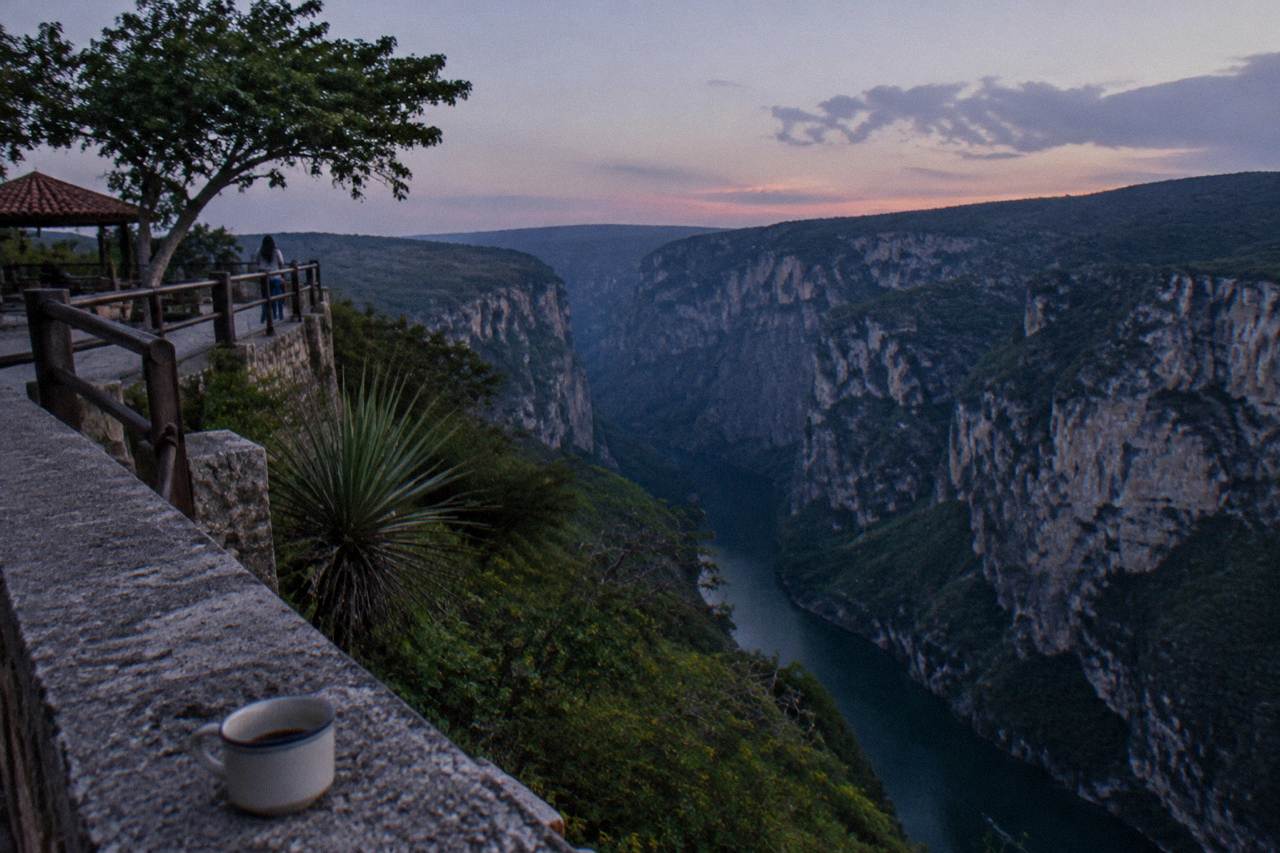
Most travelers who ask whether Chiapas is worth the trip are really asking three smaller questions: is there enough to see, is it safe, and is the logistics burden worth absorbing for a region that gets a fraction of the attention of Oaxaca or the Yucatan. The short answers are yes, mostly with caveats worth reading, and yes, because one single day trip, the Sumidero Canyon boat ride, delivers a landscape on the scale of a national-park headline act without requiring anything more of you than showing up at a meeting point in San Cristobal or Tuxtla. If you're weighing that boat ride for your own itinerary, the full verdict on the Sumidero Canyon boat ride covers what it actually delivers, what it costs in pesos, and who should skip it.
This article gives the verdict the way a friend who knows the region would: what the state actually offers, what the official safety guidance says, what a realistic budget looks like using real listed tour prices, and which specific trips do the heavy lifting for a first visit.
Yes, for the large majority of travelers who reach it, Chiapas earns the journey: the state packs a 1,000-meter canyon, colonial towns, indigenous communities, waterfalls and Maya ruins into a compact, inexpensive region, and its easiest highlight, the Sumidero Canyon boat day, runs from $40 per person on the budget end. The caveat is the US State Department advisory, which places Chiapas at Level 3, so the trip rewards preparation.
That verdict is not hype. The canyon itself is the anchor: a national park decreed on 8 December 1980, covering 21,789.41 hectares per the CONANP registry, with limestone walls commonly cited above 1,000 meters, and one 2026 source giving roughly 1,200 meters at the El Roblar viewpoint. The navigable section of the Grijalva River runs about 30 to 33 kilometers from the Chiapa de Corzo area up to the Chicoasén dam wall, and the shared boat ride that covers it takes about two hours round trip. Very few places in the country hand you a landscape of that scale for a day-trip price. That scale naturally raises the question of where these walls rank nationally, and how Sumidero compares to Mexico's deepest canyon gives a clear answer.
Around the canyon sits everything else that makes the state work as a destination: San Cristobal de las Casas, a highland colonial town of walking streets and markets; Chiapa de Corzo, a small riverside town with a 1562 mudéjar fountain that is unique in the Americas; the indigenous communities of San Juan Chamula and Zinacantán; the waterfalls and lakes of Chiflón and Montebello; and, further north, the Maya ruins of Palenque. A visitor can see the canyon, one town and one community in two full days, or spend a week and still leave things undone.
The cost argument is unusually strong. Budget shared day trips from San Cristobal to the canyon start at $40 per person, the cheapest full days on this site sit in the $45 to $56 range, and even the premium small-group options stay under the top listed price of $155. Set that against what equivalent days cost in more heavily touristed parts of Mexico and the value case makes itself. Natural starting points include the most reviewed San Cristobal day, a multi-day package for anyone converting the whole state into one booking, and the top-rated Tuxtla departure.
If you are weighing the state as a whole rather than just the canyon, two companion pieces on this site go deeper on each half of the question: the safety picture in detail is covered in is it safe to go to Chiapas right now, and the pacing question, how many days the state deserves, is answered in how many days do I need in Chiapas.
Why Is The Sumidero Canyon Day The Easiest Highlight?
The canyon day is Chiapas at its lowest effort and highest return: a bookable trip from either San Cristobal or Tuxtla handles transport, boat and park paperwork in one transaction, the ride itself is about two hours on the water past walls, caves and seasonal waterfalls, and prices run from $40 per person on the cheapest shared listing up to $155 on the premium hotel-pickup boat tour. Wildlife is possible but never promised.
The reason this day works for almost everyone is that the friction is removed. Getting to the canyon independently means a colectivo or taxi to an embarcadero, paying the 125 MXN CONANP park fee separately from the cooperative boat fare, and joining a shared lancha that leaves when full. A booked day trip collapses all of that: the listing states what is included, most state the park fee is included, and the bus does the driving on a road that takes about an hour from San Cristobal to the docks.
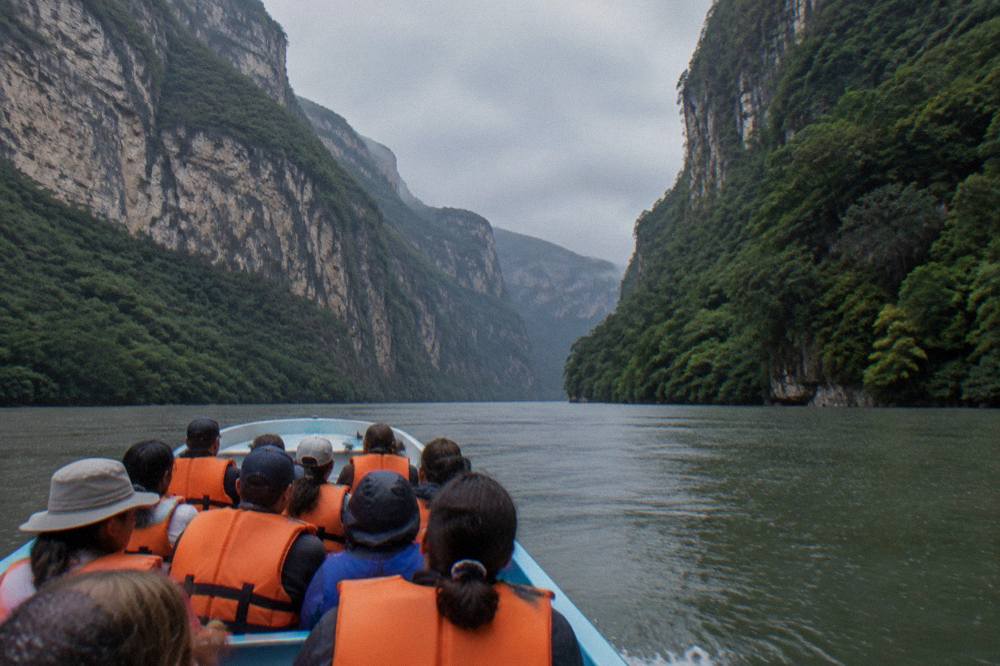
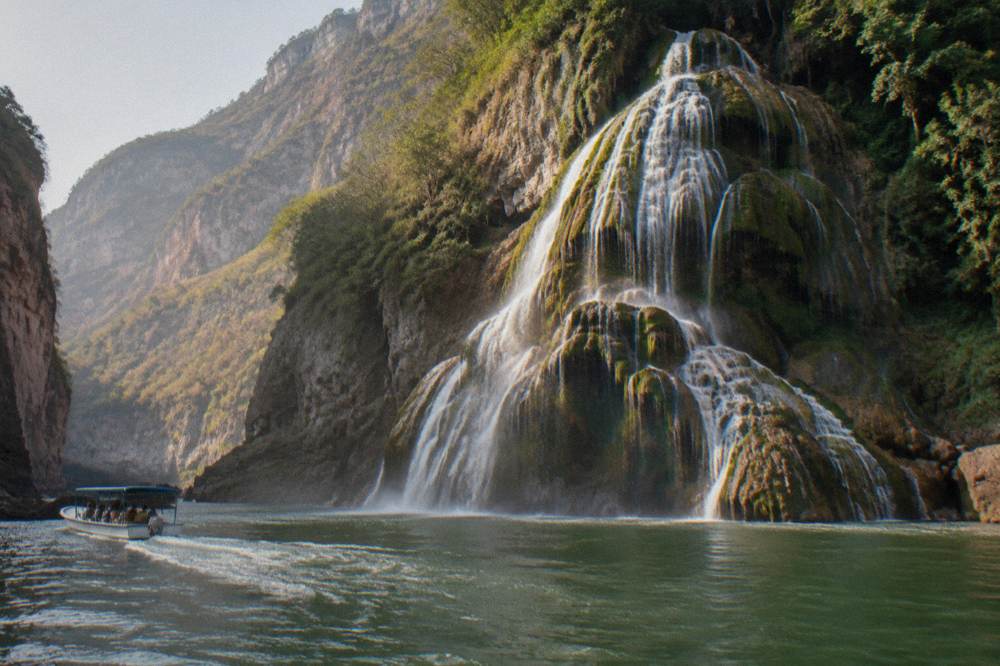
What you actually get on the water is consistent across listings because the route is fixed: up the Grijalva from the Chiapa de Corzo embarcadero to the Chicoasén dam wall and back, passing named sights that include the Belisario Domínguez bridge, Cueva de Colores with its shrine to the Virgen de Guadalupe, the Velo de Novia and Árbol de Navidad waterfalls, and a river bend shaped like the Chiapas coat of arms. American crocodiles, spider monkeys and birds including herons, cormorants and vultures are reported along the ride, and sightings cannot be promised. In October 2026 Profepa released 13 rescued river crocodiles into the park, which tells you the population is real and actively managed.
Most listings bolt on the two things that fill a day well: a stop in Chiapa de Corzo, usually 40 minutes to an hour and a half of free time, and a drive along the miradores road above the canyon. That road, and its five viewpoints from La Ceiba to El Tepehuaje, is open Wednesday to Monday and closed Tuesdays, a scheduling detail that matters when you pick your day. The visitor rules on the water are firm and worth knowing in advance: life jacket mandatory, hands out of the water, no glass, no pets, no drones, and do not leave the boats.
The featured trip on this site for first-time visitors is the Jalapeño full day from San Cristobal, formally listed as the San Cristóbal: Canyon, Viewpoints & Chiapa de Corzo Tour. It runs 8 to 9 hours, is rated 4.6 from 268 reviews, the most reviewed trip on this site, and costs from $85 per person with entrance fees, national park fees, air-conditioned minivan transport and the shared boat service included. It is the closest thing to a default canyon day that exists, and the same operator's Tuxtla departure listing covers the one-way version for travelers heading up to the highlands.
If $85 is more than the day deserves in your budget, cheaper options exist. The OTISA budget fare from San Cristobal, a 9-hour day rated 4.6 from 104 reviews, costs from $46 per person, includes land transport, entrance fees, the shared boat tour and the Chiapa de Corzo visit, and skips a guide, food and drinks, which the listing lists as an exclusion. At the other end, the Selva Azul premium boat tour at from $155 per person adds hotel pickup and drop-off and an English-speaking guide in the private option. Same canyon, same two hours on the water, three price tiers.
Is Chiapas Safe For Tourists Right Now?
The picture is layered: the US State Department advisory lists Chiapas at Level 3, Reconsider Travel, citing terrorism and crime, and October 2026 brought reported road blockades on the Tuxtla to San Cristobal highway, yet 2025 and 2026 reporting contains no reports of crime targeting tourists at the canyon, Chiapa de Corzo, Tuxtla or San Cristobal. Preparing, not panicking, is the right response.
The advisory itself deserves precision rather than paraphrase. The US State Department places Chiapas at Level 3 and restricts its own employees from specific municipalities and zones, mainly in southeastern Chiapas; the advisory text carries no specific restrictions for Tuxtla Gutiérrez, Chiapa de Corzo or San Cristobal de las Casas beyond the statewide level. Readers should read the advisory directly rather than rely on a summary, including any older-adult or family considerations that apply to them: the official Mexico travel advisory page.
The blockades are the practical issue, not crime. CNTE-led road blockades on the Tuxtla to San Cristobal route were reported repeatedly in October 2026, including incidents near kilometer 46 and at the Chiapa de Corzo stretch, with full or partial closures and the free alternate road advised at moments. The same highway was modernized and widened to three lanes on a 29.2-kilometer section completed around December 2025, so the road itself is new; the disruption is political and episodic. Anyone with a flight to catch should build slack into departure day and confirm conditions locally, because no writer can promise a route is open on any given morning.
Across the 2025 and 2026 material, incidents in the tourist zone were limited to traffic accidents, not crime aimed at visitors. The embarcaderos at the canyon have had official patrols and real-time monitoring since at least a May 2025 state security report, and CONANP actively enforces its visitor code in the park. None of that is a guarantee; on the tourist corridor the reported incidents were road and traffic events, while the statewide travel advisory still cites crime.
Travel in daylight, keep departure-day schedules loose, carry a copy of your documents, and take the ordinary precautions you would in any unfamiliar region. The deeper answer, including the advisory's own wording and how it maps onto the canyon corridor, is in the Chiapas safety explainer on this site.
What Does A Chiapas Trip Actually Cost?
A realistic Chiapas budget is low by Mexican tourism standards: canyon day trips from San Cristobal run from $40 to $155 per person across the tours on this site, the Tuxtla departures run from $48 to $145, and multi-day packages covering canyon, towns, waterfalls and Palenque run from $567 to $1,130 per person for the package. Independent travel is cheaper still, with boat fares of 460 MXN for foreign adults (400 MXN for nationals) plus the 125 MXN park fee.
The table below uses only listed prices from the tours on this site, each printed exactly as listed. Note what varies and what does not: every San Cristobal day includes transport and the shared boat, but hotel pickup is only listed on some, and meal inclusions differ listing by listing, so read the inclusions line before assuming lunch.
| Trip | Departs | Duration | Rating | Price (per person) |
|---|---|---|---|---|
| Budget boat day (Selva Azul) | San Cristobal | 8 hours | 4.0 from 80 reviews | from $40 |
| OTISA budget fare | San Cristobal | 9 hours | 4.6 from 104 reviews | from $46 |
| Jalapeño full day | San Cristobal | 8 to 9 hours | 4.6 from 268 reviews | from $85 |
| Premium boat tour (Selva Azul Chiapas) | San Cristobal | 8 hours | 4.6 from 136 reviews | from $155 |
| Apasionado views and Chiapa day | Tuxtla | 9 to 10 hours | 4.7 from 175 reviews | from $53 |
| 5-hour family tour | Tuxtla | 5 hours | 5.0 from 15 reviews | from $102 |
| Chiapas 3-day package | Tuxtla | 3 days | no rating yet | from $567 (multi-day package) |
| 5-day Palenque package | Tuxtla | 5 days | 4.4 from 2 reviews | from $1,130 (multi-day package) |
The independent route deserves its own line of math. Doing the canyon without a tour means the CONANP entry fee of 125 MXN per person per day, separate from the boat, plus the 2026 cooperative lancha fares: 460 MXN for foreign visitors, 400 MXN for Mexican nationals, 340 MXN for older adults with INAPAM credential and children, and 290 MXN for children under 2.
Where the money question gets genuinely interesting is multi-day. The Viajes Chiapas 3-day, 2-night package at from $567 per person covers four-star hotel nights in San Cristobal, two American breakfasts, the canyon boat, the viewpoints admission, the Chiflón and Montebello parks, and the Chamula and Zinacantán communities, with dinners and guides excluded. The 5-day version at from $1,130 per person adds Palenque, Agua Azul and Misol Ha and stretches to Villahermosa. For a traveler who wants the state without assembling it piece by piece, that is the whole answer in one purchase.
What Else Does Chiapas Offer Beyond The Canyon?
Beyond the canyon, Chiapas stacks four distinct experiences within a few hours of each other: the highland town of San Cristobal de las Casas with its markets and free INAH museum, the living indigenous communities of San Juan Chamula and Zinacantán, the colonial river town of Chiapa de Corzo with its January Parachicos festival, and the waterfalls and Maya ruins to the north. A canyon-and-town day touches only the first layer.
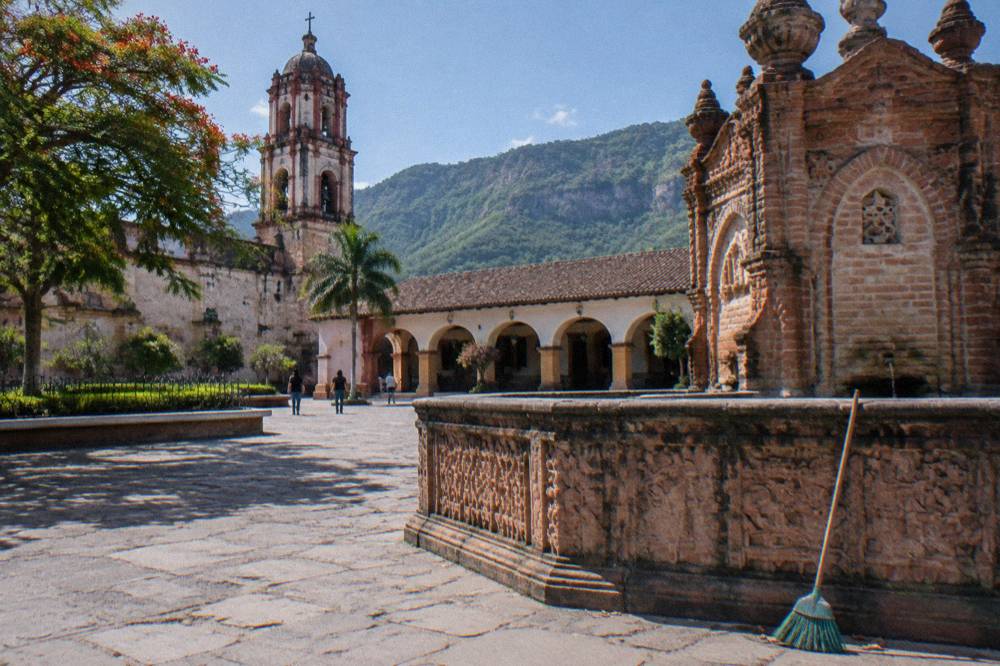
San Cristobal is the base most travelers choose, and it earns the role. The old center is walkable, the artisan market at Santo Domingo and the main municipal market are free to wander, and the INAH museum in the former Santo Domingo convent, the Centro Cultural de los Altos, is free entry. Chiapa de Corzo, the town every canyon tour stops in, holds La Pila, the 1562 mudéjar brick fountain, and a free-entry INAH archaeological zone open daily. Between 4 and 23 January the town stages the Fiesta Grande with the Parachicos dances, one of Mexico's most distinctive festivals, and the 2026 calendar ran six Parachicos processions across the month. Other pages covering the same trip are gathered on Sumidero Canyon Tours.
North of the canyon the state widens out. The 5-day packages bundle Palenque, the Maya city set in forest, with the Agua Azul and Misol Ha waterfalls, and the shorter packages reach the Chiflón waterfalls and the Montebello lakes, a string of colored mountain lakes on the Guatemalan border. None of these require you to build the itinerary yourself if you would rather not; the multi-day tours on this site handle the combinations, and the one-day Chiapas itinerary guide shows the tightest possible version for anyone passing through with a single day.
The limitation of the state, and the thing that keeps some travelers away, is that English is thin outside the main tourism corridors and many budget listings run in Spanish only, as several tour listings state outright. Travelers who want English commentary should filter for it: the Jalapeño day lists Spanish and English but includes only a Spanish-speaking driver with no guide, the premium Selva Azul tour lists both with an English guide in the private option, and the OTISA English-guide variant at from $86 exists precisely for this. None of this makes the state hard; it makes it a place where a booked tour with the right language line does real work.
How Many Days Do You Need In Chiapas?
Two full days covers the canyon, Chiapa de Corzo and San Cristobal for most travelers, three to four days adds the indigenous communities and one waterfall or lake park without rushing, and five days or more buys Palenque and the northern ruins at a humane pace. The single-day visitor should do the canyon day and accept that the rest of the state stays for a return trip.
The two-day version is the sweet spot for a first visit and it is almost embarrassingly easy to assemble. Day one is a canyon day trip from San Cristobal; day two is the town itself, markets, churches and the free museum. The budget OTISA fare at from $46 and the eco-operator days in the $79 to $89 range all return you to San Cristobal by early evening, leaving the night for the town. Travelers arriving in Tuxtla can even run the one-way Jalapeño listing, a canyon day that starts in Tuxtla and finishes at Portal 9 in San Cristobal, folding the transfer and the sightseeing into one transaction.
Three to five days is where the state stops being a highlight reel. The third day reaches Chamula and Zinacantán, best done either as the dedicated Chiapas Family Tours combo from Tuxtla, rated 5.0 from 6 reviews at from $145, or as part of a multi-day package. The fourth day is waterfalls, and the fifth is Palenque, which is a long drive north but the single most significant archaeological site in the state. The Viajes Chiapas 3-day package at from $567 per person is the tidy version of exactly this arithmetic.
For the day-trip-only traveler, one caution repeats throughout this site: Tuesdays. The miradores road above the canyon is closed Tuesdays, so a Tuesday canyon day loses the viewpoints layer even though the boats run. Pair that with the early-morning argument, better light on the walls and fewer boats on the water before mid-morning, and the planning advice almost writes itself: any day but Tuesday, earliest departure you will tolerate, and the best time of day for the boat ride guide covers the reasoning in full.
When Is The Best Time To Visit Chiapas?
The dry season, roughly November to April, is the dependable window: Tuxtla's climate normals show monthly rainfall collapsing to between 1 and 16.7 millimeters from November through March, while the rainy-season months from June to September are far wetter, and the canyon's boats run all year regardless. High season crowds and the January Parachicos festival are the trade-offs to weigh.
The numbers behind that verdict come from the CONAGUA station normals for Tuxtla Gutiérrez, 1991 to 2020, which is the canyon's local climate. The monthly maximum temperatures sit between 29.5 and 35.9 degrees Celsius across the year, with April and May the hottest months, but rainfall is the real seasonal signal: May opens the rainy season at 88.5 millimeters, the summer months each bring heavy rain, with June, August and September all exceeding 200 millimeters, and October tapers to 77 before November drops to 16.7. The national meteorological service places the official rainy season from May to mid-October, peaking in June and September. The underlying station data is published by CONAGUA at the SMN climate normals page.
| Month | Max temp (C) | Rain (mm) | Rainy days |
|---|---|---|---|
| January | 29.5 | 1 | 0.8 |
| April | 35.9 | 9.7 | 1.9 |
| June | 32.8 | 211.1 | 17.7 |
| September | 31.6 | 208.7 | 18.4 |
| November | 29.6 | 16.7 | 3 |
Rainy season is not a reason to cancel, and this site resists the lazy advice that it is. The boats run all year; the river runs higher with more sediment, the walls go greener, and the seasonal waterfalls, including the Árbol de Navidad formation, flow hardest between May and October, when spray can reach the boats. What the rainy season does carry is reported navigation restrictions at the embarcaderos when conditions demand, and tropical-storm overlap, since Atlantic hurricane season runs 1 June to 30 November and the Eastern Pacific season 15 May to 30 November per NOAA: NOAA's tropical cyclone climatology page. The full trade-off analysis, including what the dam level does to the water, is in Sumidero Canyon in rainy season.
One freshness note that no first page of search results will hand you: the Chicoasén dam that closes the canyon's northern end stood at 99 percent capacity in mid-October 2026, and the reservoir's constant cleanup removed more than 2,393 tons of floating waste in 2026 as of early October, alongside roughly 900,000 cubic meters of dredged sediment in 2025. The canyon you ride through is an actively maintained working river, not a static postcard, and the state's investment in keeping it navigable is itself part of the answer to whether the destination is worth it.
The Verdict, In Plain Terms
Chiapas is worth visiting for most travelers who do an hour of homework: the state's headline day, the Sumidero Canyon boat ride, is bookable from $40 per person, the towns and ruins around it justify three to five days, and the safety picture is a Level 3 advisory plus episodic road blockades rather than any known pattern of crime against visitors. The traveler it does not suit is the one who wants zero planning and guaranteed smoothness.
Put that way, the decision is simple. If you would rather ride a boat through a 1,000-meter canyon than read another debate about whether southern Mexico is ready for you, the state has already answered your question. Book the canyon day, give the rest of Chiapas at least one more day than you were planning, keep your departure-day schedule loose for the road, and treat the advisory as information rather than a verdict. The listings below are what this site would put in front of a first-timer.
Common Questions About Visiting Chiapas
Should I Make The Trip To Chiapas?
Yes, for most travelers. The Sumidero Canyon boat day alone justifies the journey, bookable from $40 per person, and the state adds colonial towns, indigenous communities, waterfalls and Palenque within a few hours of each other. Read the Level 3 advisory and current road conditions before booking, but 2025 and 2026 reporting shows no pattern of crime targeting tourists in the main visitor areas.
Is Chiapas Safe For Tourists Right Now?
The US State Department lists Chiapas at Level 3, Reconsider Travel, and CNTE road blockades on the Tuxtla to San Cristobal highway were reported in October 2026, so build slack into travel days. Current reporting shows no crime targeting tourists at the canyon, Chiapa de Corzo, Tuxtla or San Cristobal, and the embarcaderos have had official patrols since a 2025 state security report.
How Many Days Do You Need In Chiapas?
Two full days covers the canyon, Chiapa de Corzo and San Cristobal. Three to four days adds the indigenous communities and a waterfall or lake park, and five days or more reaches Palenque at a humane pace. Multi-day packages covering all of it run from $567 per person for the package.
What Is The Best Month To Visit Chiapas?
The dry season, November to April, is the dependable window: Tuxtla's climate normals show 1 to 16.7 millimeters of monthly rain from November through March, against more than 200 millimeters in June and September. January adds the Parachicos festival in Chiapa de Corzo but also high-season crowds.
Do You Need To Speak Spanish To Visit Chiapas?
It helps but is not required. Many budget canyon listings run in Spanish only, as their listings state, while the Jalapeño full day from San Cristobal lists Spanish and English (Spanish-speaking driver, no guide) and the OTISA English-guide variant at from $86 per person offers an English guide. Filtering listings by language before booking is the practical fix.
Can You Visit Sumidero Canyon Without A Tour?
Yes. Take a colectivo or taxi to the Chiapa de Corzo embarcadero, pay the 125 MXN CONANP park fee separately, and join a shared lancha, 460 MXN for foreign visitors and 400 MXN for Mexican nationals, that departs when full and covers the canyon in about two hours. A booked day trip from $40 per person adds transport and, on most listings, handles the fees.