Is It Safe To Go To Chiapas Right Now?
A source-checked answer to whether Chiapas is safe for visitors right now: the US advisory level, October 2026 road blockades on the Tuxtla highway, tourist-area crime reports, and how a guided canyon day tour fits in.
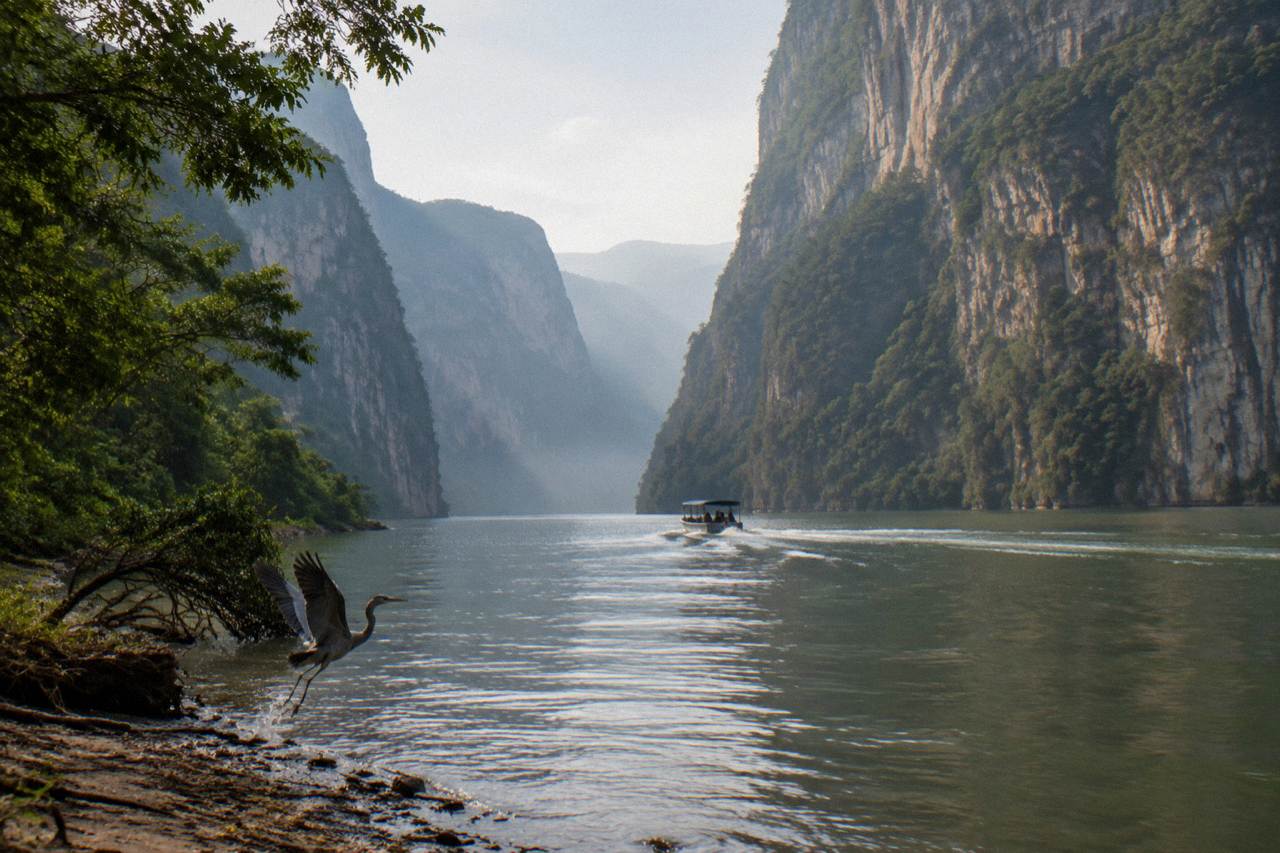
The question deserves a straight answer, so here it is up front. The US State Department's Mexico travel advisory lists Chiapas at Level 3, Reconsider Travel, citing terrorism and crime, in its latest update issued August 12, 2025. At the same time, 2025 and 2026 reporting contains no incidents of crime targeting tourists at Sumidero Canyon, Chiapa de Corzo, Tuxtla Gutierrez or San Cristobal de las Casas. Those two statements are not in conflict; they describe different things, and the difference matters for how you plan a canyon day. This article walks through the advisory, the October 2026 road blockades on the Tuxtla to San Cristobal highway, the safety record at the canyon itself, and what a guided day tour does and does not take off your plate.
For the places most visitors actually go, the canyon corridor, the US State Department's employee restrictions cover the Ocozocoautla municipality, which borders Tuxtla Gutierrez, and zones toward Ocosingo and the southeast; none of them name Chiapa de Corzo or San Cristobal. The US State Department still lists Chiapas at Level 3, Reconsider Travel, a state-wide rating driven by security concerns in zones far from the tourist circuit. The practical risk that changed in late 2026 was not crime but the road: teacher-union blockades on the Tuxtla to San Cristobal highway appeared repeatedly in October 2026, sometimes closing the route entirely.
Breaking that down starts with separating three different questions that often get merged into one. The first is the official advisory, a state-wide political judgment issued by a foreign government. The second is the on-the-ground record in the specific towns and the national park that a canyon itinerary touches. The third is logistics: whether the highway between Tuxtla and San Cristobal is passable on the day you travel. Each has a different answer, and only the third one changed materially in late 2026.
Visitors who book a structured day trip, transport, boat ticket and viewpoints handled by an operator, are buying convenience and local knowledge as much as sightseeing. The listings below fit a safety-conscious first visit best, covering full day options from San Cristobal, departures from Tuxtla, and pickup for travelers flying into Tuxtla Gutierrez.
The rest of this article goes layer by layer, advisory first, then roads, then the canyon and its docks, so you can weigh each piece on its own evidence rather than on a headline.
What Does The US Travel Advisory Actually Say About Chiapas?
Chiapas sits at Level 3, Reconsider Travel, in the US State Department's Mexico advisory, its latest update issued August 12, 2025, with the stated reasons being terrorism and crime, and its employee restrictions name specific zones well away from the Tuxtla, Chiapa de Corzo and San Cristobal tourist corridor. The same advisory text restricts US government employees from the municipality of Ocozocoautla, which borders Tuxtla Gutierrez, and from zones toward Ocosingo and the southeast. It lists no restrictions naming Chiapa de Corzo or San Cristobal de las Casas beyond the state-wide rating. You can read the current wording directly on the State Department's Mexico travel advisory page, and that is the version worth checking, not a summary cached in a forum thread.
Level 3 is a middle tier on a four-step scale, and it is worth being precise about what it asks of you: reconsider whether you need to go, it does not say do not travel. Mexico's advisory map is drawn state by state, and several states carry the higher Level 4 rating. Chiapas has held Level 3 across the 2025 to 2026 period covered by the safety reporting reviewed here.
Two caveats belong next to that. First, an advisory is a government's risk judgment, not a description of what happens to travelers; the same 2025 and 2026 reporting that documents the advisory shows no tourist-targeted crime in the four places on the canyon circuit. Second, advisories change without a press release, so a page you read in the spring may not match the page in the autumn. Check the live advisory close to your travel date, and again before you book anything nonrefundable.
Are The Road Blockades On The Tuxtla Highway A Problem?
Yes, genuinely, and this is the item that changed in late 2026: CNTE teacher-union blockades were reported repeatedly on the Tuxtla to San Cristobal route in October 2026, including at kilometer 46, at La Pochota, and at highway toll booths, some closing the road fully for hours. None of the reports link the blockades to tourists; they are political protests aimed at the state, and travelers are affected only as traffic. Earlier in 2026 a June blockade at the toll plaza was reported to cut the route entirely for a period. The free alternate road exists but adds time.
Context softens the picture somewhat. A 29.2 km section of the road was modernized by December 2025. The road itself is better than it has ever been. What is variable is whether it is open on a given morning, and that is not something any operator, guide or article can promise.
| Reported event | Where | When reported | Effect on travelers |
|---|---|---|---|
| CNTE blockade at km 46 | Tuxtla to San Cristobal highway | Concluded October 2, 2026, followed by a march | Full or partial closure, then congestion |
| Blockades at La Pochota and Chiapa de Corzo stretch | Highway entries and PEMEX station area | October 2026 | Closures and long delays reported |
| Total blockade at the toll booth | Highway caseta de cobro | June 2026 | Route cut for a period |
| Trailer crash at km 41 to 44 | San Cristobal to Tuxtla highway | October 17, 2026 | Fatalities and injuries reported, road disruption |
| Highway modernization, 29.2 km | Tuxtla to San Cristobal | Reported complete December 2025 | Three lanes, new bridges, improved safety |
The practical playbook is simple. Travel the highway in the morning when most tours do, keep your schedule loose on transfer days, and let your operator or hotel confirm the route the day before. Operators based in Tuxtla and San Cristobal monitor the road as part of their daily work; that local read is one of the quiet advantages of a booked day trip over a self-drive attempt.
Is There Crime Targeting Tourists At The Canyon?
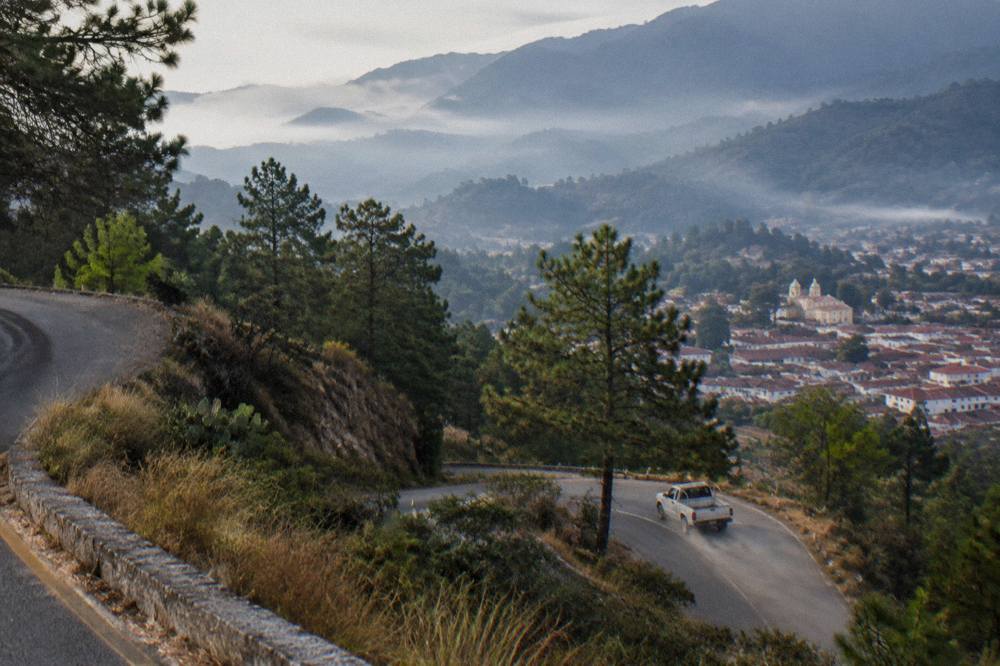
No report for 2025 or 2026 describes crime targeting tourists at Sumidero Canyon, Chiapa de Corzo, Tuxtla Gutierrez or San Cristobal de las Casas, while the same period's incidents on the corridor were traffic events, not criminal ones, and the embarcaderos have carried official patrols since May 2025. The incidents that did surface in the period's reporting were traffic-related: the October 17, 2026 trailer crash on the highway, and a tour bus that rolled back at a Sumidero viewpoint in July 2026 with international tourists aboard, with no crime involved.
This is where the gap between the state-wide advisory and the tourist corridor is widest. The zones named in the advisory restrictions for government employees lie away from the canyon circuit, toward Ocosingo and the southeast. The park, the embarcadero towns and the two cities on the itinerary appear in the reporting mainly as logistics stories: boat schedules, blockade detours.
An absence of reports is not a guarantee; it means none of the 2025 to 2026 reporting shows such incidents, not that none can ever occur. Standard travel habits, keeping valuables modest, using booked transport rather than roadside deals, still apply. But the specific fear the question usually carries, violent crime against visitors at the canyon, has no supporting case in the period's reporting. For a fuller picture of what the day on the water involves, the wildlife and boat ride guide covers the route stop by stop.
How Safe Are The Embarcaderos And The Boat Ride?
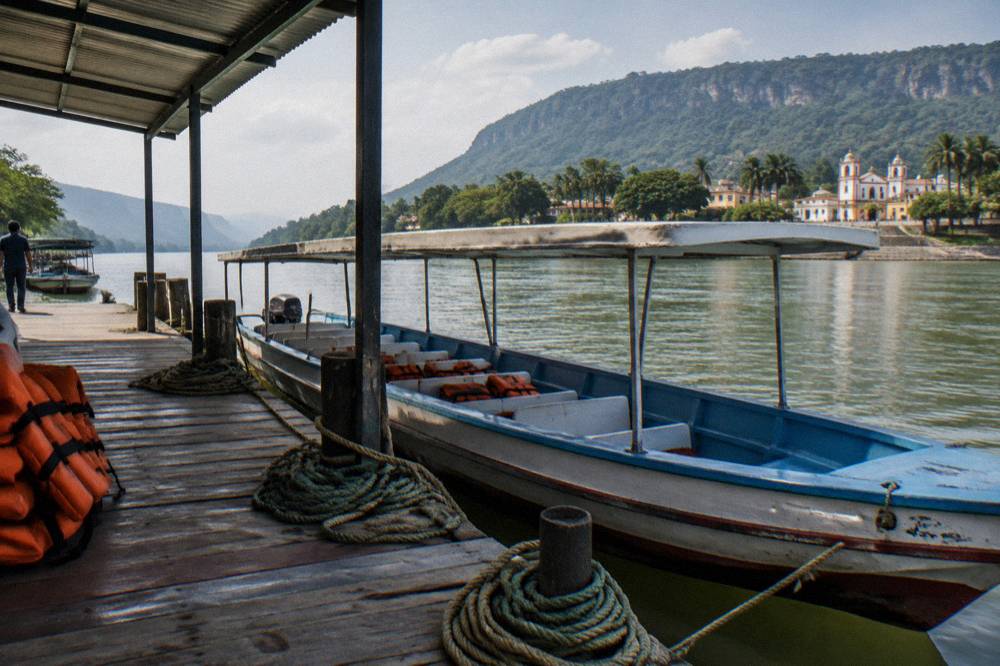
The boat docks at Chiapa de Corzo have had official security presence since at least May 2025, when state police, rescue and first-aid monitoring were reported at the embarcaderos, and the boat ride itself runs under rules from two sources. The national park's visitor regulation, published by CONANP on the official park page, bans bringing in alcohol, bans smoking and campfires, requires riders to stay in the boat and to wear the conservation wristband. The boat cooperatives add their own rules: mandatory life jackets, hands out of the water, no glass containers, no pets and no drones.
The docks are working infrastructure, not remote outposts. The Chiapa de Corzo embarcadero sits a block or two from the town's central plaza, boats depart through the day from morning to mid-afternoon, and the cooperatives that run them operate on a shared-boat basis that fills a lancha before it leaves. Crowds, not crime, are the usual friction: the park draws on the order of half a million to eight hundred thousand visitors a year by one 2026 estimate, concentrated in the dry season.
One seasonal note belongs here because it is safety-adjacent rather than crime-related. During the rainy season, roughly May to mid-October, navigation restrictions and occasional cancellations at the embarcaderos have been reported when river conditions demand it, and those calls are made for passenger safety, not for any other reason. No closure of the canyon itself appears in CONANP or 2026 news as of late October 2026. If you are traveling in the wet months, the rainy season guide explains what changes and how to plan around it.
The ride runs about two hours round trip, up the Grijalva to the Chicoasen dam wall and back, past the caves and seasonal waterfalls the route is known for. In terms of physical risk, the record is that of a regulated, high-volume tourist operation: enforced life jackets, an established operator cooperative, patrols on shore. Nothing in the 2025 to 2026 sources suggests otherwise.
Do Traffic Accidents Change The Picture?
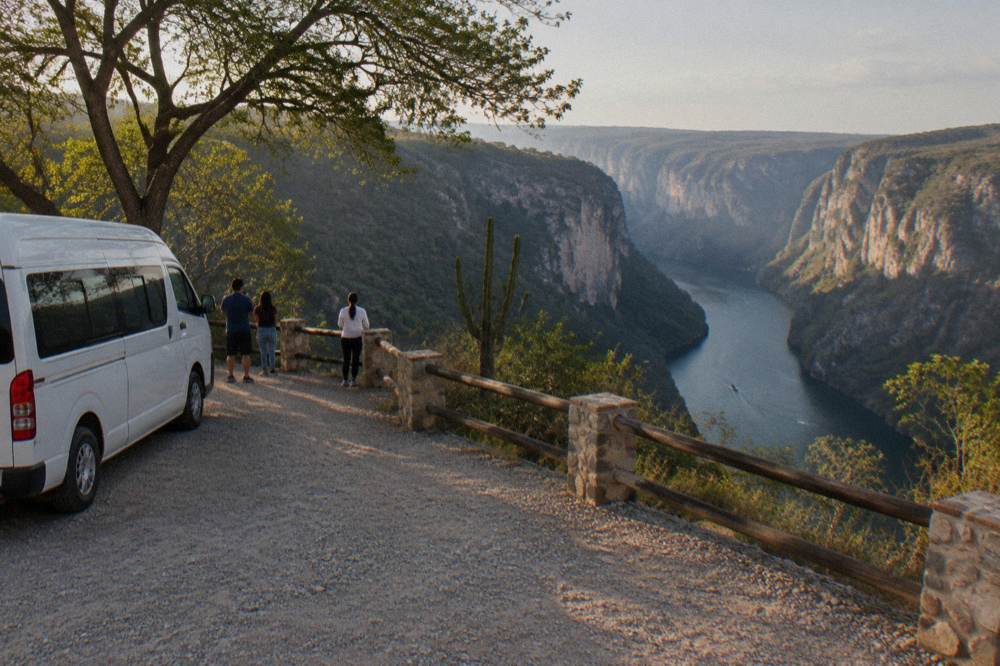
They are the one category of harm to travelers in the 2025 to 2026 record: a trailer crash on the San Cristobal to Tuxtla highway on October 17, 2026 killed and injured several people, and a tour bus rolled back at a Sumidero viewpoint in July 2026 with international tourists aboard, and no crime was involved. Neither was crime, and both point to the same practical advice: highway travel in mountain country deserves the same caution anywhere in Latin America, seatbelts, daylight travel, booked licensed transport.
The July 2026 viewpoint incident involved international tourists and received attention in foreign press precisely because it was unusual. The October 2026 crash was a freight vehicle striking multiple cars and an ambulance, a road-safety failure rather than anything aimed at visitors. Set against the volume of traffic the modernized highway carries, these are reported incidents, not a pattern.
What reduces your exposure is unglamorous. Travel the corridor in daylight, which most tours do by default with morning departures. Choose listings with licensed, insured transport; these tours state which include travel insurance and air-conditioned vehicles. Avoid driving the mountain highway yourself at night in rain. These are the same choices a cautious traveler makes in any highland region, and they address the risk the record actually shows.
How Does A Guided Tour Change The Safety Picture?
A booked day trip removes the three tasks where a visitor is most exposed: reading the mountain highway conditions yourself, arranging the boat at the dock, and timing the day around weather and traffic; the operator handles the route, the tickets and the schedule, though no operator can promise a blockade-free road. Every tour on this site states free cancellation unless marked otherwise, so a safety-driven change of plan is usually recoverable if you act before the cutoff on the live listing.
The comparison is worth spelling out. Independent travel means a colectivo or taxi to Chiapa de Corzo, a wait at the embarcadero for a shared boat to fill, and your own read on the weather and the road. A guided day bundles transport, the park entry and the boat into one moving piece, with a driver who already knows the day's road conditions. Neither is dangerous per the record; one simply transfers the judgment calls to someone who makes them daily.
| Option | Who handles the highway | Park fee and boat | Typical day |
|---|---|---|---|
| Independent by colectivo | You, in stages | You, at the embarcadero | Flexible, slower, cheapest ground cost |
| Shared guided day from San Cristobal | Operator's van and driver | Stated as included on most listings | 8 to 9 hours, viewpoints and Chiapa de Corzo included |
| Small-group day from Tuxtla | Operator, hotel pickup listed | Park fee stated as included | 5 to 7 hours, closest to the docks |
| Private car day | Your driver, hotel pickup listed | Boat ticket paid at the dock, listing says so | 8 hours, your pace, fees not included |
Two listings illustrate the range. The Chiapas Family Tours five-hour day from Tuxtla lists hotel or bus-terminal pickup, a bilingual small-group format, bottled water, travel insurance and the park entrance, from $102 per person, with a 5 rating from 15 reviews. The Selva Azul premium boat day from San Cristobal, from $155 per person with hotel pickup and an English-speaking guide in the private option, carries a 4.6 from 136 reviews. Both follow the same pattern: transport, fee and boat bundled, with the details stated listing by listing.
For travelers landing at Tuxtla Gutierrez airport, the Jalapeño option that starts at the airport and ends in San Cristobal or Tuxtla, from $130 per person, seven hours, up to nine travelers, folds the airport transfer and the canyon into one booked movement, which removes the transfer-leg risk question entirely on arrival day.
What Should You Check Before You Book?
Three checks, in order: the live State Department advisory for the current wording and date, the operator's cancellation terms on the listing you are actually booking, and, during October to November and again around June, a quick local read on the highway through your hotel or operator the day before travel. Each takes minutes, and together they cover everything the 2025 to 2026 record flags as variable.
The advisory check is not about obeying or dismissing a rating; it is about reading the state-specific text yourself, including any employee-restriction zones, and measuring it against your actual itinerary. The cancellation check matters because the one genuine operational risk in the period, blockades, is exactly the kind of event a flexible booking absorbs. Most of these tours state free cancellation; the few that do not, say so, and that difference is worth money on a mountain highway.
The third check is the one people skip. A one-line message to your hotel or operator the day before, asking whether the highway is flowing normally, gets you information no article can hold: today's road. Reported blockades were temporary and their durations varied, and travelers with a day of slack rerouted around them.
Weather belongs in the same pre-booking pass. The rainy season, May to mid-October with June and September peaks in the Tuxtla climate record, is when river levels rise and navigation calls get made at the docks; the dry months, November to April, are the stable-weather window most first visits target, and the monthly weather guide breaks it down town by town.
The listings this article has used as examples cover the full day from San Cristobal, the Tuxtla pickup day, and the airport-start option, each with the fee, transport and boat bundled on the live booking page.
One last framing thought before the questions. Every source-backed safety story about this region in 2025 and 2026 is a story about roads, weather and politics, not about visitors being targeted. The visitors who fared worst in the reporting were in vehicles on a highway, and the mitigation for that is daylight travel, booked transport and a flexible schedule. That is the answer Sumidero Canyon Tours builds its advice on.
Common Questions About Safety In Chiapas
What Is The Current US Travel Advisory For Chiapas?
The US State Department lists Chiapas at Level 3, Reconsider Travel, in its latest update issued August 12, 2025. The 2025 to 2026 reporting shows no crime targeting tourists at Sumidero Canyon, Chiapa de Corzo, Tuxtla or San Cristobal, and patrols have worked the embarcaderos since May 2025. The live variable is the Tuxtla to San Cristobal highway, where blockades were reported in October 2026. Check the current advisory and confirm the road the day before you travel.
What Does Level 3, Reconsider Travel, Actually Mean?
It is the third of four levels and it asks you to reconsider whether your trip is necessary, it does not say do not travel. The Chiapas listing cites terrorism and crime, and restricts US government employees from travelling to specific zones. It imposes no requirements on private travelers.
Are The Highway Blockades Aimed At Tourists?
No. The October 2026 blockades on the Tuxtla to San Cristobal route were CNTE teacher-union protests directed at the state government. Travelers are affected as traffic, sometimes severely, but no report links the protests to visitors. Reported blockades in the period were episodic and resolved within hours to days.
Is The Boat Ride On The Canyon Regulated?
Yes. CONANP's visitor regulation requires life jackets, bans leaving the boats, drones, glass, alcohol, smoking, campfires and pets, and every visitor wears a conservation wristband. The 125 MXN per person per day park entry fee is separate from the cooperative boat fare, and many guided listings state the park fee is included.
Does A Guided Tour Make The Trip Safer?
It transfers the highway driving, the dock arrangements and the day's timing to a local operator, which addresses the risks the record actually shows: road conditions and logistics. It cannot promise a blockade-free highway or any particular weather. Most of these tours state free cancellation, which lets you adjust if conditions change.
When Is The Riskiest Time To Travel The Highway?
At night, in rain, and during periods of reported protest activity. The October 2026 blockades and the October 17, 2026 trailer crash both happened on the Tuxtla to San Cristobal corridor. Daylight morning travel, which most tours use, is the standard precaution.