Chiapa De Corzo Weather By Month: When The Canyon Is Hottest And Wettest
Chiapa de Corzo sits in a hot tropical valley, and the month you choose changes everything about a canyon day: heat, rain, river color and how the boat ride feels. Here is the climate, month by month, from the nearest official weather station.
Short answer
The nearest official station, Tuxtla Gutierrez, shows the hottest stretch from March to May, with average daily highs climbing from 33.9 to 35.9 degrees Celsius. The wettest months are June to September, when rainfall jumps from 88.5 mm in May to over 200 mm per month. November to April is the dry, cooler window most visitors prefer.
Weather is the single biggest variable in a Sumidero Canyon trip that you can actually plan around. The canyon itself runs on a tropical lowland climate: hot all year, sharply divided between a dry half and a wet half, with almost no month in between. Chiapa de Corzo, the town at the canyon's mouth where most boat rides start, shares that valley climate with nearby Tuxtla Gutierrez, and there is no weather station publishing long-term normals for Chiapa de Corzo itself. So this page quotes the nearest official record, the CONAGUA station at Tuxtla Gutierrez, and reads it for what it means on the water and at the viewpoints.
The practical takeaway is simple. Heat peaks before the rain arrives, rain peaks in the middle of the year, and the months of November through April combine the coolest temperatures with the least rainfall. Guided days such as the Apasionado Tuxtla tour, the Jalapeño full day from San Cristobal and the 5-hour Tuxtla pickup day all run year round; the month you pick mostly changes what you pack, when you start and what the river looks like, not whether the boats go out.
What Is The Climate Of Chiapa De Corzo Month By Month?
The nearest official station, Tuxtla Gutierrez (station 7202, CONAGUA normals for 1991 to 2020), records average daily highs between 29.5 and 35.9 degrees Celsius across the year, rainfall from 1.0 mm in January to 216.6 mm in August, and rain days ranging from under 1 to more than 18 per month. Chiapa de Corzo, roughly 15 km away in the same valley, tracks these figures closely. There is no separate long-term station for the town.
The full record below is the backbone of every piece of seasonal advice on this site. The three columns are the ones that matter for planning: how hot the afternoons get, how much rain falls, and how many days of the month it falls on. Note that "rain days" does not mean all-day rain; in this climate most wet-season rain arrives in heavy afternoon or overnight showers, and mornings are frequently dry.
| Month | Avg max temp (°C) | Rainfall (mm) | Rain days |
|---|---|---|---|
| January | 29.5 | 1.0 | 0.8 |
| February | 31.8 | 1.8 | 0.5 |
| March | 33.9 | 2.6 | 0.6 |
| April | 35.9 | 9.7 | 1.9 |
| May | 35.4 | 88.5 | 9.1 |
| June | 32.8 | 211.1 | 17.7 |
| July | 32.4 | 164.5 | 16.6 |
| August | 32.4 | 216.6 | 16.7 |
| September | 31.6 | 208.7 | 18.4 |
| October | 30.7 | 77.0 | 10.0 |
| November | 29.6 | 16.7 | 3.0 |
| December | 29.5 | 2.6 | 1.2 |
These are the 1991 to 2020 climate normals published by Mexico's national meteorological service for the Tuxtla Gutierrez station, which you can read in full at the CONAGUA normals file for station 7202. Normals are 30-year averages, so a specific week can run hotter, cooler or wetter than the table; treat them as the shape of the year, not a forecast. For the park's own hours and rules, which do not change with the season, the official CONANP page for Cañón del Sumidero is the primary source.
When Is Chiapa De Corzo Hottest For A Canyon Boat Ride?
The hottest months at the canyon are March, April and May, with average daily highs of 33.9, 35.9 and 35.4 degrees Celsius respectively, and April averaging the warmest of the whole record. Rain is still minimal in March and April, under 10 mm per month, so this is the sunniest, most punishing stretch of the year for midday exposure on the water.
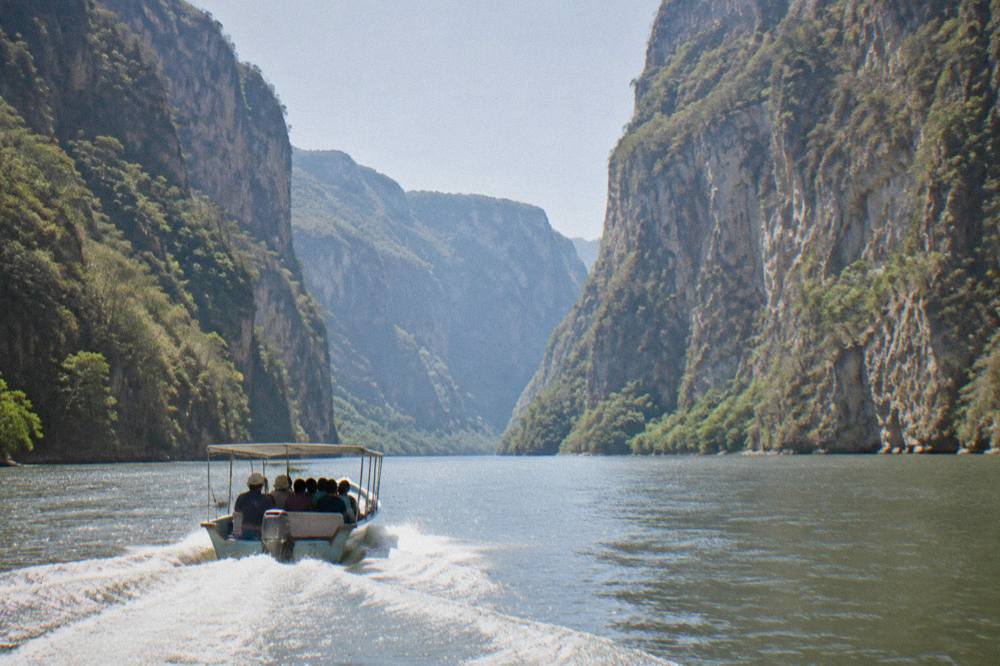
The boat ride is a two-hour round trip from the Chiapa de Corzo embarcadero to the Chicoasen dam wall and back, and much of it sits in a channel with little natural shade. The boats move, which helps, but the reflected sun off the water doubles the exposure. CONANP's own visitor guidance suggests long sleeves, a hat, sunscreen and comfortable clothes, and that advice matters most in these three months. Early departures are the standard fix: light on the walls is better in the morning, wildlife is more active, and you finish before the hottest hours. Our separate piece on the best time of day for the boat ride works through that in detail.
Heat also changes how the day trips feel on land. The Jalapeño full day from San Cristobal runs 8 to 9 hours, with a viewpoints scenic drive, about 1 hour 45 minutes on the boat, then free time in Chiapa de Corzo; in April heat, the midday free time in town, with shade and cold drinks available, is genuinely welcome after the drive and the boat. Listed in both Spanish and English but with only a Spanish-speaking driver provided and no guide, the Jalapeño full day runs 8 to 9 hours, costs from $85 per person, and is rated 4.6 from 268 reviews, making it the most reviewed tour of the bunch.
One more heat detail worth knowing: Tuxtla and the canyon floor are reliably several degrees warmer than San Cristobal de las Casas, up in the highlands. Travelers who dress for San Cristobal's cool morning air and then descend into the valley for the boat are the ones caught out. Layers you can shed in the van solve it.
Which Months Bring The Most Rain To Sumidero Canyon?
The wettest months are June through September, when the Tuxtla Gutierrez normals show 211.1 mm in June, 164.5 mm in July, 216.6 mm in August and 208.7 mm in September, falling on roughly 17 to 18 days per month. August is the single wettest month of the record, and September has the most rain days, at 18.4 on average.
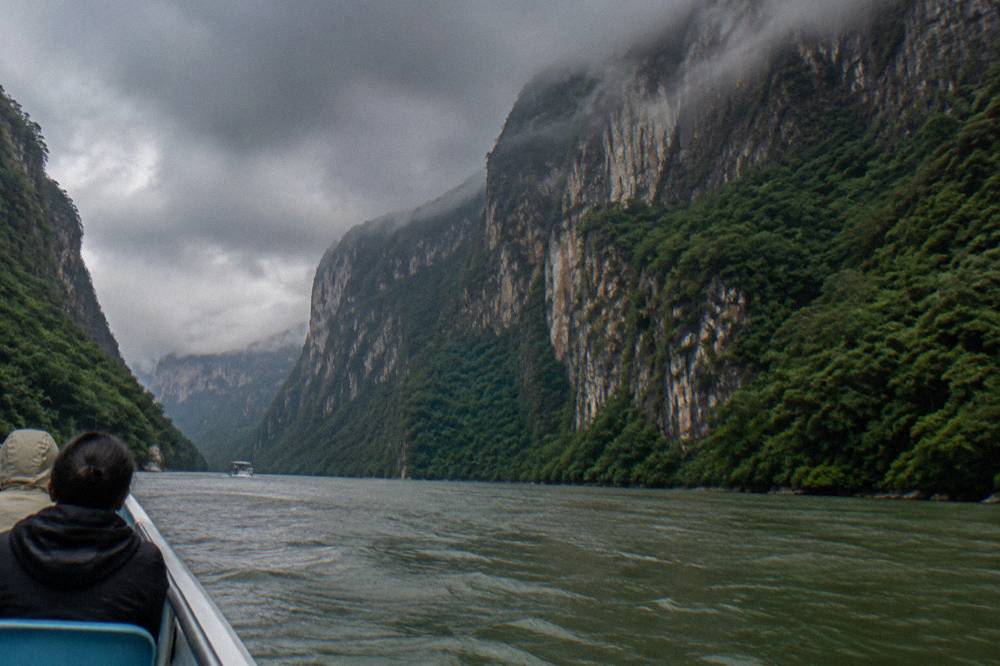
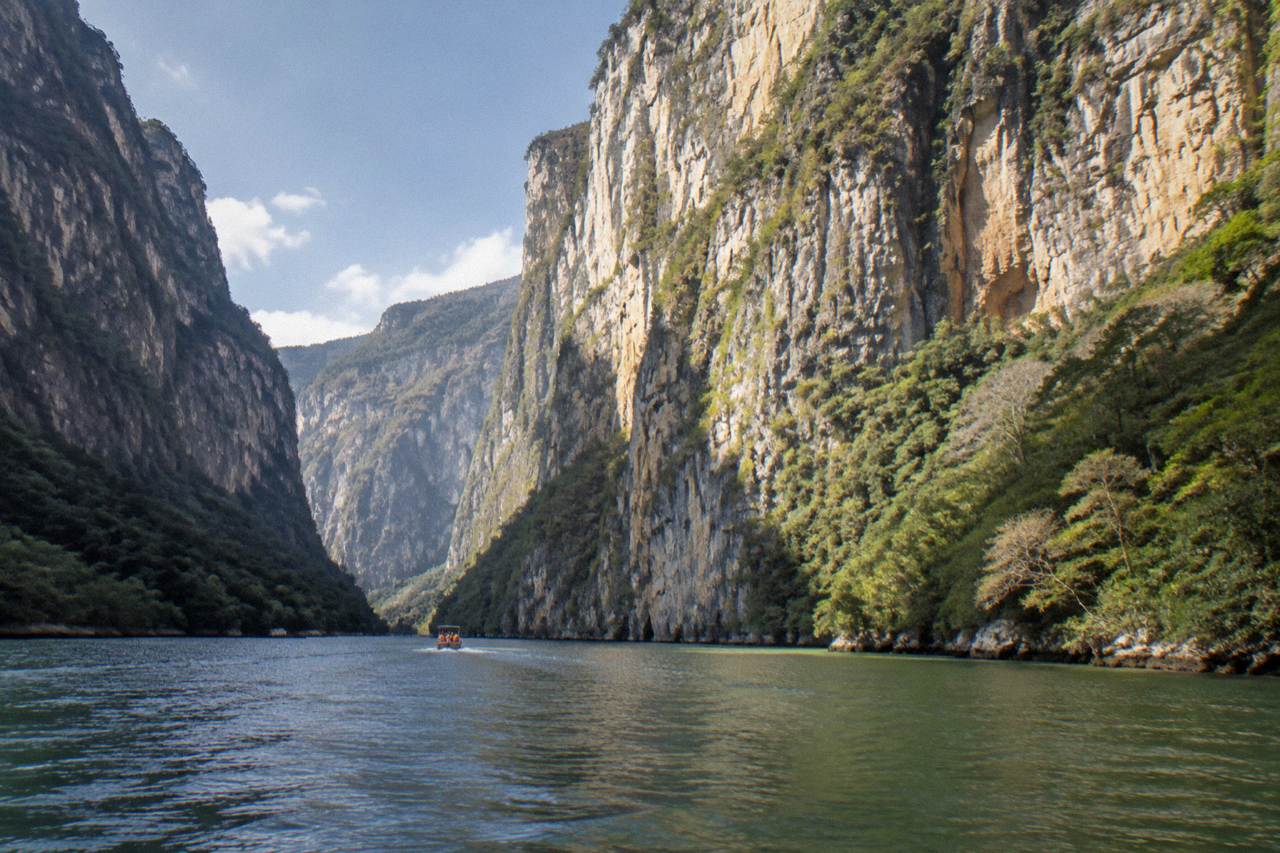
Mexico's met service defines the region's normal rainy season as May through mid-October, peaking in June and September, and the normals table matches that definition almost exactly. The rain does not switch off navigation: boats run all year, and the canyon is widely described as at its most dramatic in these months, greener, louder, with seasonal waterfalls pouring off the limestone walls that simply are not there in winter. The Árbol de Navidad waterfall, one of the ride's named sights, is reported to run strongest in the rainy season and to shrink to a trickle in the dry months while the moss formation stays visible.
The tradeoffs are real, though. The river carries more sediment when flows are high, so the water reads brown rather than the emerald green the dry season is known for, and rainy-season navigation restrictions at the embarcaderos have been reported when conditions demand it. If a storm system is passing through, operators may shorten or reschedule trips, and it makes sense to keep a flexible day. Our longer treatment of the canyon in rainy season covers what changes and what does not.
Booking-wise, rain is the argument for free cancellation. The 5-hour Chiapas Family Tours day from Tuxtla, rated 5.0 from 15 reviews and from $102 per person, includes hotel pickup, a 2-hour shared boat tour, park entrance and bottled water, and states free cancellation; on a wet-season trip that flexibility is worth having. The same logic applies to the Tuxtla eco day tour, from $99 per person with hotel pickup and a 14-traveler maximum.
How Does Hurricane Season Overlap With The Rainy Months At The Canyon?
The Atlantic hurricane season runs 1 June to 30 November and the Eastern Pacific season 15 May to 30 November, according to NOAA, so the canyon's wettest months of June to September sit inside both windows. A direct strike on the Chiapas interior is uncommon, but tropical systems can push heavy rain inland, raise river levels and occasionally prompt preventive tour suspensions.
The storm calendars are published by the US National Oceanic and Atmospheric Administration and are stable year to year. For trip planning, the overlap mostly means the September rain peak can arrive in bigger pulses than usual, with debris in the river and murkier water afterwards. It does not mean the canyon closes; there were no closures or advisories on the canyon itself in the 2025 to 2026 reporting. The reasonable wet-season habit is to book with cancellation flexibility, keep one spare half-day, and confirm conditions at the embarcadero on arrival, since live river state is exactly the kind of thing no published source can promise.
One dated data point that helps explain the river's behavior in wet years: in October 2026 the Chicoasen dam, at the canyon's northern end where boats turn around, was reported at 99 percent capacity, with authorities on alert during rain events. A full dam is the reason the canyon's navigable section stays boatable all year, and also the reason high-water months look and handle differently from the dry-season green pool.
What Is The Best Month To Visit The Sumidero Canyon National Park?
November through April is the dry window most visitors should aim for: highs between 29.5 and 35.9 degrees Celsius, rainfall under 20 mm per month until April's 9.7 mm, and rain days in the low single digits. Within it, November to February offers the coolest temperatures, while March and April trade a few degrees more heat for the clearest, most stable skies.
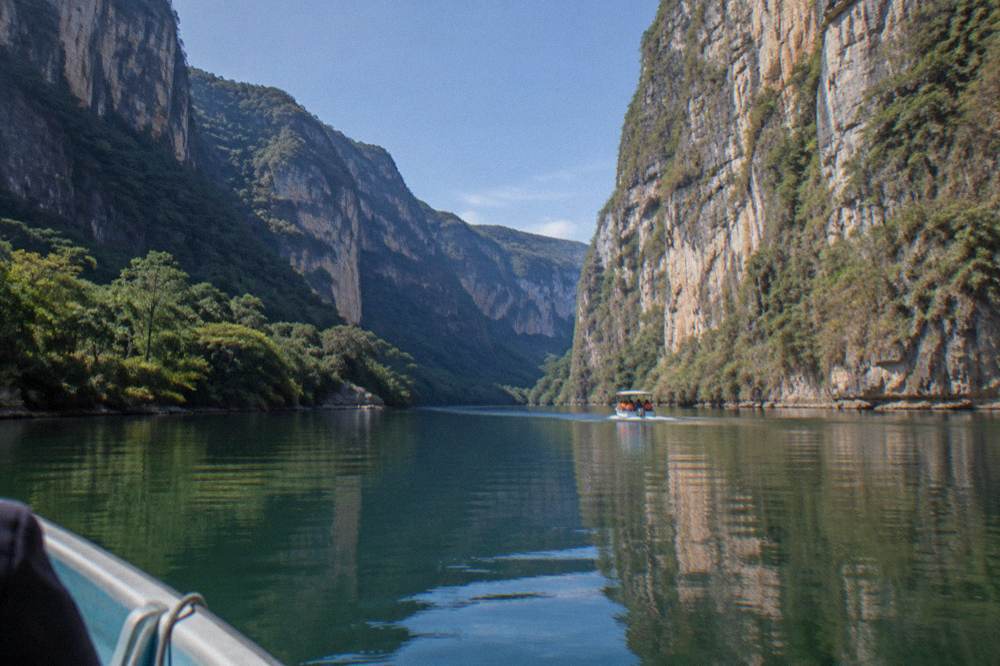
The dry season is described consistently across recent regional guides as the window for clearer water, safer navigation and the best visibility for photography, and it is also the busiest stretch, so early starts matter more, not less. The land side of the park follows its own fixed rule regardless of month: the miradores road is open Wednesday to Monday, 8:00 to 17:00, and closed on Tuesdays. A perfect-weather Tuesday still means no viewpoints, so pair the calendar with the days of the week. Our month-level comparison at the best time to visit the canyon adds crowd and price context.
For the viewpoints-plus-boat combination, the Jalapeño miradores day trip from San Cristobal, from $56 per person and rated 4.5 from 85 reviews, spends about two hours in the national park plus stops at the miradores and Chiapa de Corzo, and states national park fees included. In the dry season those stops run exactly as listed, with the caveat that Tuesday closures apply to the land side. The wider set of guides lives on Sumidero Canyon Tours.
If instead you want a quiet stretch before peak crowds with the rains falling off, late October into November is a good pick: the rains drop from 77 mm in October to 16.7 mm in November, the landscape is still green, and high-season crowds have not fully arrived. October's normals, 77 mm and 10 rain days, describe a month already halfway out of the wet season; the driest months are December to March.
Does San Cristobal De Las Casas Have The Same Weather As The Canyon?
No. San Cristobal de las Casas sits high in the Chiapas highlands while Chiapa de Corzo and the embarcaderos sit in the hot lowland valley, so the mountain town runs dramatically cooler year round, and the road between them drops from sweater weather into lowland heat in about an hour of driving.
This is the classic packing trap. Day trips from San Cristobal, and there are many on this site, all descend into the valley climate described by the Tuxtla normals. The budget OTISA 9-hour day from San Cristobal, from $46 per person and rated 4.6 from 104 reviews, and the Apasionado day trip, from $52 per person and rated 4.4 from 124 reviews, both follow the same pattern: cool departure in the highlands, hot boat ride at the bottom, cool return. Dress for the boat, carry a layer for the town.
Wet-season planning from San Cristobal adds one more consideration that is not about rain falling on you: CNTE road blockades on the Tuxtla to San Cristobal highway were reported several times in October 2026, and the highway's modernization was only completed around December 2025. None of this is a reason to skip the trip, but on any travel day in the region it is worth confirming your route is running normally rather than assuming it.
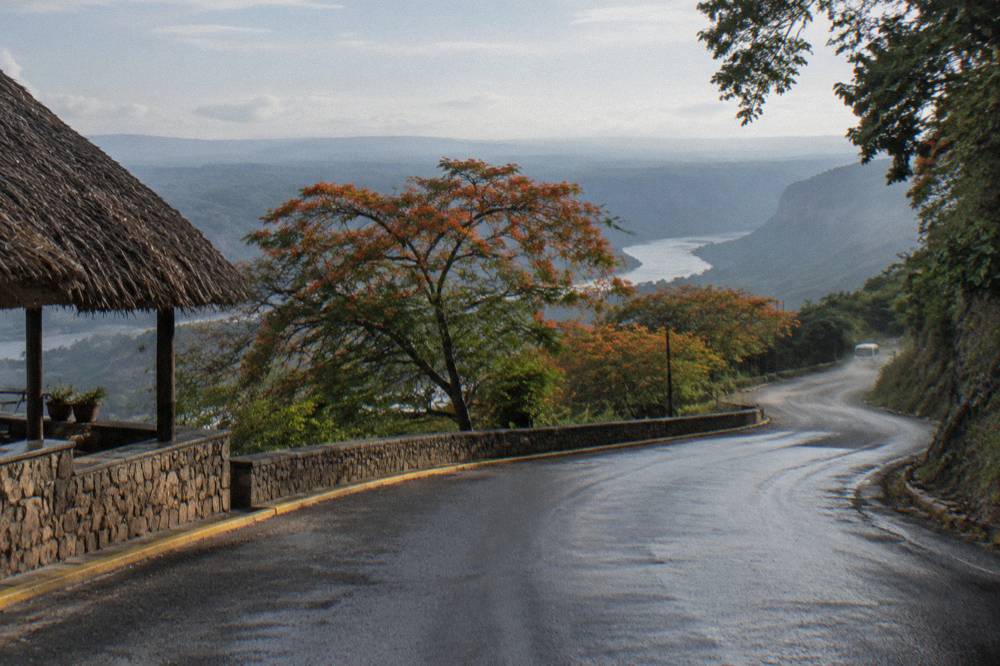
What Should You Pack For A Sumidero Canyon Day In Each Season?
For the dry months of November to April, pack for heat and sun: high-factor sunscreen, a hat, long sleeves, sunglasses and more water than you think you need, because highs run 29.5 to 35.9 degrees Celsius and boat shade is minimal. For the wet months of June to September, add a light rain layer, quick-dry clothes and dry bags for electronics, and expect high humidity on roughly 17 to 18 rain days per month.
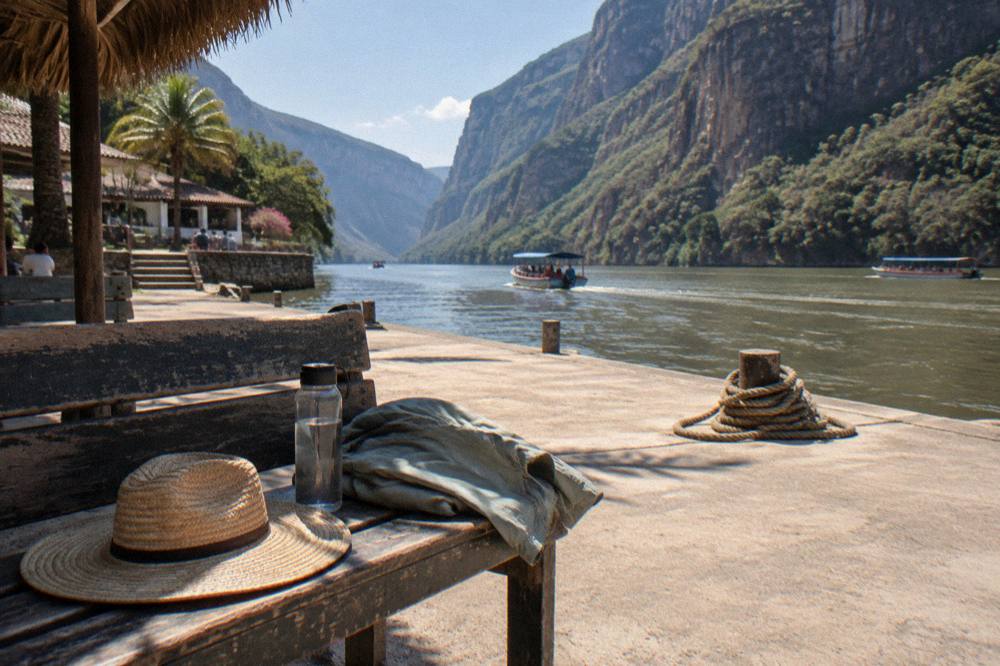
CONANP's suggested kit, comfortable clothes, sneakers, long sleeves, hat, sunscreen and repellent, covers the dry season almost perfectly. Repellent matters in the wet months particularly, when still air and humidity near the embarcaderos make insects more noticeable. For a fuller clothing rundown by season, including footwear for the canyon walk sections some tours include, see our piece on what to wear to the canyon.
A quick packing matrix by season:
| Season | Months | Typical conditions | Carry |
|---|---|---|---|
| Dry, cool | November to February | Highs near 29.5 °C, under 17 mm rain per month | Sun protection, layers for the boat wind |
| Dry, hot | March to May | Highs 33.9 to 35.9 °C, minimal rain | Extra water, hat, long sleeves, early start |
| Early wet | May | Heat breaking into heavy showers | Rain layer, dry bag, repellent |
| Peak wet | June to September | Over 164.5 mm rain per month, humid | Quick-dry clothes, rain jacket, spare shirt |
| Drying out | October | 77 mm rain, green landscape | Rain layer plus sun gear, flexible schedule |
Tours rarely include food, and the listings are explicit about that: most exclude meals and drinks. Build water and a snack into your own kit in every month, and in the March to May window treat a midday refill stop in Chiapa de Corzo as part of the plan rather than an afterthought.
Which Tour Format Suits Which Season At The Canyon?
Short pickup-inclusive days suit the hot dry months of March to May, when finishing before peak heat matters, while long viewpoint-and-pueblo days and budget shared departures shine in the cooler November to February window. In the June to September wet season, listings with stated free cancellation and shorter loops give you the most room to adapt. The tour formats map cleanly onto the climate table above.
The match works in both directions. In the hottest months, the 5-hour Chiapas Family Tours day from Tuxtla (from $102 per person, hotel pickup listed, bottled water included) compresses the whole loop into the comfortable part of the day. In the cool dry months, when midday heat is no penalty, the 9 to 10 hour Apasionado Tuxtla day, from $53 per person and rated 4.7 from 175 reviews, spreads out across the canyon, Chiapa de Corzo and the miradores without wearing anyone down. And in the wet season, the budget shared days such as the Selva Azul boat trip from San Cristobal, from $40 per person, keep the commitment small enough that a reschedule costs little.
| Season window | Best-fit tour format | Example listing | Why it fits |
|---|---|---|---|
| November to February | Long full day with viewpoints | Jalapeño full day, San Cristobal, from $85 per person, 4.6 from 268 reviews | Cool air makes the 8 to 9 hour span and canyon walk comfortable |
| March to May | Short loop with hotel pickup | Chiapas Family Tours 5-hour Tuxtla day, from $102 per person, 5.0 from 15 reviews | Ends before peak heat; water included |
| June to September | Budget shared day, free cancellation | Selva Azul boat day from San Cristobal, from $40 per person, 4.0 from 80 reviews | Low commitment if rain reschedules the boat |
| October | Flexible mid-range day | Tuxtla eco day tour, from $99 per person, 4.0 from 17 reviews | 14-traveler maximum keeps a weather-shifted group manageable |
| Any month, private | Private car day | Rincones Viajeros private day from Tuxtla, from $28 per person, no rating yet | Set your own start time around the forecast |
Note the last row: the private car day lists no rating yet, so there is no review pool to lean on; it is included here for its timing flexibility alone, and its listing states the park fee is not included, the opposite of most shared days here.
Can You Do The Canyon Boat Ride In The Rain Without Losing The Day?
Yes, in most rain the ride still runs: boats operate all year, rain days peak at 17 to 18 per month in the wet season and most of that rain falls in bursts rather than all day, and the canyon walls are at their greenest and most dramatic after it. What actually stops or shortens trips is high river flow or storm debris, which operators and the cooperatives judge day by day, not the calendar.
That distinction is the whole game in wet-season planning. A shower over the embarcadero is a nuisance; a swollen Grijalva carrying debris is a routing decision, and rainy-season navigation restrictions at the embarcaderos have been reported when conditions warrant. Operators with free cancellation and shorter itineraries give you the most room to adapt. The 5-hour Chiapas Family Tours day from Tuxtla is the tightest full loop of these tours, hotel pickup, 2-hour boat ride, an hour in Chiapa de Corzo, home again, from $102 per person. At the other end of the scale, the budget Selva Azul boat day from San Cristobal, from $40 per person and rated 4.0 from 80 reviews, is the cheapest shared-boat day of these tours and states entrance fees and travel insurance included, a sensible low-commitment bet when the forecast is uncertain.
Wet-season days also reward the flexible for what they add: seasonal waterfalls on the walls, greener vegetation and thinner crowds. Several listings make that trade easy. The Tuxtla eco day tour, from $99 per person with hotel pickup, hotel drop-off and the park admission fee stated as included, keeps a 14-traveler ceiling, so a rain-rescheduled party is a small one.
The one thing not to do is treat the monthly normals as a forecast. They describe thirty years of averages; the week you actually stand on the dock can differ in either direction. Book the month that matches what you want from the canyon, heat and clarity against water and green, then confirm conditions on arrival.
Common Questions About Chiapa De Corzo Weather
What Is The Hottest Month In Chiapa De Corzo?
April, with an average daily high of 35.9 degrees Celsius in the Tuxtla Gutierrez normals, the nearest official station. March and May sit just behind at 33.9 and 35.4 degrees, so the whole March to May stretch is the hottest window.
What Is The Rainiest Month Near Sumidero Canyon?
August, with 216.6 mm of rain in the monthly normals. June and September are close behind at 211.1 and 208.7 mm, and September has the most rain days, 18.4 on average.
What Is The Best Month To Visit Sumidero Canyon?
November through April is the dry window. November to February is coolest, with highs near 29.5 degrees Celsius and almost no rain, while late October into November combines the year's greenest landscape with collapsing rainfall.
Does It Rain All Day In Chiapa De Corzo In The Rainy Season?
Usually not. The wet-season months average roughly 17 to 18 rain days, but in this tropical climate the rain typically arrives in heavy bursts, often in the afternoon or overnight, and mornings are frequently dry enough for boat departures.
Is San Cristobal De Las Casas As Hot As The Canyon?
No. San Cristobal sits in the cool highlands while the canyon and Chiapa de Corzo sit in a hot valley, so the road between them drops from cool mountain air into lowland heat in about an hour. Pack layers you can shed on the way down.