What To Wear To Sumidero Canyon?
A practical clothing and packing guide for Sumidero Canyon: sun protection for the boat, shoes for the viewpoints, rainy season layers, and the official visitor rules that shape what you can bring.
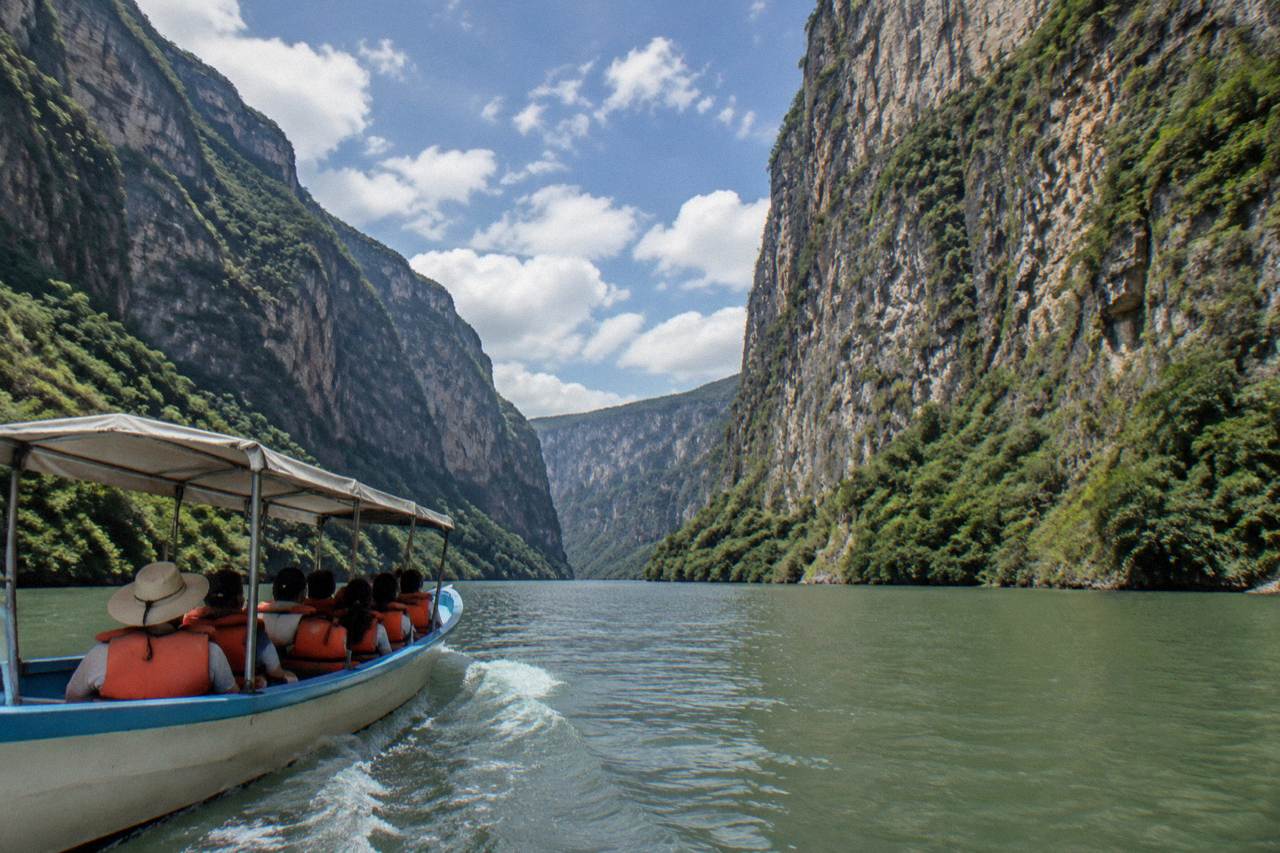
Dress for three environments in one day: a hot, exposed boat deck, breezy clifftop viewpoints, and a sunny colonial town. The official park guidance is comfortable clothes, sneakers, long sleeves, a hat, sunscreen and repellent. Add a light rain layer from May to mid-October, and skip anything you would mind getting sprayed, because canyon waterfalls can soak the boat.
That is the short version. The longer version is that Sumidero Canyon punishes two kinds of dressers: the one who shows up in a cotton t-shirt and flip-flops for a nine-hour day, and the one who overpacks for a jungle trek that this is not. The canyon sits at tropical latitude, over the Grijalva River reservoir held by the Chicoasén dam, and Tuxtla Gutiérrez, the nearest city, is one of the hottest state capitals in Mexico. Maximum temperatures run from 29.5 degrees Celsius in the coolest months to 35.9 degrees in April, per the CONAGUA climate normals for the Tuxtla Gutiérrez station. On the water the sun reflects off the river surface, so exposure is stronger than the air temperature alone suggests.
Most visitors experience the canyon through a guided day trip rather than independently. The Jalapeño full day from San Cristobal, an 8 to 9 hour outing rated 4.6 from 268 reviews, from $85 per person, is the most reviewed option on these tours and includes the shared boat service and national park fees, which is why it is the featured pick for this article. Its itinerary strings together a scenic-drive viewpoint stop, a canyon walk and free time in Chiapa de Corzo, so your clothing has to work standing, sitting, walking and boarding a lancha, all in one outfit.
If you are still choosing how you will see the canyon, these listings cover the common formats, and each one rewards the same wardrobe:
The guides on this site break the decision down in more depth elsewhere: start with the Sumidero Canyon boat ride options comparison if the lancha is your priority, or with how to get to the canyon if logistics are still open. This article stays on clothing, shoes and the small pack of things the rules and the climate make worth carrying.
What Should You Wear For The Canyon Boat Ride?
Wear a breathable, light-colored, long-sleeved layer, long pants or capris you can roll, a wide-brim hat with a chin strap or drawstring, polarized sunglasses and reef-safe sunscreen applied before boarding. The life jacket is mandatory and worn over everything, so skip bulky outerwear, and leave nothing loose that wind or spray can take: the official rules say hands stay out of the water.
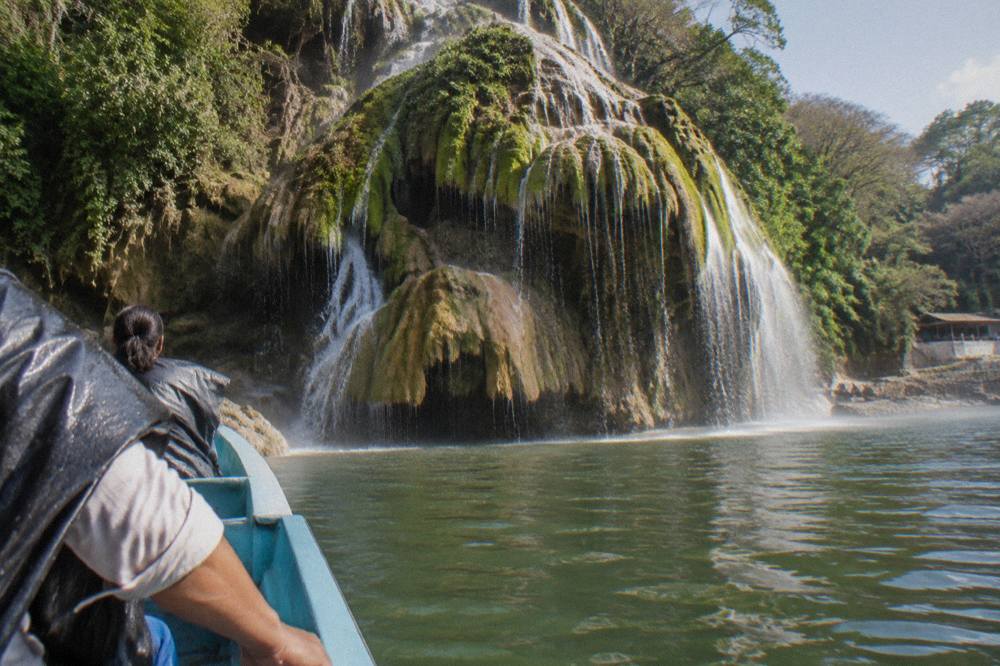
The boat ride is the anchor of every canyon day: about two hours round trip from the Chiapa de Corzo embarcadero up the Grijalva to the dam wall and back, passing named stops like the Cueva de Colores, the Velo de Novia and the Árbol de Navidad waterfall. In the rainy season that waterfall runs hard and the boats deliberately come close, and passenger reports regularly describe getting soaked. In the dry season it slows to a trickle, but spray from the moving boat is normal year-round. This is the strongest argument for quick-drying fabrics over cotton, which stays wet and cold for the rest of a day that includes an air-conditioned van ride.
The life jacket rule is not optional and not negotiable: the visitor regulation and the boat cooperatives both state it, and jackets are provided. Anything thick, stiff or heavily layered under a jacket becomes uncomfortable within twenty minutes, so think of the jacket as your outer layer and dress beneath it accordingly. A loose long-sleeve shirt in a light synthetic or merino blend does double duty: it blocks more sun than sunscreen alone on a two-hour run, and it dries fast.
Footwear on the boat itself barely matters, which is why the shoe question really belongs to the viewpoints section below. What matters on the boat is the small stuff. A hat without a strap will spend the ride in your hand; the boats move at speed and the canyon funnels wind. Sunglasses on a retainer, a phone lanyard or zipped pocket, and a dry bag or at least a zip-lock for documents are the difference between a relaxed run and a lost item in a river that is, at points, reported to be well over 250 meters deep, a commonly cited figure.
One clothing-adjacent rule to know before you pack: no glass containers and no bringing your own alcoholic drinks onto the water, and drones are prohibited throughout the park, so the aerial photographer in the group leaves the drone at the hotel. The full rule set sits on the official CONANP park page, which also states the 125 MXN per person per day entry fee and the 8:00 to 17:00 hours.
Before moving on, if the boat-plus-viewpoints format sounds like your day, the Ecoexperiencias boat ride and viewpoints trip from San Cristobal, from $79 per person and rated 4.0 from 73 reviews, lists hotel pickup and drop-off plus a professional guide.
Which Shoes Work Best For The Canyon And The Viewpoints?
Wear closed-toe walking shoes or trail sneakers with grip. The viewpoints are short gravel and pavement stops, but the town of Chiapa de Corzo is cobbled and steep in places, the dock ramps can be wet and slick, and boat boarding means a step down over water. Sandals work only if they genuinely walk; flip-flops fail on every surface this day involves.
The shoe question comes up because a standard canyon day touches four surfaces. First the van, which is trivial. Second the embarcadero: concrete ramps and metal gangways that are hosed down and dripped on all day, where the combination of water and smooth soles is the main slip risk of the entire trip. Third the miradores: the five official viewpoints along the Calzada al Sumidero from Tuxtla, La Ceiba through El Tepehuaje, are viewing platforms and short paths, easy in any real shoe. Fourth, Chiapa de Corzo itself: colonial streets of round cobblestone that roll ankles in thin soles and punish new leather. The wider set of guides lives on Sumidero Canyon Tours.
Closed shoes also answer the sun problem that most visitors underestimate. On a two-hour boat run your feet sit in reflected glare, and the tops of unprotected feet are a classic first-day burn for sandal wearers in the tropics. If you do wear sandals, put sunscreen on your feet; that single line saves more discomfort than any other in this article.
What about the kayak option? The double crossing kayak experience, from $89 per person, rated 5 from 2 reviews, is a different wardrobe proposition: expect to get wet properly, so swimwear or quick-dry shorts, a rash guard, secure water shoes, and a dry bag become the norm rather than the precaution. The listing states park entry and jetty fees are included, and it meets in Tuxtla Gutiérrez. For everyone on the standard lancha, though, the everyday answer stands: the sneakers the park itself recommends.
What Should You Wear In The Rainy Season?
From May to mid-October, add a real rain layer: a light hooded rain shell or a cheap poncho that fits over your daypack, plus a dry bag for phone and documents. Quick-dry everything. Afternoon downpours are normal, June and September are the wettest months, and the boat ride itself can soak you at the waterfalls, so assume damp is part of the day.
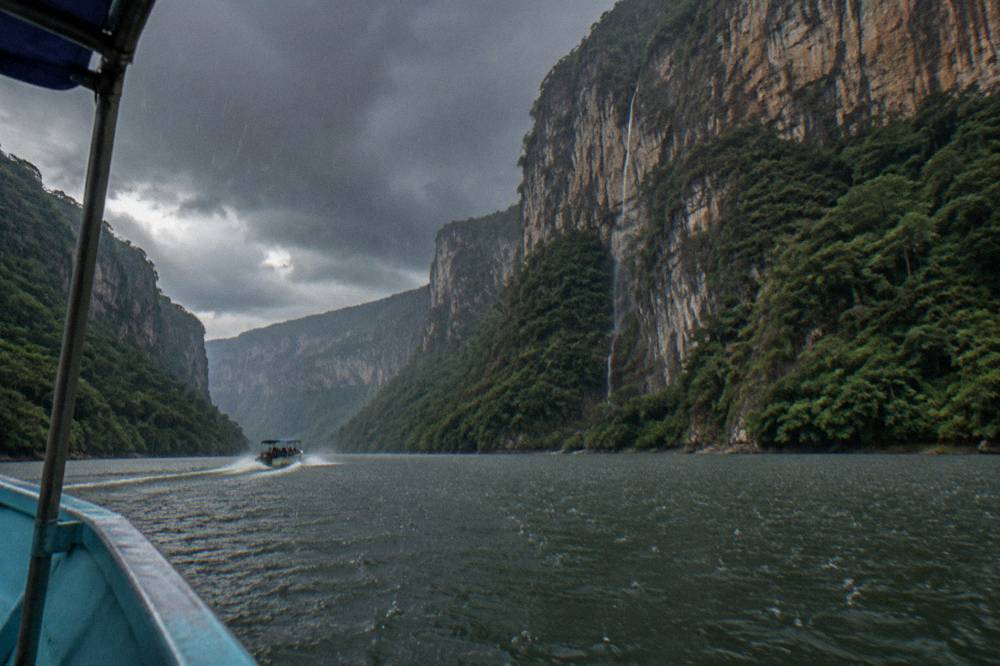
The numbers explain the layer. The CONAGUA normals for the Tuxtla Gutiérrez station, covering 1991 to 2020, put June at 211.1 mm of rain over 17.7 rain days, August at 216.6 mm over 16.7, and September at 208.7 mm over 18.4. May switches on the season with 88.5 mm; October switches it off with 77 mm, and by November the figure collapses to 16.7 mm. The SMN climate normals file publishes the full monthly table. What this means for clothing is simple: in the wet months you will probably get rained on, usually in the afternoon, and a two-dollar poncho beats a three-hundred-dollar shell for a boat day because it can cover both you and your bag.
| Month | Typical max temp (C) | Rain days | What the numbers mean for clothing |
|---|---|---|---|
| January | 29.5 | 0.8 | Full sun protection, no rain layer needed |
| February | 31.8 | 0.5 | Same as January, warmer |
| March | 33.9 | 0.6 | Peak sun season, hat and sleeves matter most |
| April | 35.9 | 1.9 | Hottest month, light colors, extra water |
| May | 35.4 | 9.1 | Heat plus first storms, add a poncho |
| June | 32.8 | 17.7 | Rainy season proper, quick-dry fabrics |
| July | 32.4 | 16.6 | Humid, brief heavy showers likely |
| August | 32.4 | 16.7 | Wettest month by volume, full rain layer |
| September | 31.6 | 18.4 | Most rain days, damp shoes likely |
| October | 30.7 | 10 | Season tapers, keep the poncho handy |
| November | 29.6 | 3 | Back to dry, sun is the only adversary |
| December | 29.5 | 1.2 | Cool mornings, warm afternoons, dry |
Rainy season dressing has one compensating upside: this is when the canyon is at its most dramatic, with seasonal waterfalls streaking the walls and the vegetation at full green, and the Árbol de Navidad running strongly enough to drench passing boats. The trade-off reported by operators is that high river flow can bring navigation restrictions at the embarcaderos in heavy weather, so a flexible wardrobe matches a flexible plan. Our rainy season guide covers what else changes: see Sumidero Canyon in rainy season for the full picture.
Also count the hurricane season overlap: the Atlantic basin runs 1 June to 30 November and the Eastern Pacific 15 May to 30 November, per NOAA's tropical cyclone climatology. A canyon day is not a hurricane day, but tropical systems in either basin can push heavy rain inland, and packing as if one downpour is coming is simply the correct read of the calendar.
What Should You Wear In The Dry Season?
From November to April wear your lightest breathable layers in light colors, a brimmed hat, and polarized sunglasses, and carry more water than feels reasonable. Rain is nearly irrelevant, but the reflected sun on the boat and the 33 to 36 degree afternoons of March and April make heat and UV the only wardrobe problems worth solving.
Dry season is the recommended window in most guides, and the climate file shows why: December through February register 0.5 to 1.2 rain days per month, and November 3. The sun, though, does not take the season off. April is the hottest month in the normals at a 35.9 degree average maximum, and even January averages 29.5. Light-colored, loose, long-sleeved sun clothing beats shorts and a tank top for actual comfort on the water: it shades skin from direct and reflected UV while letting air move, which is how locals in hot climates have always dressed.
One dry season note about the waterfall: in these months the Árbol de Navidad reduces to a trickle, so the spray factor drops and you can dress slightly less for soaking, but keep the phone in a pocket that closes. The light in the dry months is the clearest of the year for photography, which cuts both ways: better photos, stronger glare. The best time of day logic is covered separately in the best time of day for the boat ride, and morning light is the short answer, which also means dressing for a cool start and a hot finish from November to February.
What Should You Pack Beyond Clothing?
Pack sunscreen, insect repellent, a hat, sunglasses, a small towel, a dry bag or zip-lock, refillable water bottles, cash in pesos for the 125 MXN park wristband and any boat fare not prepaid, and a light bag that closes. Skip glass containers, alcohol, drones and pets: all are barred by the visitor rules, and the wristband is mandatory.
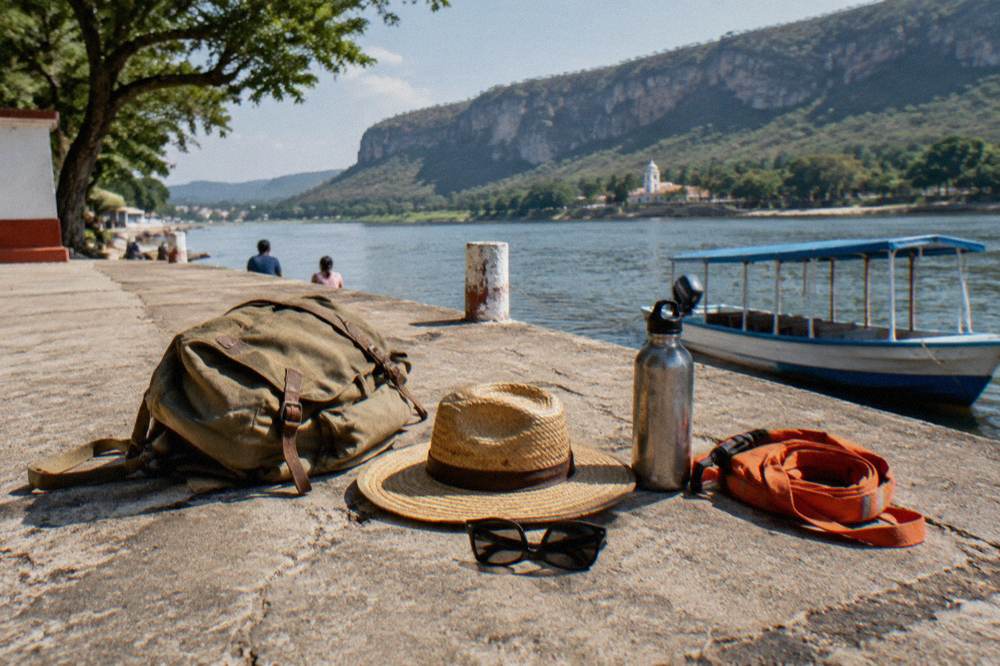
The official suggestion list from CONANP, repeated in the 2026 reporting on the canyon, names comfortable clothes, sneakers, long sleeves, a hat, sunscreen and repellent. Repellent surprises visitors who think of the canyon as open water, but the embarcadero area at Chiapa de Corzo and the riverbanks are tropical lowland, and insects are simply part of that. Apply it before the boat, not on it, since spray and shared benches do not mix.
On the money-clothing boundary: wear or carry something with secure pockets. Many guided listings state that park and entrance fees are included, and for those the wristband is handled, but if you ride the public cooperative lancha independently, the 2026 fares are 460 MXN for foreign visitors, 400 MXN for Mexican nationals, 340 MXN for older adults with INAPAM credential and children, and 290 MXN for children under 2, and those are cash propositions at the dock. The 125 MXN CONANP daily fee has exemptions and discounts for older adults, children under 12, students and teachers with credential, and Mexican nationals with official ID. The fares belong to the cooperatives and can change without notice, so carry a cushion of cash either way. The full breakdown, including which listings include what, is in Sumidero Canyon cost and tickets.
| Item | Dry season (Nov-Apr) | Rainy season (May-Oct) | Why |
|---|---|---|---|
| Wide-brim hat with strap | Essential | Essential | Reflected UV off the river |
| Long-sleeve sun layer | Strongly advised | Advised | Sun blocking, dries fast |
| Rain shell or poncho | Not needed | Essential | Afternoon storms, waterfall spray |
| Quick-dry pants or shorts | Either | Quick-dry only | Wet seats and spray |
| Closed walking shoes | Essential | Essential | Cobbles, docks, viewpoint paths |
| Sunscreen | Essential | Essential | Tropical latitude, open boat |
| Insect repellent | Advised | Essential | Lowland tropical vegetation |
| Dry bag for electronics | Advised | Essential | Spray, rain, splashes |
| Cash in pesos | Essential | Essential | Fees and fares at the dock |
| Light sweater or fleece | Cool mornings | Rarely needed | Vans are air-conditioned |
A word on bag choice: you will leave belongings in the van during viewpoint stops on most tours, so a bag that zips shut matters more than a bag that carries much. The one-day Chiapas itineraries that pair the canyon with San Juan Chamula and Zinacantán, or with other towns, add church visits where a scarf or light cover-up is respectful clothing for women in particular; the Chamula and Zinacantán combo from Tuxtla, rated 5 from 6 reviews and from $145 per person, is the example.
What Not To Wear Or Bring To Sumidero Canyon?
Leave behind glass bottles, your own alcohol, drones, and pets, all barred by the visitor rules, plus anything that cannot survive spray: leather, silk, paper maps and non-waterproof phones without a case. Do not plan to leave the boat mid-ride; that is prohibited too. And the canyon has no sunscreen ban, unlike some Mexican marine parks, so bring it freely.
The prohibition list is short and clear, and it comes from the official visitor regulation: stay on trails, do not climb retaining walls, no bringing in alcohol, no smoking, no campfires, no removing flora or fauna, do not leave the boats, control your solid waste, and wear the conservation wristband. On the water the cooperatives add: life jacket at all times, hands out of the water, no traveling under the influence, no glass, no pets, no drones. Most of these are behavior rather than wardrobe, but three have direct clothing consequences. Glass bottles, meaning the pretty Mexican Coke bottle you bought at the dock, cannot come aboard, so decant or buy cans. Drones cannot come at all, anywhere in the park; the photography rules are covered in full in the canyon photography and drone rules guide.
The sunscreen point deserves a paragraph because wrong information travels: some Mexican protected areas, particularly certain marine parks, restrict sunscreen types or ban it outright, and that rule is sometimes wrongly pasted onto the canyon. The CONANP guidance for Sumidero actively suggests sunscreen. Reef-safe formulations are still a good habit anywhere on a river that feeds a major reservoir, but there is no ban here, and a visitor who arrives with none is the one making the mistake.
Finally, jewelry and valuables: the boats are stable but open, and rings dropped overboard stay overboard. The same logic applies to the swimming question people sometimes ask; the ride is a boat tour on a river with crocodiles reported along the banks, and you stay in the vessel, full stop. Sightings of crocodiles, spider monkeys and birds like herons, cormorants and vultures are commonly reported but never promised.
If a viewpoint stop on the miradores road is part of your plan, note that Tuesday closure again and read the Sumidero Canyon miradores guide before deciding how much walking your day includes, because that is the difference between sneakers and something lighter.
One more comfort consideration crosses from clothing into planning, and it is the reason this site exists at all: on a well-run guided day, someone else handles the fee lines, the timing and the transport, and your only jobs are sun, shoes and a poncho. The Apasionado x Chiapas day trip from Tuxtla, from $53 per person and rated 4.7 from 175 reviews, is the most reviewed Tuxtla listing, and its listing states reception and transfer at your hotel plus entrance fees.
The Ecoexperiencias boat ride and viewpoints day from San Cristobal covers similar ground from the highlands side, with hotel pickup listed and a professional guide in the inclusions.
To sum up the wardrobe in one sentence: dress like it is hot, because it is; dress like it is sunny, because it is; and from May to mid-October dress like it will rain, because on 17 or 18 days a month in the peak wet months, it does. Beyond that, these listings are the outfit-neutral ways to spend the day, whichever shoes you choose:
Common Questions About What To Wear To Sumidero Canyon
What Clothes Offer Sun Protection On The Canyon Boat Ride?
A breathable long-sleeve sun layer, long pants or capris, closed walking shoes, a wide-brim hat with a strap, sunglasses and sunscreen. Add a light rain layer from May to mid-October and expect spray on the boat. The life jacket is mandatory and worn over your clothes, so keep layers thin.
Do I Need To Bring My Own Life Jacket?
No. Life jackets are mandatory and provided by the boat cooperative or your tour operator, and wearing one for the whole ride is a park rule, not a suggestion. Bringing your own is allowed but pointless for most travelers.
Can I Wear Flip-Flops On The Boat Ride?
You can, but you will regret them at the dock ramps and in Chiapa de Corzo, where cobbles are steep and slick. Sneakers or closed walking shoes are the park's own recommendation and cover every surface of a standard day: dock, boat, viewpoints and town.
Will I Get Wet On The Boat Ride?
Probably some spray, and in the rainy season possibly soaked at the Árbol de Navidad waterfall, when boats come close to the falling water. Quick-dry fabrics and a dry bag for electronics are the standard precautions. In the dry season the waterfall slows to a trickle and the ride is much drier.
Is Sunscreen Allowed In The Canyon?
Yes. CONANP's own guidance suggests sunscreen, along with comfortable clothes, long sleeves, a hat and repellent. There is no sunscreen ban at Sumidero Canyon; restrictions of that kind belong to other Mexican protected areas.
What Should I Wear In Chiapa De Corzo After The Boat?
The same comfortable day clothes work; the town is a short walk from the embarcadero with a colonial plaza, a fountain and churches. If your itinerary continues to the indigenous communities of San Juan Chamula or Zinacantán, add a light scarf or cover-up, since modest dress is expected in the churches there.