Sumidero Canyon Wildlife: Crocodiles, Spider Monkeys And Birds From The Boat
American crocodiles, spider monkeys and a long list of water birds are the animals people come to Sumidero Canyon for, and the two-hour boat ride up the Grijalva River is the only practical way to look for them.
Short answer
The animals reported along the Sumidero Canyon boat ride are American crocodiles, spider monkeys and birds including herons, cormorants, pelicans and vultures. There are no official population counts, so sightings are never guaranteed. In October 2026 Profepa released 13 rescued river crocodiles into the national park.
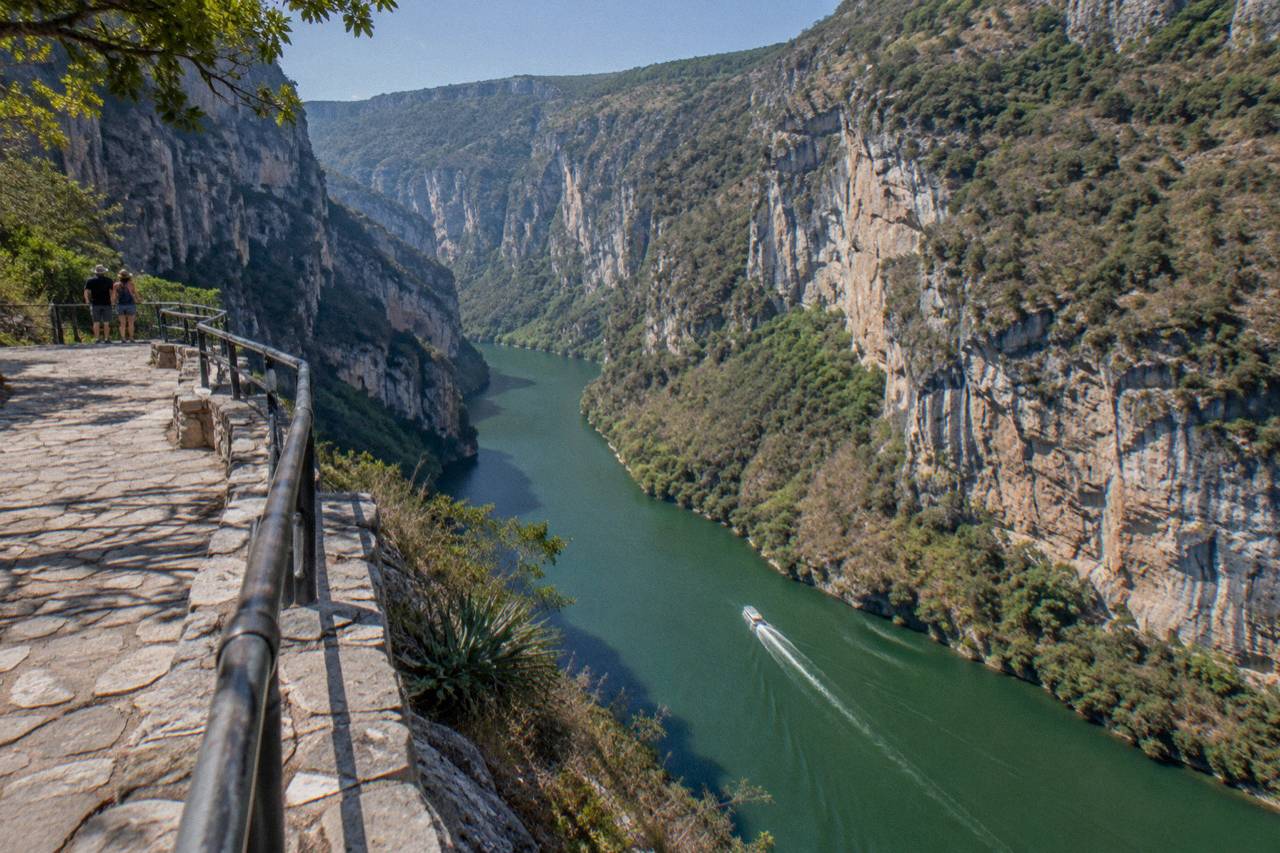
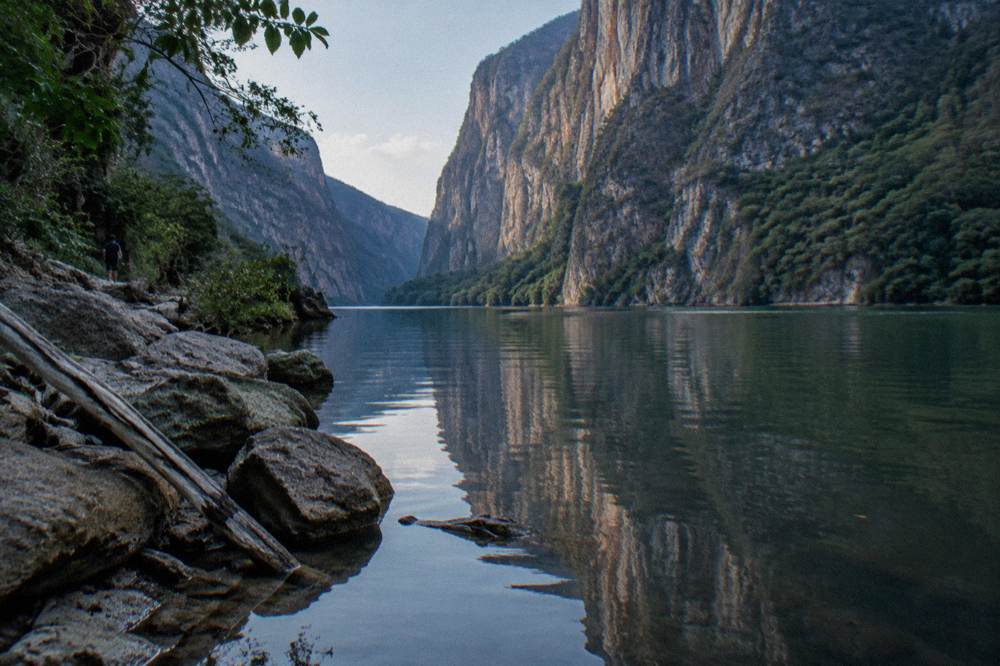
The Grijalva River cuts through a national park of 21,789.41 hectares, decreed on 8 December 1980, and the animals that live on its walls and waterline are the reason most visitors take the two-hour boat ride at all. The canyon runs roughly 30 to 33 kilometers from the Chiapa de Corzo embarcadero to the Chicoasen dam wall, with limestone walls commonly cited above 1,000 meters, and every meter of that stretch is habitat. Boats from the cooperative docks at Chiapa de Corzo and Cahuare make the round trip daily from 8:00 to 17:00, with a last full-trip departure around 14:00. If the canyon itself has you curious beyond the animals, the collection of interesting facts about Sumidero Canyon covers everything from the dam at the far end to the caves and waterfalls along the way.
What you are looking for: American crocodiles basking on the mud banks, spider monkeys moving through the trees on the upper slopes, and water birds, herons, cormorants, pelicans and vultures among them, working the river's edge. Guides and guests report all of these regularly. No official population count exists for any of them, and the park's own visitor rules exist precisely because the animals are wild. In October 2026, Profepa released 13 rescued river crocodiles into the park, animals taken from urban areas between 2022 and 2025, which tells you the crocodile population here is actively managed, not counted.
This guide lays out what the boat actually passes, what the rules are, and which day trips from San Cristobal or Tuxtla put you on the water with the best odds. More on the canyon's geology and sights is in what the boat ride shows you, and the seasonal picture is in the best time to visit the canyon.
What Animals Live In Sumidero Canyon?
The animals consistently reported inside the national park are American crocodiles (Crocodylus acutus), spider monkeys (Ateles geoffroyi) and a mix of water and scavenging birds: herons, cormorants, pelicans and vultures. Boat captains point out crocodiles on the banks and monkeys in the trees on most trips, but no official counts are listed and sightings are never guaranteed.
The crocodiles are the headline. The American crocodile is the species here, the same one found along much of Mexico's Gulf and Pacific coasts, and in the canyon they sun themselves on the mud and sand flats a short distance from the embarcadero. They are most visible when the weather is cooler and they climb out of the water to warm up, and least visible in the middle of hot afternoons. The October 2026 Profepa release of 13 rescued animals, reported by Quadratin, added grown crocodiles to a population nobody outside the cooperative captains really knows the size of.
Spider monkeys live higher up, in the forest on the canyon walls. They are harder to spot than the crocodiles because they move through the canopy rather than sitting still on a bank, but captains who run the river daily know where troops hang out and will slow the boat when they see movement. Birdlife rounds out the ride: herons fishing in the shallows, cormorants drying their wings on the rocks, pelicans on the wider stretches near the dam, and vultures riding the thermals along the walls. Visitors who want the wider natural history of the park, including the caves and the Árbol de Navidad waterfall formation, should read what to see in Chiapa de Corzo for the town side of the trip.
| Animal | Where on the ride | How often reported | Notes |
|---|---|---|---|
| American crocodile | Mud and sand banks near the river's edge | Reported along the ride, with no frequency or count documented | 13 rescued crocodiles released by Profepa in October 2026 |
| Spider monkey | Forest canopy on the canyon walls | Regularly, but harder to spot | Moves in troops; captains slow down when seen |
| Herons | Shallows and overhangs | Commonly | Fish in the early morning calm |
| Cormorants | Rocks at the waterline | Commonly | Perch with wings spread to dry |
| Pelicans | Wider water near the dam end | Reported on many trips | More likely far up the canyon |
| Vultures | Thermals above the walls | Almost always | Circle the cliffs in warm hours |
Some listings and travel articles imply a zoo experience. The canyon is a national park under CONANP management, the animals move where they want, and river conditions change with the season. A listing that describes wildlife viewing is describing what guests commonly report, not a promise. The Jalapeño full day from San Cristobal, the most reviewed product on this site at 4.6 from 268 reviews, lists its Sumidero Canyon segment as a walk and a shared boat service, from $85 per person, with park entrance fees included in the listing.
Where On The Boat Ride Do You See Crocodiles?
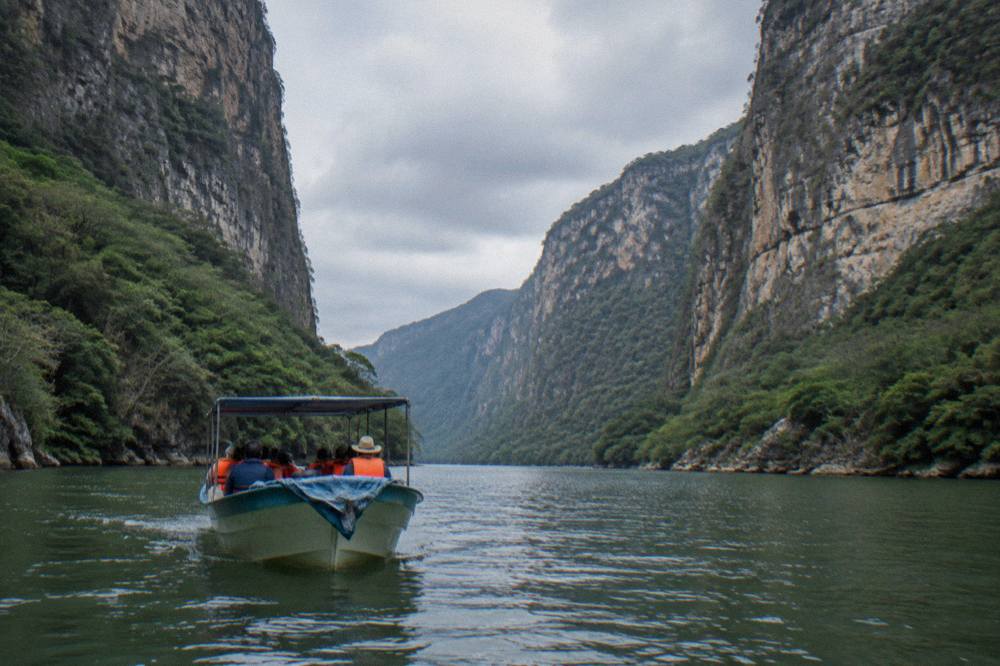
Crocodiles are reported on the banks of the Grijalva in the first stretch of the ride, from the embarcadero up through the narrower sections, where mud flats and shallow water give them places to bask. Boats slow down when captains spot them. The ride runs about two hours round trip to the Chicoasen dam wall and back.
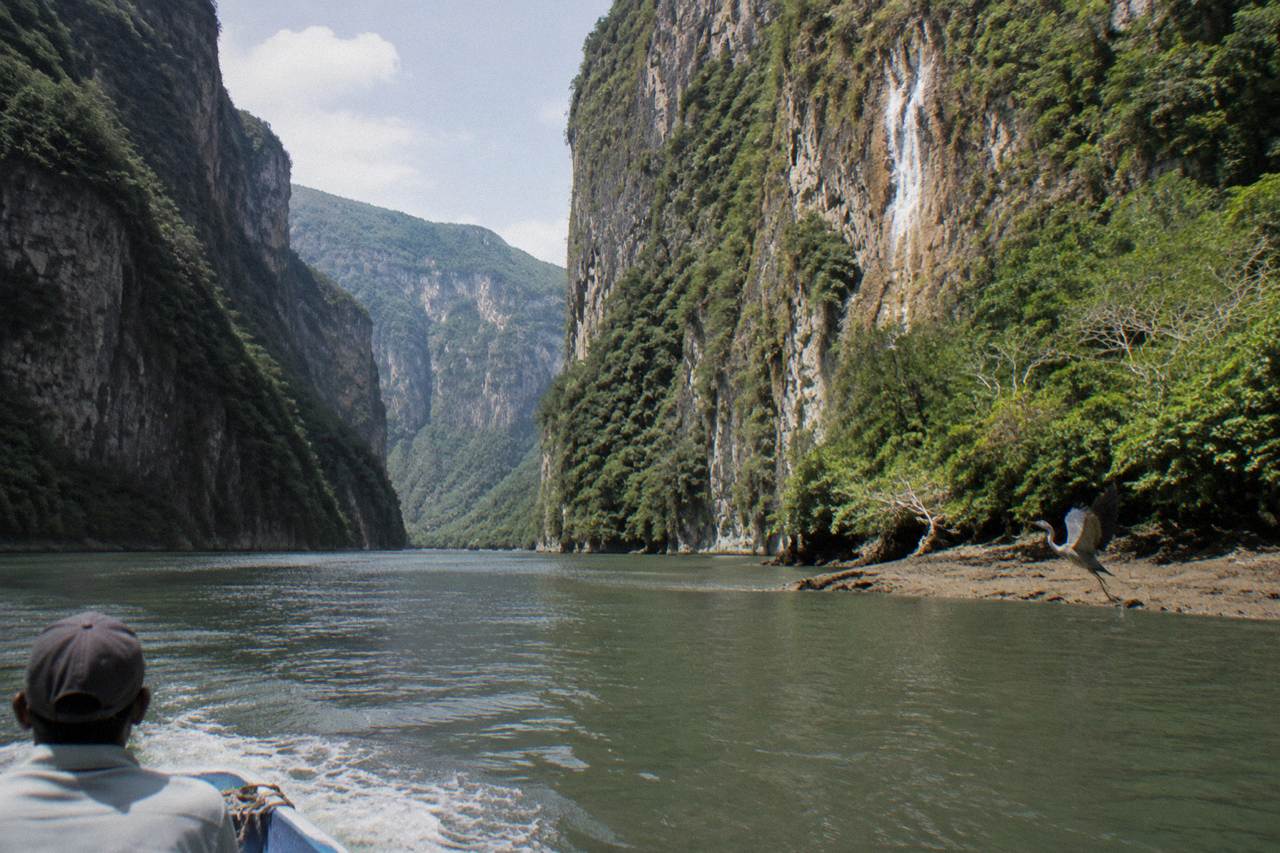
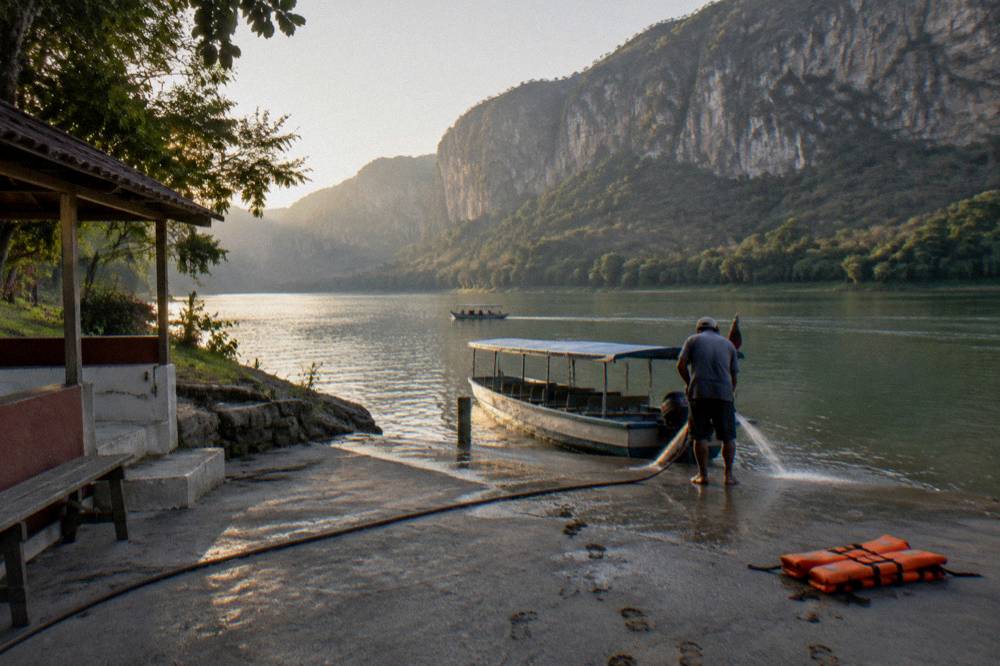
The route itself is fixed by the cooperative: out from Chiapa de Corzo or Cahuare, past the Belisario Domínguez bridge, along the bend shaped like the Chiapas coat of arms, past the Cueva de Colores and the Velo de Novia and Árbol de Navidad waterfalls, up to the dam wall, and back. The crocodile banks sit mostly on the lower half of that route, close to where the river widens and the mud accumulates. Captains on the shared lanchas know the spots and will cut the engine when there is an animal on the bank.
Two things affect your odds. Time of day is one: crocodiles bask most in the morning after a cool night, so the 8:00 to 10:00 departures tend to pass more animals out of the water than the early afternoon ones. Season is the other: in the rainy season, roughly May to mid-October per the national weather service's definition for the region, the river runs higher and some banks are submerged, while the dry season, November to April, exposes more basking ground. Neither is a rule, only a pattern, and the rainy season guide covers the navigation side in full.
The fare for the ride itself, if you go independently rather than on a day tour, is set by the lancha cooperatives: 460 MXN for foreign visitors, 400 MXN for Mexican nationals, 340 MXN for older adults with INAPAM credential and children, and 290 MXN for children under 2. That is separate from the 125 MXN park entry fee charged per person per day, which many guided tours do include; each listing states its own position, and the conservation wristband shows it was paid. The full fee mechanics are in canyon costs and tickets.
If a day trip is the better fit for your dates, these San Cristobal options all include the shared boat ride and the park:
The three differ mainly in pace and price. The Jalapeño day at from $85 per person runs 8 to 9 hours with viewpoints and a canyon walk. The OTISA budget fare at from $46 per person is a 9-hour trip with a 100-minute river boat segment. The EcoExperiencias national park full day at from $89 per person caps the group at 14 and lists hotel pickup. All three state that park and entrance fees are included.

Which Birds Can You Spot On The Sumidero Canyon Boat Ride?
The birds reported along the canyon boat ride are herons, cormorants, pelicans and vultures, plus whatever else the river turns up on the day. Herons and cormorants sit low on the waterline rocks, pelicans appear on the wider water toward the dam, and vultures circle above the walls. No bird count is given, and sightings vary.
Birders should calibrate expectations. This is not a dedicated birding expedition with a spotter and a scope; it is a shared lancha with a captain who narrates the canyon and its wildlife in Spanish. What it does offer is two hours of quiet river access through habitat that is otherwise almost unreachable, since the walls rise sheer and the miradores road runs along the rim, not the waterline. Early departures pass calmer water, and herons fish in that calm.
The listed species are the ones named consistently across operator descriptions and guest reports. Herons stand the shallows. Cormorants, easy to recognize when they hold their wings out to dry, perch on the rocks in loose groups. Pelicans show up more on the broad water near the Chicoasén reservoir end, where the canyon opens out. Vultures are near-certain, riding the thermals along the limestone at almost any hour. Birders wanting a slower, quieter platform sometimes consider the kayak option: the double crossing kayak experience from Tuxtla runs 6 hours from $89 per person, includes the park bracelet and the Chicoasen jetty entry, and holds a 5 rating, though from only 2 reviews, so the pool is tiny. Kayaks move with less engine noise than the shared lanchas, which some paddlers feel improves close wildlife passes.
For most visitors, though, the standard boat is the practical choice, and the wildlife is a bonus layered over the geology. The walls themselves are the draw for many: limestone of Upper Mesozoic marine sediments, roughly 80 to 136 million years old, eroded along a tectonic fault, with one 2026 source putting the maximum height near 1,200 meters at the El Roblar mirador. The miradores viewpoints guide covers the rim road, open Wednesday to Monday and closed Tuesdays.
Are Spider Monkeys Easy To See In The National Park?
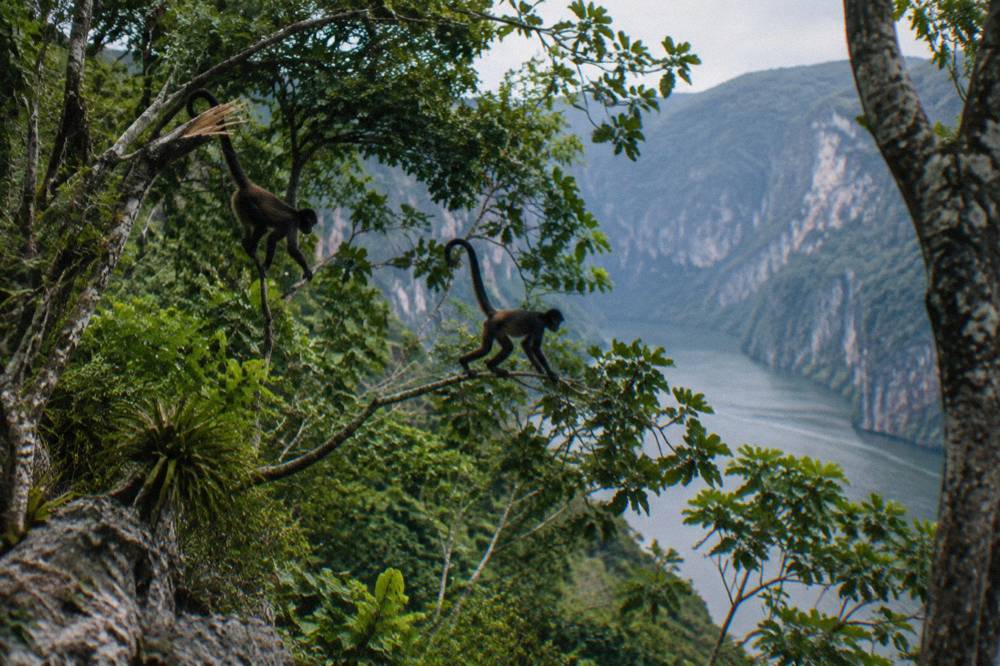
Spider monkeys are reported regularly in the forest on the canyon walls but they are not easy to see: they stay in the canopy, they move fast, and the boat passes below them at river level. Captains who spot a troop will slow down, so sit where you can see both walls. No population figure is given.
The spider monkey here is the Geoffroy's spider monkey, a species that ranges through the forests of southern Mexico and Central America and depends on continuous canopy. The canyon walls provide exactly that, which is why the troops persist so close to two cities. The viewing problem is geometry. From the boat, you are looking up a wall that in places reaches over 1,000 meters, and a dark monkey in a dark tree at that distance reads as shadow. Sightings tend to come in bursts: nothing for twenty minutes, then a troop crossing a gap in the canopy, all arms and tails, in clear view for under a minute.
Morning again helps, both because the monkeys feed actively early and because the light angles across the walls before noon. The same logic applies to the crocodiles and birds, which is why most day tours from San Cristobal leave around 8:45 and reach the water by late morning. The EcoExperiencias national park full day from San Cristobal, from $89 per person with a 14-traveler maximum and hotel pickup listed, reaches the canyon after about 80 minutes of driving and puts two hours on the water.
One practical note on photos: drones are prohibited throughout the park, so the temptation to fly one over the monkey slopes should end before it starts. Drones are banned on the boat ride under cooperative rules reported in 2026, and CONANP filed a 2025 complaint over visitor conduct at a mirador. Long lens or nothing.
What Are The Rules For Watching Wildlife On The Grijalva?
The rules are short and enforced: life jacket mandatory, hands inside the boat and out of the water, do not leave the boats, no feeding or removing fauna, no drones, no pets, no glass or alcohol, and wear the conservation wristband. They come from CONANP's visitor regulation and the cooperatives' own guidance.
The CONANP regulation for the park lists nine visitor rules, and the ones that touch wildlife directly are these: stay on trails, do not remove flora or fauna, do not leave the boats, control solid waste, and wear the conservation wristband. The cooperative guidance adds the water-specific items: life jacket at all times, hands kept out of the water, no glass containers, no travelling under the influence, no pets, no drones. Feeding animals is prohibited under the general fauna rule, and the crocodiles are the obvious reason the hands rule exists.
| Rule | Source | Why it matters for wildlife |
|---|---|---|
| Life jacket mandatory | Cooperative guidance | Fast currents near the dam end |
| Hands out of the water | Cooperative guidance | Crocodiles in the lower river |
| Do not leave the boats | CONANP regulation | Banks are crocodile habitat |
| Do not remove flora or fauna | CONANP regulation | Feeding and handling are covered |
| No drones | Cooperative guidance and park rules | Disturbs monkeys and birds |
| No pets, no glass, no alcohol | Cooperative guidance | Keeps the water and banks clean |
| Conservation wristband | CONANP regulation | Proof of the 125 MXN daily fee |
CONANP suggests comfortable clothes, sneakers, long sleeves, a hat, sunscreen and repellent for a day in the park, which is sensible advice for a two-hour open boat in tropical sun even in January, when Tuxtla Gutiérrez normals still show an average high near 29.5 degrees. The official park page with the fee, hours and rules is published by CONANP at the national park's official listing.
When Is The Best Time Of Day For Wildlife On The Canyon Boat Ride?
Early morning, roughly the 8:00 to 10:00 departures, gives the best combination reported by operators and guides: calmer water for wading birds, crocodiles basking after a cool night, and active monkeys feeding in the canopy. The embarcaderos run boats from 8:00, departing when full, with the last full trip around 14:00.
The reasoning is straightforward. Crocodiles are cold-blooded and bask to warm up, so cool nights put them on the banks in the morning. Herons and other fishers work the calm water before wind picks up. Monkeys feed in the first hours of daylight. By early afternoon, animals retreat from heat and from boat traffic, and the 2026 fare structure and schedule both push you early anyway, since boats after about 14:00 only run the shorter trip to the Árbol de Navidad, past the best crocodile banks only briefly. The best time of day guide breaks down the departure windows in detail.
Season matters alongside hour. The dry season, November to April, brings lower river levels and, per guides, clearer water and more exposed bank for basking. The rainy season, May to mid-October with peaks in June and September, brings higher flow, seasonal waterfalls off the walls and greener slopes, and reported navigation restrictions at the embarcaderos when conditions demand. The Tuxtla Gutiérrez climate normals from the national weather service put August rainfall at 216.6 millimeters against February's 1.8, which is the size of that difference; the full normals table is published at the SMN station normals for Tuxtla Gutiérrez.
Which Day Trips From San Cristobal Or Tuxtla Pass The Wildlife Hotspots?
Every boat-based day trip passes the same water, because the cooperative route is fixed: the wildlife hotspots are the lower river banks, the wall forests and the dam-end water. The difference between listings is departure city, group size, language and price, from $46 on the budget San Cristobal fare to $155 on the premium hotel-pickup boat tour.
Since the route is the same, choose on logistics. From San Cristobal, the OTISA budget fare at from $46 per person runs 9 hours in Spanish with a 100-minute river segment and park fees included. The Apasionado day trip at from $52 per person adds a mirador photo stop and a canyon walk. The Selva Azul premium boat tour at from $155 per person, 4.6 from 136 reviews, lists hotel pickup, a 90-minute boat tour, the park entrance fee and travel insurance. From Tuxtla, the Chiapas Family Tours 5-hour option at from $102 per person, 5 from 15 reviews, includes hotel pickup, a 2-hour shared boat tour, the park entrance and a cooler of bottled water, which suits a short window.
| Tour | From | Price | Boat time | Pickup listed | Rating and reviews |
|---|---|---|---|---|---|
| OTISA budget day trip | San Cristobal | from $46 per person | 100 minutes | Not stated | 4.6 from 104 |
| Apasionado day trip | San Cristobal | from $52 per person | Within 9-hour day | Not stated | 4.4 from 124 |
| Jalapeño full day | San Cristobal | from $85 per person | Shared boat, 8 to 9 hours | Not stated | 4.6 from 268 |
| Selva Azul premium boat tour | San Cristobal | from $155 per person | 90 minutes | Yes | 4.6 from 136 |
| Chiapas Family Tours 5-hour | Tuxtla | from $102 per person | 2 hours | Yes | 5 from 15 |
The Jalapeño full day from San Cristobal deserves its place at the top of most shortlists: it is the most reviewed listing on this site, it folds the viewpoints road and a canyon walk around the shared boat service, and the listing states that park and national park fees are included, from $85 per person. Book it on Sumidero Canyon Tours and the cancellation terms are stated on the operator's live listing.
Is Wildlife Viewing In Sumidero Canyon Guaranteed?
No. Crocodiles, spider monkeys and the birds are wild animals in a national park, and no operator, captain or listing can promise a sighting. What is verifiable is that these species are present and reported on most rides, that the 2026 crocodile release added 13 adults to the river, and that the two-hour route passes their habitat.
Any listing that markets the canyon will show photographs of crocodiles; that is marketing, not a contract. The Selva Azul premium listing, for instance, describes its canyon segment as "wildlife viewing" as an activity type, which is an accurate description of intent, not outcome. Guests on the water regularly report crocodiles, and the captains' local knowledge concentrates effort where animals were seen recently, but weather, river level and season all shift the odds.
The 2026 conservation record is genuinely encouraging, though. Beyond the October crocodile release, state and federal agencies have run continuous cleaning operations on the river, with more than 2,393 tons of floating waste removed in 2026 as of early October and roughly 900,000 cubic meters of sediment dredged from the Chicoasén reservoir in 2025 to improve flow. A cleaner river is better habitat, and the dam keeps water in the canyon year-round, which is why the boats run in every month. For the wider context of the river system, NOAA's published hurricane-season windows, June 1 to November 30 for the Atlantic basin, overlap the rainy season and explain most weather-driven trip changes.
Common Questions About Sumidero Canyon Wildlife
What Animals Live In Sumidero Canyon?
American crocodiles, spider monkeys and birds including herons, cormorants, pelicans and vultures are reported along the boat ride. There are no official population counts, and sightings are never guaranteed.
Will I See Crocodiles On The Boat Ride?
Crocodiles are reported on most rides, basking on the banks of the lower Grijalva, especially on morning departures. No operator can promise a sighting; the animals are wild.
Can You See Spider Monkeys In Sumidero Canyon?
Yes, spider monkeys live in the forest on the canyon walls and captains slow the boat when a troop is spotted, but they stay high in the canopy and sightings are brief.
Are There Crocodile Releases In The Park?
In October 2026 Profepa released 13 rescued river crocodiles into the national park. The animals had been rescued from urban areas between 2022 and 2025.
What Are The Wildlife Rules On The Boats?
Life jacket mandatory, hands out of the water, stay in the boat, no feeding or removing fauna, no drones, no pets, no glass or alcohol, and wear the conservation wristband.
What Is The Best Time Of Day For Wildlife?
The 8:00 to 10:00 departures give calmer water, basking crocodiles and feeding monkeys and birds. The embarcaderos run boats from 8:00, with the last full trip around 14:00.