How Do I Visit Canon Del Sumidero?
A step-by-step guide to visiting Canon del Sumidero: choosing a departure city, picking a tour format, understanding the park fee and boat fares, and going independently to the docks.
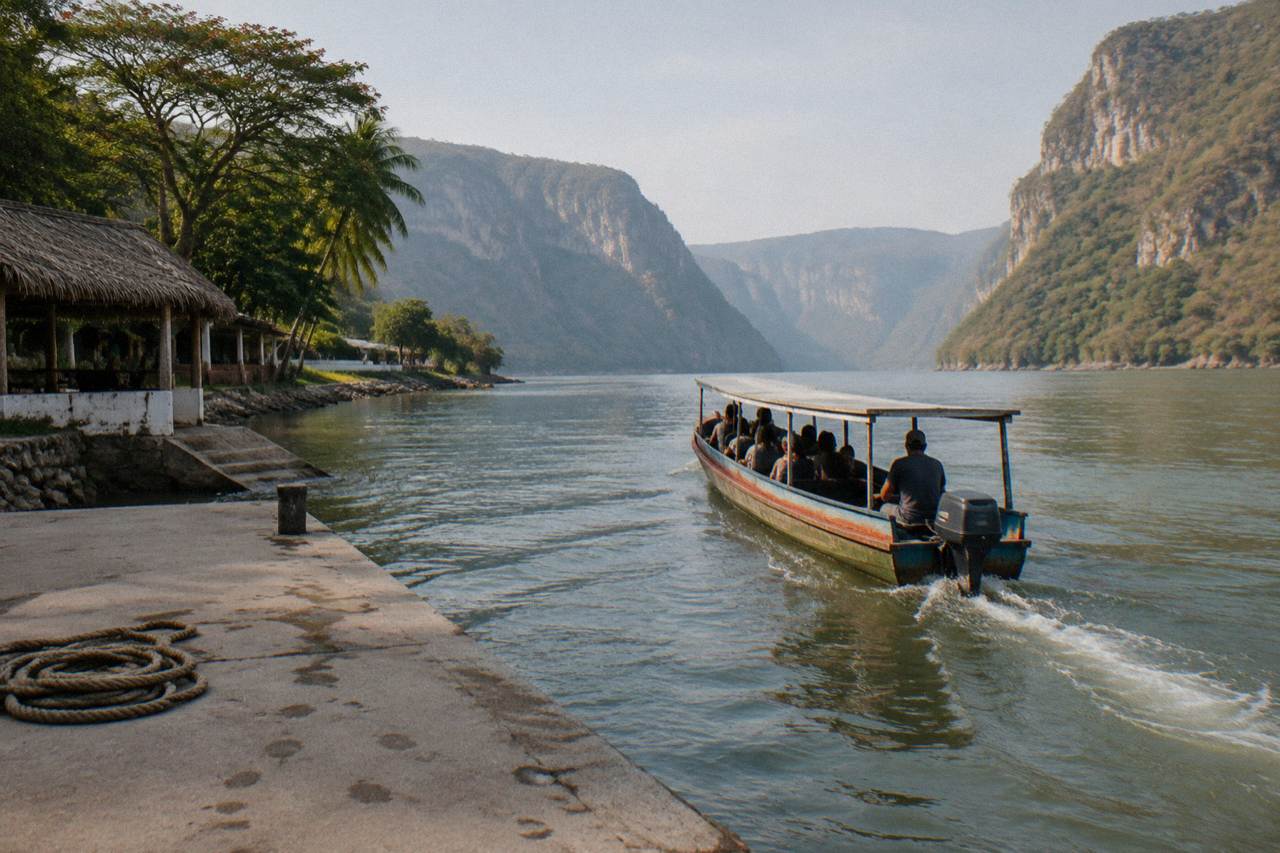
You visit Canon del Sumidero in one of two ways: you book a day tour from San Cristobal de las Casas, Tuxtla Gutierrez or Chiapa de Corzo that bundles transport, a shared boat ride and usually the viewpoints and the colonial town, or you travel independently to an embarcadero and buy a lancha ticket at the dock at the current cooperative fares plus the 125 MXN park fee. The park is open 8:00 to 17:00, boats run every day, and the miradores road is closed on Tuesdays. Those are the facts everything else hangs on.
The canyon itself is a national park, decreed on 8 December 1980 and covering 21,789.41 hectares of limestone walls that rise above 1,000 meters over the Grijalva River. The boat ride from the Chiapa de Corzo dock to the Chicoasen dam wall and back takes about two hours, passing the Cueva de Colores, the Velo de Novia waterfall and the seasonal Árbol de Navidad formation. Roughly 500,000 to 800,000 people a year make this trip, and almost all of them do it in one of the two ways described above.
This page walks through the whole decision in order: departure city first, then tour format, then fees, then meeting points and timing. If you want the short version, the Jalapeño full day from San Cristobal, from $85 per person with 268 reviews behind its 4.6 rating, is the most reviewed starting point among these tours.
Which Departure City Should You Start From?
Most visitors start from San Cristobal de las Casas or Tuxtla Gutierrez, and the choice is really about where you are sleeping: San Cristobal carries 15 of these tours, Tuxtla carries 10, and Chiapa de Corzo itself is where the main dock actually sits, about an hour by road from San Cristobal. The Tuxtla option shortens the drive to as little as 20 or 30 minutes depending on the listing.
San Cristobal is the backpacker and colonial-town base of Chiapas, high in the mountains, and nearly every full-day trip from there follows the same shape: a van down the highway, a boat ride of about 100 minutes to two hours on the water, free time in Chiapa de Corzo, and the drive back up. The drive is about an hour each way, reported consistently across the itineraries. If you are staying in San Cristobal, this is the simplest decision on the page, and the San Cristobal departure guide breaks the listings down one by one.
Tuxtla Gutierrez, the state capital, sits in the hot lowlands right beside the canyon. Trips from Tuxtla are shorter: the EcoExperiencias 6-hour day from $99 per person gets you back by early afternoon, and the Chiapas Family Tours 5-hour bilingual option from $102 per person is the quickest hotel-pickup tour here. If you fly into Tuxtla and want the canyon before moving on to San Cristobal, there is even a Jalapeño one-way listing that finishes at Portal 9 in San Cristobal, from $51 per person.
Chiapa de Corzo itself is the third option, and in some ways the smartest one. The town holds the main embarcadero, one or two blocks from the central park, so if you sleep there you can walk to the boats. The trade-off is lodging: most people stay in San Cristobal or Tuxtla and visit the town as part of the day. For the details of each dock, see the embarcadero comparison.
Which Tour Format Fits Your Trip?
These tours offer three formats: shared day tours in a van with a group (from $40 per person, the bulk of the listings), a private car day with hotel pickup from $28 per person, and a 6-hour double-crossing kayak experience from $89 per person. Shared tours run 5 to 10 hours, the private day runs 8, and the kayak runs 6.
The shared day tour is what most people book, and it is the format with the widest price spread. At the bottom, the Selva Azul budget boat day from $40 per person covers transport, park entrances and the boat ride, with a 4.0 rating from 80 reviews. At the top, the Selva Azul Chiapas premium boat tour from $155 per person adds hotel pickup and drop-off, a 90-minute boat tour and an English-speaking guide in the private option, rated 4.6 from 136 reviews. In between sit a dozen variations that differ mostly in viewpoints included, guide language and pickup, which is exactly why comparing the listing lines matters more than the headline price.
The private format answers a different question. The Rincones Viajeros private car day, from $28 per person with the car priced per group of up to three, gives you a sedan, a driver-host and hotel pickup in Tuxtla for eight hours. Its listing is unusual in being explicit about what is not included: the boat ticket, roughly 400 to 550 MXN paid at the desk, and the miradores reserve admission, roughly 65 to 125 MXN at the booth. That makes it a good study in how private days work: you buy flexibility and pay the entry costs as you go. It has no rating yet, so there is no review pool to lean on.
The kayak is the specialist choice. The double-crossing experience from $89 per person, rated 5.0 from just 2 reviews, meets at an AutoZone parking lot in Tuxtla and includes the park access bracelet and the Chicoasen jetty entrance over six hours. Two reviews is a small pool, but the format itself is the appeal: the same water, seen from water level, without a boatload of fellow passengers. For the standard shared-boat alternative with hotel pickup and a professional guide, Check availability on the Ecoexperiencias listing, from $79 per person.
What Does The Park Fee Cover And What Do Boats Cost?
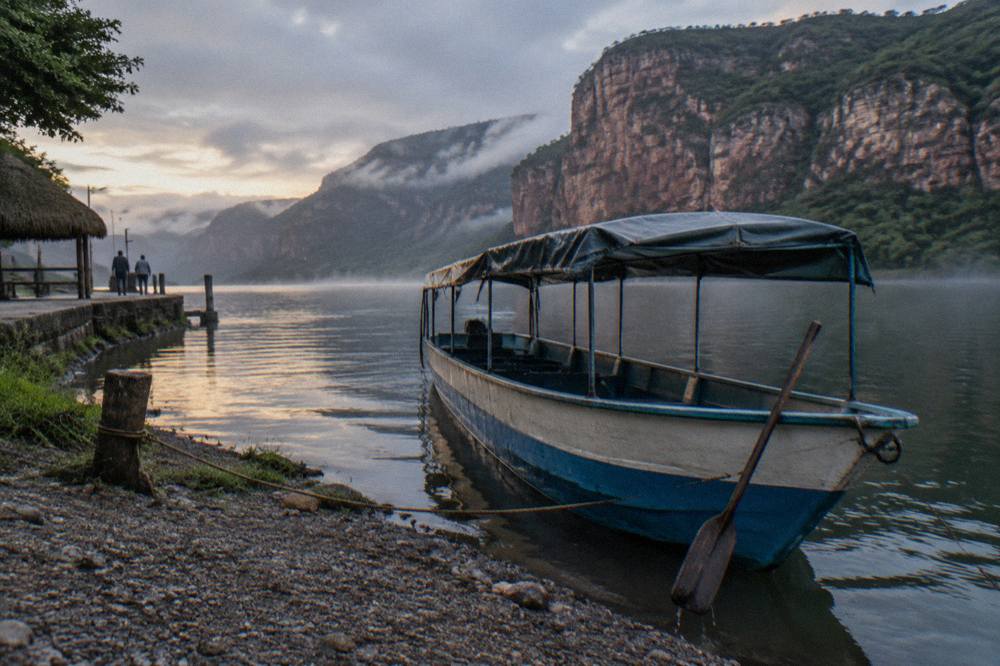
Two separate charges apply: the CONANP park entry fee of 125 MXN per person per day, which foreign tourists pay in full, and the cooperative lancha fare, currently 460 MXN for foreign visitors, 400 MXN for Mexican nationals, 340 MXN for children and older adults with INAPAM credential, and 290 MXN for children under 2. Most guided tours state the park fee as included; the independent route pays both at the dock.
The split confuses a lot of first-time visitors, so it is worth being precise. The 125 MXN is the official federal park charge, the "cobro de derechos", collected through the conservation wristband you wear on the water. Exemptions exist for older adults, pensioners, people with disabilities and children under 12 with valid credential, students and teachers get 75 percent off with credential, and Mexican nationals and foreign residents get 50 percent off with official ID, per the official CONANP park page. A foreign tourist without Mexican residency pays the full amount. The same fee and the same wristband cover the miradores road on the same day.
| Charge | Who pays it | 2026 amount | Where it is paid |
|---|---|---|---|
| Park entry (CONANP) | All visitors, per day | 125 MXN, discounts and exemptions with credential | Park entry, or included in many tours |
| Shared lancha, foreign visitor | Non-resident foreigners | 460 MXN | Embarcadero cooperative |
| Shared lancha, Mexican national | Nationals | 400 MXN | Embarcadero cooperative |
| Shared lancha, child or INAPAM | Children, older adults with credential | 340 MXN | Embarcadero cooperative |
| Shared lancha, under 2 | Infants | 290 MXN | Embarcadero cooperative |
The lancha fares are set by the boat cooperatives, not by the park, and they can change without notice; the current figures come from the cooperative tariff reported in January 2026 and confirmed in October 2026 reporting. One clarification worth repeating: the park charges a separate entry fee of 125 MXN per person, collected independently of the boat fare. Whether a tour operator bundles this cost into their price varies, so check the listing before you book. Confirm at the desk which line item covers which charge before you pay. The ride itself is about two hours, to the dam wall and back.
On the tour side, every listing on this site states its fee position, and those positions differ. The Apasionado day trip from San Cristobal, from $52 per person, states the Sumidero National Park entrance fee is included. The OTISA 9-hour tour with viewpoints, from $86 per person, does not state its fee position either way, so you cannot claim it is included. The private Rincones day states plainly that the boat ticket is not included. Never assume a fee line transfers from one listing to another, because it does not. The full fee and ticket picture, including the credit-card and currency angles, lives in the cost and tickets guide.
Where Do You Meet The Tour Or Board The Boat?
Every San Cristobal listing names a concrete meeting point, almost always in front of the Al Grano Cafe at Portal Oriente 9 facing the central park, while Tuxtla listings more often pick up at your hotel or at the Soriana Hiper Poliforum; independent travelers board at the Chiapa de Corzo embarcadero, one or two blocks from the central park, or the Cahuare dock on the highway.
The Al Grano Cafe corner is, in practice, the San Cristobal departures terminal. The Jalapeño full day, the OTISA listings and the budget fares all collect there, with reception times around 8:45 in the morning stated in the meeting point text. If you book a San Cristobal listing, you walk to that corner; hotel pickup appears only on some listings, such as the EcoExperiencias national park full day from $89 per person and the Selva Azul Chiapas premium day from $155 per person, both of which list hotel or lobby pickup explicitly.
In Tuxtla the pattern flips. The Jalapeño viewpoint tour starts at the Soriana Hiper Poliforum plaza; the EcoExperiencias and Chiapas Family Tours listings pick up at your hotel or even the bus terminal; and one Jalapeño listing starts at Angel Albino Corzo International Airport, from $130 per person, for a seven-hour canyon-and-transfer day. The airport-start listing is worth knowing about even if you never book it, because it proves the sequence works: land, canyon, onward to San Cristobal, all in one booking.
Independent visitors have two docks. The Chiapa de Corzo embarcadero sits in town, a short walk from the La Pila fountain and the main plaza. Cahuare, on the Tuxtla to San Cristobal highway near kilometer 1078, is about 7 kilometers and roughly a 6-minute drive from Tuxtla's Libramiento Sur Oriente, and colectivos between Tuxtla and Chiapa de Corzo run about 20 to 25 MXN. Shared boats leave when full, typically from 8:00 to 16:00, with the last full-trip departure around 14:00; later departures run shorter routes to the Árbol de Navidad only. Getting to the docks from either base city is mapped step by step in the getting-there guide.
When Should You Arrive And What Rules Apply On The Water?
Arrive early: boats start around 8:00, morning light hits the walls better, fauna is more active and the queues are shorter, while the park closes at 17:00 and the miradores road only opens Wednesday to Monday; on the water, the life jacket is mandatory, hands stay out of the water, and drones, glass, pets, smoking and leaving the boats are all prohibited.
The timing advice is consistent across the season reporting: departures before about 9:00 to 9:30 get the best light on the canyon walls, fewer competing boats and better odds of active wildlife. That argument favors both the earliest tour departures and the independent route, where you control your own arrival at the dock. In the dry season high months, November to April, early arrival also matters because the park receives hundreds of thousands of visitors a year and midday is when the queues at the embarcadero build.
The rules come from the cooperative guidance and the official CONANP visitor regulation, and they are enforced: a 2025 CONANP case involved a formal complaint against a visitor who broke the code at a mirador. The nine-point regulation is short and worth reading on the official page linked above: stay on trails, do not climb retaining walls, no alcohol brought in, no smoking, no campfires, do not remove flora or fauna, do not leave the boats, control solid waste, and wear the conservation wristband. On the boat, add the life jacket and hands out of the water. Drones are prohibited park-wide, which matters to photographers planning the trip; the detail sits in the photography and drone rules guide.
Weather shapes the day more than most visitors expect. Tuxtla's climate normals put June at 211.1 millimeters of rain against February's 1.8, with the official rainy season running May to mid-October and peaking in June and September, per CONAGUA station data. Boats run all year, but rainy-season navigation restrictions at the embarcaderos are reported, so confirm conditions on arrival. The trade is real: the dry months give clearer water and stable skies, while the wet months fill the seasonal waterfalls on the walls.
How Do You Visit Independently Without A Tour?
Going independently means getting yourself to the Chiapa de Corzo or Cahuare dock, buying a shared lancha ticket at the cooperative window (460 MXN as a foreign visitor), paying the 125 MXN park fee, and boarding when the boat fills; it costs less than any tour and gives you control of timing, at the price of arranging your own transport and skipping the viewpoints unless you also take the miradores road.
The arithmetic is straightforward. A foreign visitor paying full fare spends 460 MXN on the boat and 125 MXN on the park entry, both at the dock, with no van, guide or booking platform in the middle. Against the cheapest shared tour here at from $40 per person, the independent route can save money, especially for Mexican nationals and residents who qualify for the discounted fares. Against the full-featured days, from $85 and up with viewpoints and Chiapa de Corzo time built in, the comparison gets closer, because the tours are buying your highway transfers and your miradores access too.
The catch is logistics. From San Cristobal you face about an hour to the docks by road, and the colectivo connections from San Cristobal to the embarcaderos are spotty, with most public routes running through Tuxtla rather than direct. From Tuxtla it is easier: the colectivo to Chiapa de Corzo runs about 20 to 25 MXN and 20 to 30 minutes, and Cahuare is minutes off the Libramiento. Road conditions deserve a check before you commit to any independent drive: CNTE blockades on the Tuxtla to San Cristobal highway were reported repeatedly in October 2026, alongside a completed 29.2-kilometer widening finished around December 2025. Confirm the route status on the day.
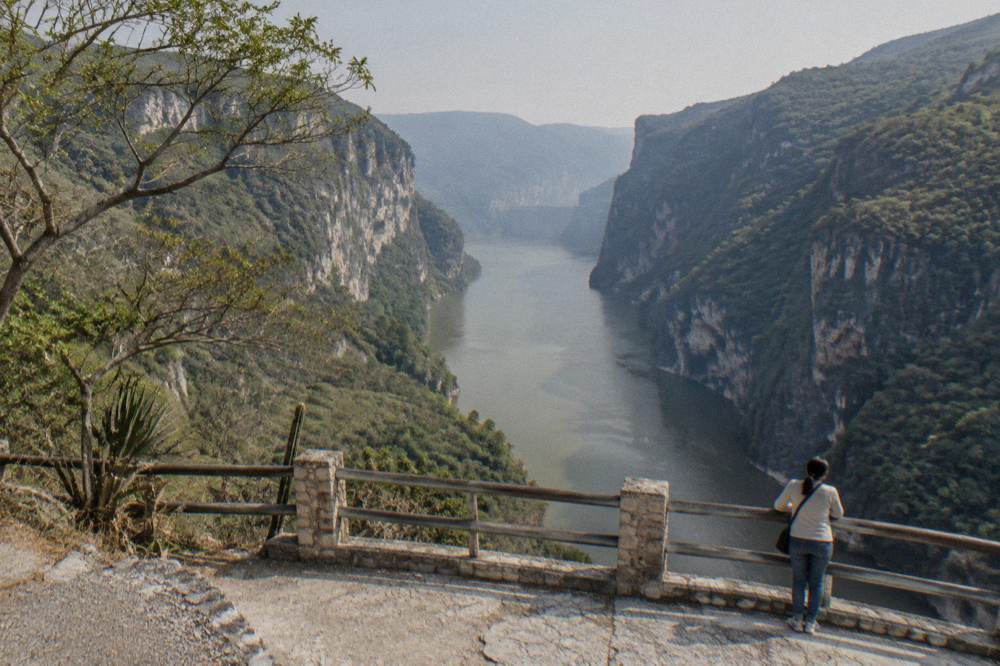
The independent route also leaves the miradores to you. The viewpoints road, the Calzada al Sumidero from Tuxtla, reaches the five lookouts, La Ceiba, La Coyota, El Roblar, Los Chiapa and El Tepehuaje, on the same 125 MXN wristband and the same Wednesday-to-Monday schedule. Without a vehicle or a tour that includes the viewpoints, most independent visitors see the canyon only from the water. That single difference, the walls from above at El Roblar against the walls from below at Cueva de Colores, is the reason many travelers end up booking a tour anyway. The full viewpoint logistics are in the miradores guide.
What Do You Actually See On The Ride?
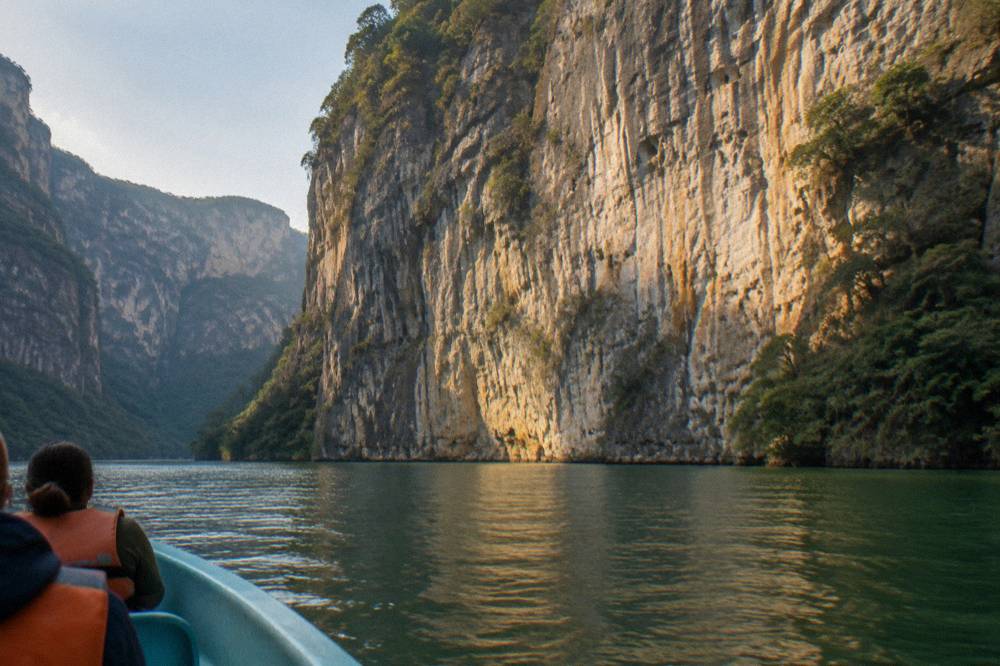
The roughly two-hour route from the Chiapa de Corzo dock to the Chicoasen dam wall and back passes the Belisario Dominguez bridge, the Caballito de Mar, the river bend shaped like the Chiapas coat of arms, the mineral-stained Cueva de Colores with its Guadalupe shrine, and the Velo de Novia and Árbol de Navidad waterfalls; crocodiles, spider monkeys and birds are reported along the way, with no sighting guaranteed.
The named stops are the skeleton of every trip, guided or independent, because the cooperative boats follow the same route up the Grijalva. The Cueva de Colores is the classic photo stop, a cave whose walls are stained in mineral colors with a small shrine inside. The Árbol de Navidad is a moss-covered limestone formation that reads as a Christmas tree when the seasonal waterfall flows over it; in the rainy season the flow can soak the boats, and in the dry months it slows to a trickle while the structure stays visible. Boats pause at several of these, and the captains' commentary, in Spanish on most listings, carries the local detail.
Wildlife is the part no operator should promise. American crocodiles, spider monkeys and birds including herons, cormorants, pelicans and vultures are all reported along the ride, and the October 2026 Profepa release of 13 rescued river crocodiles into the park made the local news, but there are no population counts and no operator can guarantee an encounter. The right expectation is a landscape trip that sometimes delivers animals, not a wildlife tour. The species-by-species picture, including what the seasons change, is in the wildlife guide.
Geology gives the trip its scale. The canyon runs about 30 to 33 kilometers, the walls are commonly cited above 1,000 meters with one 2026 source giving about 1,200 meters at El Roblar, and the river depth figure of over 250 meters is an older but consistently cited number. The walls are Mesozoic marine limestone, roughly 80 to 136 million years old, eroded along a tectonic fault, and the Chicoasen dam at the northern end holds the reservoir that keeps the canyon navigable all year. When a review on a live listing calls the walls vertiginous, this is the arithmetic behind the word.
Should You Book Ahead Or Decide On The Ground?
Book ahead if you want hotel pickup, an English-speaking guide, a seat in a small group or a specific same-day combination of viewpoints and boat, because those features belong to specific listings; decide on the ground only if you are flexible on timing, happy to travel to the dock yourself and traveling in the shoulder months when boats rarely sell out.
The booking-step reality is that the listings are not interchangeable. Want bilingual service from San Cristobal? The Jalapeño full day lists Spanish and English and carries 268 reviews behind a 4.6 rating; the OTISA budget fare at from $46 per person lists Spanish only. Want a stated group cap? The EcoExperiencias national park day caps at 14 travelers, the OTISA viewpoints day at 30, and most listings state no cap at all. Want free cancellation? Most tours here state it, but the Ecoexperiencias boat ride and viewpoints day from $79 per person does not state it, and neither does the Pasion x Chiapas private day. These are listing-by-listing differences, which is the whole argument for reading the line you are about to buy.
Timing also argues for booking ahead in high season. The dry months of November to April are the busy months, and the earliest boats are the ones reviews recommend. A pre-booked seat with a stated meeting point removes the morning variables: the colectivo connection, the dock queue, the wait for a boat to fill. In the wet months the calculus reverses somewhat, since rainy-season restrictions are reported and a booking with free cancellation, which most listings carry, lets you reorganize if the day turns.
One safety note belongs in any booking decision. The US State Department currently lists Chiapas at Level 3, Reconsider Travel, with no specific restrictions on Tuxtla Gutierrez, Chiapa de Corzo or San Cristobal beyond the general state advisory, per the official advisory page. There are no reports of crime targeting tourists at the canyon itself, the embarcaderos have official patrols, and the October 2026 incidents on the highway were blockades and a traffic accident, not attacks on visitors. Read the advisory, check the road status on your travel day, and make your own call; nothing here promises either safety or trouble.
Putting it all together, the whole visit compresses into one sentence: pick your base city, pick your format from the three on this site or the independent dock route, confirm the fee line on the exact listing, and show up at the stated point early, with the park hours and the Tuesday miradores closure in mind. Travelers who want the most reviewed way to do all of it in one booking can start with the Jalapeño full day, and Sumidero Canyon Tours keeps the tours, the trip picker and the fee tables in one place for the rest.
Common Questions About Visiting Canon Del Sumidero
What Do I Need To Decide When Booking A Sumidero Canyon Trip?
Choose a departure city, San Cristobal, Tuxtla Gutierrez or Chiapa de Corzo; pick a format, a shared day tour, a private car day or the kayak crossing; confirm the park fee line on the exact listing; and meet at the stated point, usually the Al Grano Cafe corner in San Cristobal or your Tuxtla hotel. Independent travelers go straight to the dock and buy a lancha ticket at the cooperative fares plus the 125 MXN park fee. Park hours are 8:00 to 17:00, and the miradores road closes on Tuesdays.
Do I Need A Tour Or Can I Visit On My Own?
You can visit on your own: get to the Chiapa de Corzo or Cahuare embarcadero, pay the 125 MXN park fee and the shared boat fare (460 MXN for foreign visitors), and board when the boat fills. A tour adds hotel transport, the viewpoints road, Chiapa de Corzo time and often the park fee, from $40 per person on the cheapest shared listing.
Is The Park Fee Included In The Tour Price?
It depends on the tour, and each one states it. The Jalapeño full day from San Cristobal and the Apasionado day trip both state park and entrance fees included; the OTISA viewpoints tour states neither way; the private Rincones day states the boat ticket is not included. Read the exact listing you are booking.
When Does The Park Open And Which Day Is Closed?
The park is open 8:00 to 17:00. Water access, the boats, runs every day. Land access to the miradores road runs Wednesday to Monday and is closed on Tuesdays, so a Tuesday visit is a boat-only day.
Where Do The Boats Leave From?
Shared boats leave from the Chiapa de Corzo embarcadero, one or two blocks from the central park, and from the Cahuare dock on the Tuxtla to San Cristobal highway. Boats typically run 8:00 to 16:00 and leave when full, with the last full-trip departure around 14:00.
What Should I Bring On The Boat Ride?
The park authority suggests comfortable clothes, sneakers, long sleeves, a hat, sunscreen and repellent. The life jacket is mandatory and provided, hands stay out of the water, and glass containers, alcohol, pets, smoking and drones are prohibited. In the rainy season a light rain layer is wise, since the Árbol de Navidad waterfall can soak passing boats.