Is Sumidero Canyon Bigger Than The Grand Canyon?
A size comparison between Sumidero Canyon and the Grand Canyon: Sumidero figures, what the Grand Canyon gets right, and why the answer changes how you visit.
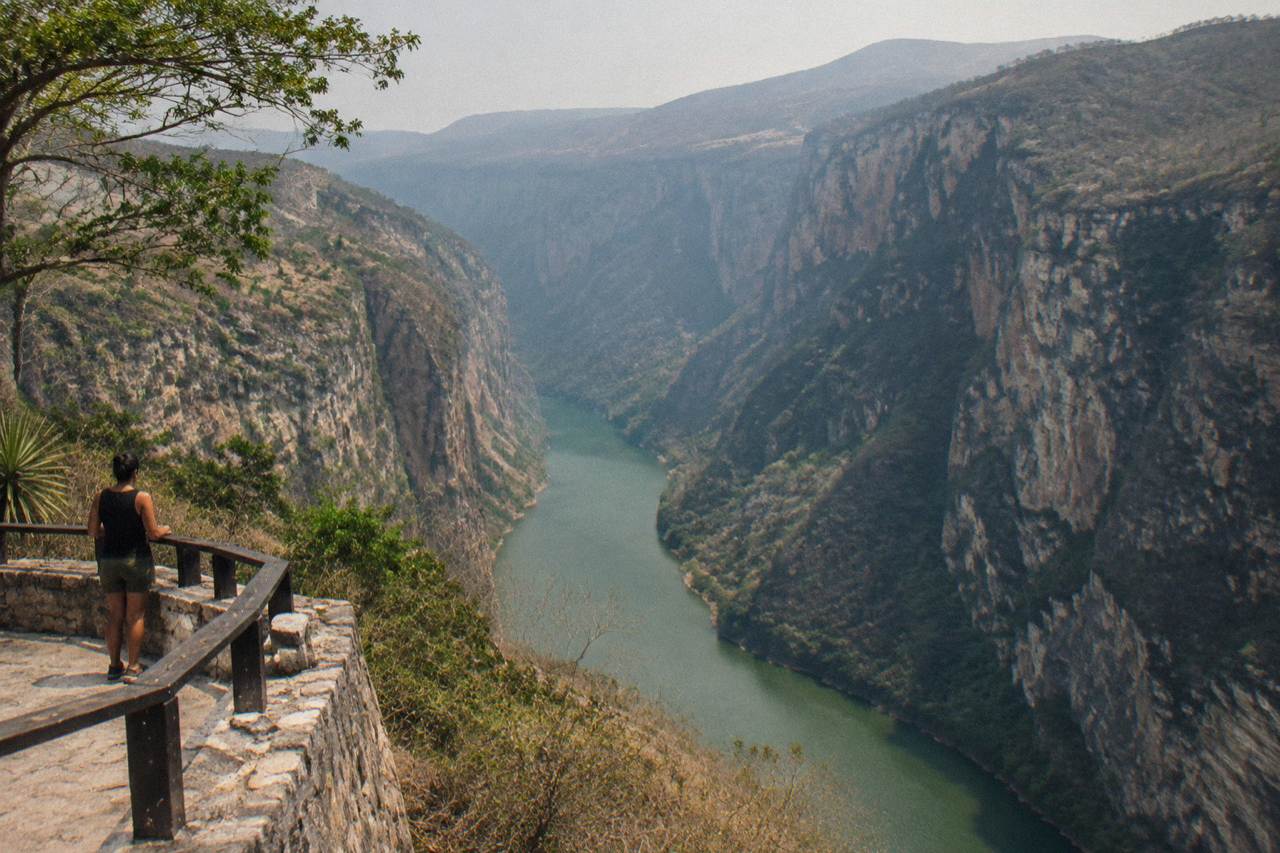
Limestone walls climb over 1,000 meters above the Grijalva River in places, and for about two hours a shared boat carries you directly underneath them. That is Sumidero Canyon, the national park decreed on 8 December 1980 and covering 21,789.41 hectares per the official CONANP record. Comparisons to the Grand Canyon show up in almost every travel article about Chiapas, and almost all of them are loose with the numbers. This page settles the question: what Sumidero's figures are, in what sense any canyon can be called "bigger," and why the answer genuinely changes the trip you should book.
The short version: no, Sumidero is not bigger than the Grand Canyon in depth, length or width. The Grand Canyon is deeper and longer: about 1.8 km deep at its deepest and 446 km long (National Park Service), versus roughly 1 to 1.3 km walls for Sumidero. Even so, Sumidero feels dramatic from the water. Sumidero is a boat canyon. The Grand Canyon is a hike-and-rim canyon. That difference, not a scoreboard, is what should decide your plans.
No. The Grand Canyon is far larger and longer than Sumidero Canyon in every overall measure. Sumidero's footprint is a national park of 21,789.41 hectares and a canyon roughly 30 to 33 kilometers long, with a narrow passage sometimes described as about 13 kilometers. The Grand Canyon is, in general terms, dramatically longer, wider and larger in area, and its scale is not in dispute.
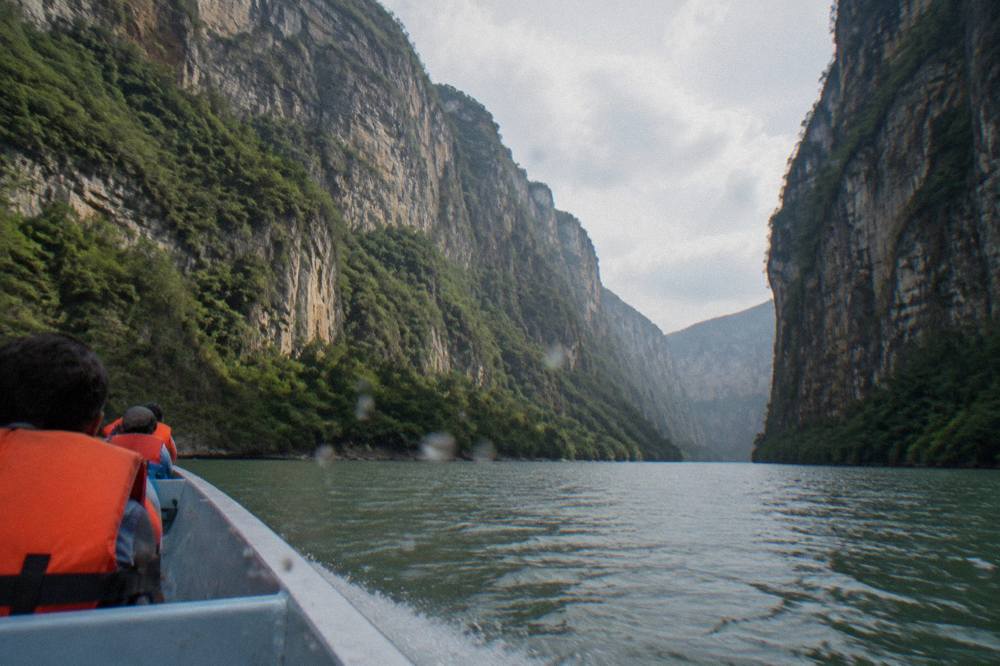
The comparison survives because of one genuine overlap: height. Sumidero's walls are commonly cited above 1,000 meters, with one 2026 source giving about 1,200 meters at the El Roblar viewpoint. Those are real numbers, drawn from the geology record and repeated across 2025 and 2026 sources, and they put Sumidero's rim-to-river relief in the same conversation as the world's famous canyons. What Sumidero does not have is the Grand Canyon's staggering horizontal sprawl. Sumidero is long and narrow, in places pinching to roughly 200 meters across while the walls stay near their maximum height. The Grand Canyon is a vast incised landscape many kilometers wide in sections.
So the framing is this: Sumidero is a deep, narrow, vertical canyon you experience from a boat on the water. The Grand Canyon is an enormous, wide, horizontal canyon you experience from rims and trails. Both can be awe-inspiring. Only one of them involves crocodiles.
If the vertical drama is what draws you, the full-day trips from San Cristobal are the standard way to see it. The Jalapeño Canyon, Viewpoints and Chiapa de Corzo tour runs 8 to 9 hours from $85 per person, rated 4.6 from 268 reviews, the most reviewed listing on this site. The budget OTISA fare covers the same core sights from $46 per person, and the Selva Azul premium boat day with hotel pickup runs from $155 per person.
How Big Is Sumidero Canyon, Really?
Sumidero Canyon is about 30 to 33 kilometers long, with walls commonly cited above 1,000 meters and a narrow section sometimes described as about 13 kilometers. The official park record lists 21,789.41 hectares, decreed a national park on 8 December 1980. Width varies from 1 to 2 kilometers down to roughly 200 meters in the tightest passages, and one 2026 source puts the maximum wall height near 1,200 meters at El Roblar.
Those figures come from CONANP and 2025-2026 geology sources, and every range on this page is labeled as commonly cited because the sources themselves vary. The river depth figure you will see elsewhere, over 250 meters, is an older cited number and should be read as such: consistent across sources, but not from a recent bathymetric survey. The walls are limestone, Upper Mesozoic marine sediments roughly 80 to 136 million years old, eroded along a tectonic fault by the Grijalva. The Chicoasen dam, Presa Manuel Moreno Torres to give its full name, closes the northern end and holds the reservoir that keeps the canyon navigable all year.
A detail worth knowing: part of the gorge is submerged. The Chicoasen reservoir raised the water level, so the wall height you see from the boat is the height above the waterline. This is one reason photos can mislead, and one reason the "deeper than the Grand Canyon" claims that circulate online deserve skepticism in both directions. For more on that whole question, see the companion piece on Mexico's deepest canyons.
| Measure | Sumidero Canyon figure | Source status |
|---|---|---|
| Length | About 30 to 33 km | Commonly cited across 2025-2026 sources |
| Narrow passage | About 13 km | Commonly cited |
| Wall height | Above 1,000 m; about 1,200 m at El Roblar per one 2026 source | Commonly cited |
| Width | 1 to 2 km, down to about 200 m in places | Commonly cited |
| Park area | 21,789.41 ha | Official CONANP record |
| Decree date | 8 December 1980 | Official CONANP record |
How Does The Grand Canyon Compare, Without The Hype?
In general terms the Grand Canyon is far longer, far wider and far larger in total area than Sumidero Canyon, and no credible source disputes that. Its rim-to-river relief is also immense, in the same order of magnitude as Sumidero's commonly cited wall heights. No Grand Canyon figures appear on this page, and any precise head-to-head comparison table on another site deserves skepticism until you can check where its numbers came from.
Sumidero's figures are documented in official and recent sources, while Grand Canyon figures quoted elsewhere are almost always unsourced, rounded differently, or borrowed from an older article that itself never cited anything. General terms hold: far larger, far longer, immensely wide, comparable vertical relief in places.
What can be said precisely is structural. The Grand Canyon is an incised plateau canyon: kilometers wide, with the river hidden at the bottom of a broad, stepped cross-section. Sumidero is a fault-line gorge: narrow, near-vertical, with the water plainly visible at the base of the cliff the whole way. That is why Sumidero works as a two-hour boat ride and the Grand Canyon does not, and why anyone swapping one for the other based on "size" is asking the wrong question.
Why Sumidero Feels Enormous From The Water
Scale perception on a boat is vertical, not horizontal. In Sumidero's narrow sections the walls rise above 1,000 meters on both sides while the channel pinches toward 200 meters, so the viewer sits inside the canyon's proportions rather than looking across them from a rim. The ride from the Chiapa de Corzo embarcadero to the Chicoasen dam wall and back takes about two hours, passing named sights along the route.
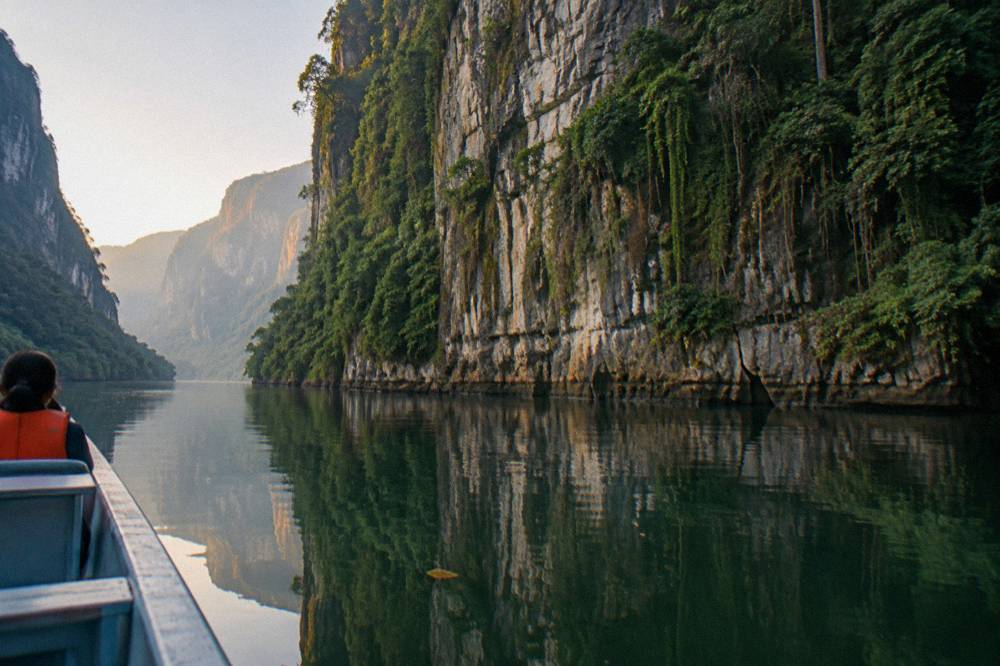
The named stops on the cooperative route include the Belisario Dominguez bridge, the Caballito de Mar formation, the river bend shaped like the Chiapas coat of arms, the Cueva de Colores with its mineral-stained walls and Virgen de Guadalupe shrine, the Cueva del Silencio, and the Velo de Novia and Arbol de Navidad waterfalls. The Arbol de Navidad, a moss-covered limestone formation resembling a Christmas tree, flows hardest in the rainy season and can reduce to a trickle from November to April, though the structure itself stays visible. None of that is a sighting promise: waterfall flow, river level and wildlife are all variable, and the tours describe them as possible and commonly reported, never guaranteed.
Wildlife along the ride is part of the scale story, because the cliffs hold life at every level. American crocodiles, spider monkeys and birds including herons, cormorants, pelicans and vultures are reported on the route, with no official population counts. In October 2026 Profepa released 13 rescued river crocodiles into the park, which tells you the ecosystem is active, not that any given boat will pass a croc. For the fuller picture, the Sumidero Canyon wildlife guide covers what is actually reported and what is rumor.
Which Canyon Is Deeper?
By commonly cited figures, Sumidero's walls run roughly 1 to 1.3 km above the river. The Grand Canyon is deeper, at about 1.8 km at its deepest, per the National Park Service.
The deeper question also hides a measurement trap. Sumidero's commonly cited heights measure rim to river, from the waterline. The Grand Canyon's own depth varies enormously along its length, and its average figures are not its maximum figures.
What is safe to state, and interesting, is the width-to-depth relationship. In Sumidero's narrow section the canyon is deeper than it is wide: walls above 1,000 meters against a channel that can narrow to roughly 200 meters. That geometry is rare and it is the reason the boat ride feels claustrophobic in the best way, with the cliff face sometimes blocking the sky. The Grand Canyon's proportions run the other way, far wider than deep, which is why its signature experience is the panorama from the rim rather than immersion.
Does The Size Difference Change Which Tour You Should Book?
Yes, because Sumidero's shape makes the boat ride the essential experience, while viewpoints and towns are complements rather than substitutes. On this site the shared-boat day trips run from $40 per person on the budget Selva Azul fare up to $155 per person on the premium boat day with hotel pickup, and nearly all of them pair the two-hour canyon ride with time in Chiapa de Corzo.
The featured Jalapeño full day from San Cristobal is the most reviewed option at 4.6 from 268 reviews, from $85 per person for 8 to 9 hours, and its itinerary states park and entrance fees are included with a shared boat service in the canyon. Budget travelers get the OTISA 9-hour day from $46 per person, 4.6 from 104 reviews, with the boat tour and Chiapa de Corzo visit included. And departing from Tuxtla instead, the Apasionado day covering the canyon, Chiapa de Corzo and the miradores runs 9 to 10 hours from $53 per person with a 4.7 rating from 175 reviews.
There is also a case for seeing the canyon's scale from above before or after the water. The miradores road along the Calzada al Sumidero from Tuxtla reaches five viewpoints, La Ceiba, La Coyota, El Roblar, Los Chiapa and El Tepehuaje, open Wednesday to Monday from 8:00 to 17:00 and closed Tuesdays. Several day trips build both into one itinerary: the EcoExperiencias National Park full day from San Cristobal, from $89 per person with a stated maximum of 14 travelers and hotel pickup listed, includes the park admission and a two-hour boat cruise. The viewpoints guide covers the road, the hours and the Tuesday closure in full.
What The Comparison Misses About Visiting Both
A size contest ignores that Sumidero and the Grand Canyon sit in completely different trip contexts. Sumidero is a single-day excursion from San Cristobal or Tuxtla, roughly an hour by road from San Cristobal to the docks, inside a state that also holds waterfalls, lakes and Maya sites. The Grand Canyon anchors a multi-day American Southwest road trip. The practical question is not which canyon wins, but which trip you are actually planning.
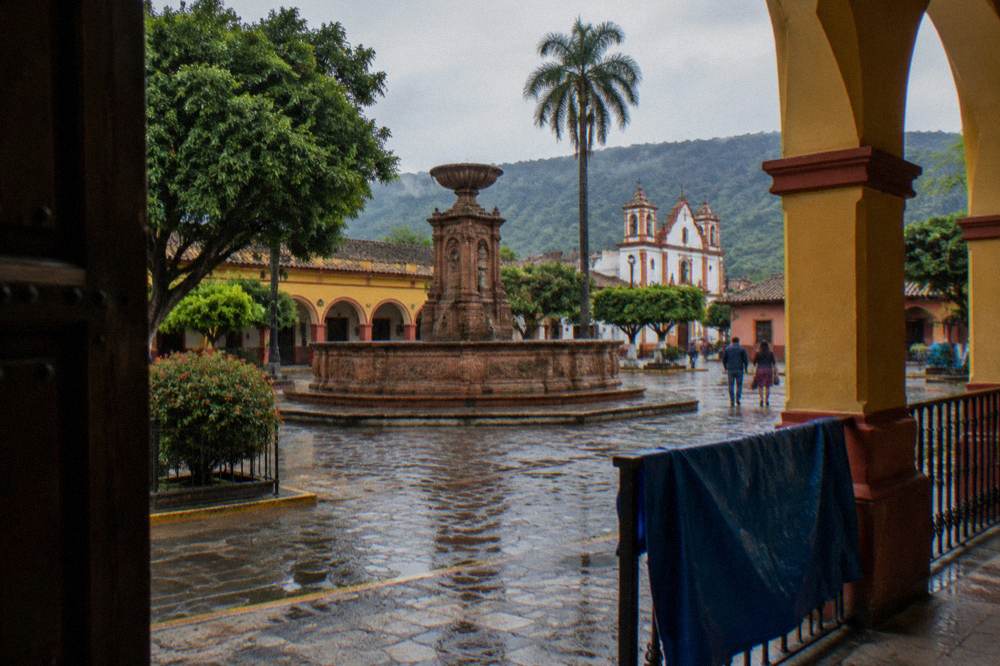
For most travelers already in Mexico, Sumidero packs extraordinary vertical scenery into one affordable day. The cheapest shared-boat fare is from $40 per person, and the typical day trip bundles transport, the boat and a stop in Chiapa de Corzo, the colonial town whose La Pila fountain dates to 1562 and whose January Fiesta Grande with the Parachicos dancers is a spectacle in its own right. Travelers with more time can extend the same logic across the state: the multi-day Chiapas packages bundle Sumidero with Montebello Lakes, the Chamula and Zinacantan indigenous communities and Palenque, from $567 per person for the 3-day package.
Season matters more than size for what you will actually see. The dry season, roughly November to April, is commonly recommended for stable weather and clearer water; the rainy season from May to mid-October brings higher river flow, seasonal waterfalls and the possibility of navigation restrictions, which are reported but never predictable in advance. The best time to visit guide works through the trade-offs month by month, including the Tuxtla climate normals that show June and September as the wettest months.
The Verdict On The Size Question
Sumidero Canyon loses the overall size comparison to the Grand Canyon by any general measure of length, width or area, and this site says so plainly rather than flattering the destination it covers. It competes on wall height, with commonly cited figures above 1,000 meters and about 1,200 meters at El Roblar, and it offers a two-hour ride inside a narrow gorge that a rim canyon cannot match.
A traveler who arrives expecting "bigger than the Grand Canyon" will spend the boat ride doing arithmetic and missing the crocodiles. A traveler who arrives expecting a deep, narrow, tropical canyon with a river running through it gets exactly that, plus a colonial town, and does it all for the price of a shared van and a lancha fare. The official park record stands on its own: 21,789.41 hectares of protected fault-line gorge, decreed in 1980, carrying somewhere between 500,000 and 800,000 visitors a year according to 2026 reporting. None of them came for a number. They came because the walls, seen from the water with the sky narrowed to a strip overhead, do something to the human sense of scale that no statistic captures, and no rival canyon diminishes.
If the comparison has convinced you the boat ride is the point, the standard ways to take it from San Cristobal are the most reviewed Jalapeño full day, the budget OTISA fare, and the premium hotel-pickup boat tour.
Common Questions About Sumidero Versus The Grand Canyon
Which Of The Two Canyons Is Larger Or Deeper?
The Grand Canyon is larger: about 446 km long and 1.8 km deep at its deepest, versus Sumidero walls of roughly 1 to 1.3 km. Sumidero's case rests on wall height commonly cited above 1,000 meters and about 1,200 meters at El Roblar in one 2026 source, plus a narrowness the Grand Canyon does not have.
How Deep Is Sumidero Canyon?
The walls are commonly cited above 1,000 meters, with about 1,200 meters reported at the El Roblar viewpoint by one 2026 source. The over 250 meter river depth figure is an older cited number, and much of the full depth now sits below the reservoir raised by the Chicoasen dam.
How Long Is The Boat Ride Through Sumidero Canyon?
About two hours round trip, from the Chiapa de Corzo embarcadero up the Grijalva River to the Chicoasen dam wall and back. The 2026 shared fares are 460 MXN for foreign visitors and 400 MXN for Mexican nationals, set by the cooperatives, plus the separate 125 MXN CONANP park fee per person per day.
Which Is Deeper, Sumidero Or The Grand Canyon?
The Grand Canyon is deeper and longer: about 1.8 km deep at its deepest and 446 km long (National Park Service), versus roughly 1 to 1.3 km walls for Sumidero. Sumidero is not bigger, but its rim-to-river relief is genuinely world class, and in its narrow section the canyon is deeper than it is wide.
Is Sumidero Canyon Worth Visiting If I Have Seen The Grand Canyon?
Yes, because the experiences barely overlap. Sumidero is seen from a boat inside a narrow tropical gorge with reported wildlife along the walls, often bundled with the colonial town of Chiapa de Corzo, on day trips from $40 per person on this site. The Grand Canyon is a rim-and-trail panorama of a vast incised plateau.