How Far Is Sumidero Canyon From San Cristobal?
The distance from San Cristobal to the Sumidero Canyon docks is about an hour by road. Here is what that hour looks like, what tours add, and how to decide.
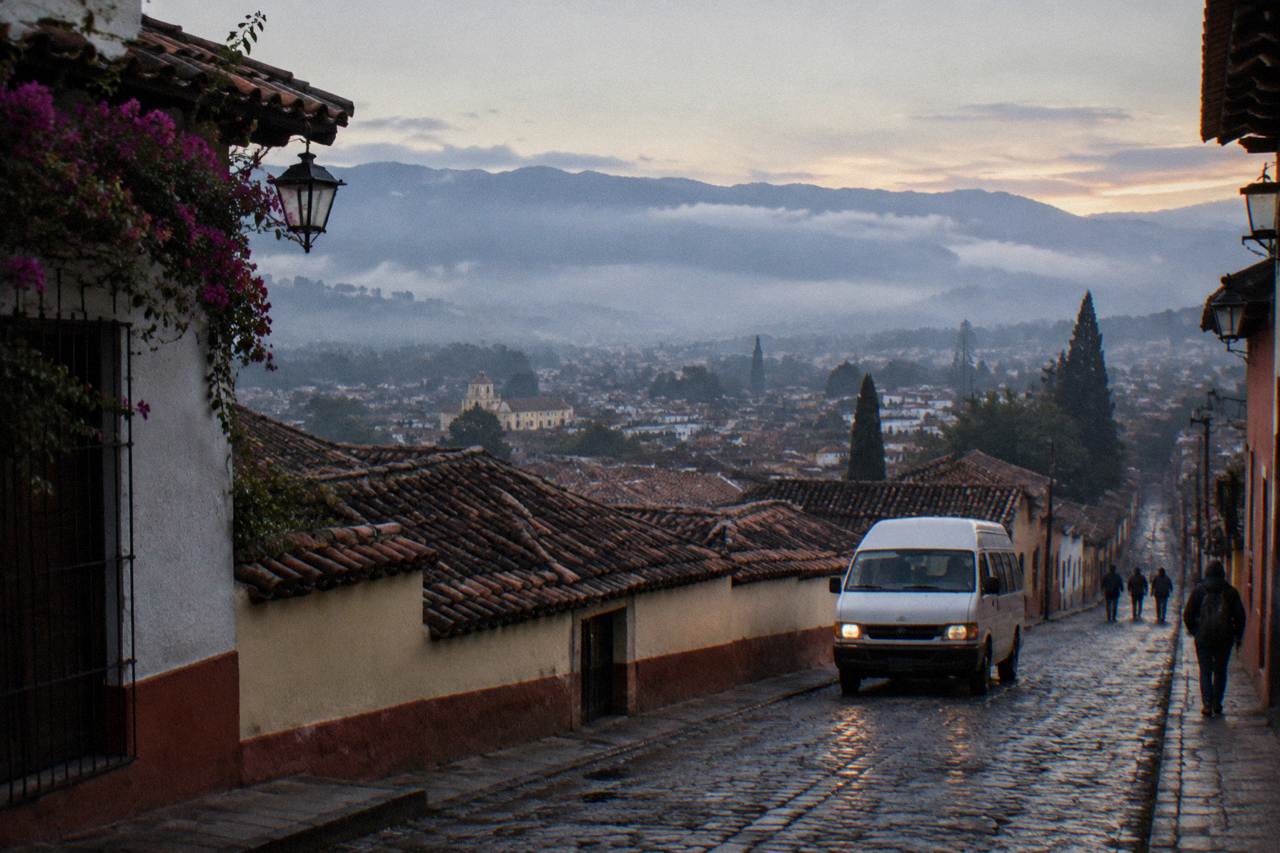
San Cristobal de las Casas and Sumidero Canyon sit in the same state but in two different worlds. The town rests at highland elevation where mornings want a jacket; the canyon drops into the hot Grijalva valley, where the official park page suggests long sleeves, a hat and sunscreen for the same day trip. The road between them is a sustained descent, and the distance is shorter than most visitors expect. What stretches the day is everything the canyon makes you do once you arrive: a fee, a dock, a two-hour boat ride up the river to the Chicoasen dam wall and back, and almost always a walk through Chiapa de Corzo before the climb home.
The featured listing's own itinerary makes the drive concrete: a 70 minute van leg to the viewpoints, then about an hour down to the dock. Fresh route data puts the run at roughly 63 to 69 km, taking about 58 minutes to 1 hour 23 minutes depending on conditions.
That hour is the single most useful number for planning, and it is worth holding it loosely. The highway that carries it, the Tuxtla to San Cristobal route, was modernized and widened to three lanes on a 29.2 km section completed around December 2025, which is one reason the drive feels faster than older guidebooks suggest. Against that, the same highway has seen repeated temporary closures in 2026, more on that below, so the planning number is an hour with a margin.
Reported route figures also give the shape of the alternative: a bus from San Cristobal to Tuxtla and then a colectivo toward the docks, which stretches a one-hour drive into a half-day exercise in connections. The colectivo fares for that specific San Cristobal to embarcadero leg are unconfirmed, so treat any figure you see for it with caution.
The practical takeaway is that distance barely constrains this trip. Day trips from San Cristobal dominate the canyon market precisely because the drive is short and the payoff is large: walls commonly cited above 1,000 m, a navigable canyon of roughly 30 to 33 km, and a boat route that reaches the Chicoasen dam wall at the northern end. These tours' San Cristobal departures run 6 to 9 hours total, and every one of those hours beyond the first is the canyon itself, not the road.
For sizing up whether a tour beats going alone, the listings below cover the range of prices and pickup options.
What Does The Drive From San Cristobal To The Docks Look Like?
The drive is a sustained descent from the highlands to the Grijalva valley, on a modernized highway for most of the way and a short local approach at the end. Route data puts the Cahuare dock about 7 km and 6 minutes off the Tuxtla ring road, and the Chiapa de Corzo embarcadero one to two blocks from the town's central park. Count on an hour door to dock, plus buffer.
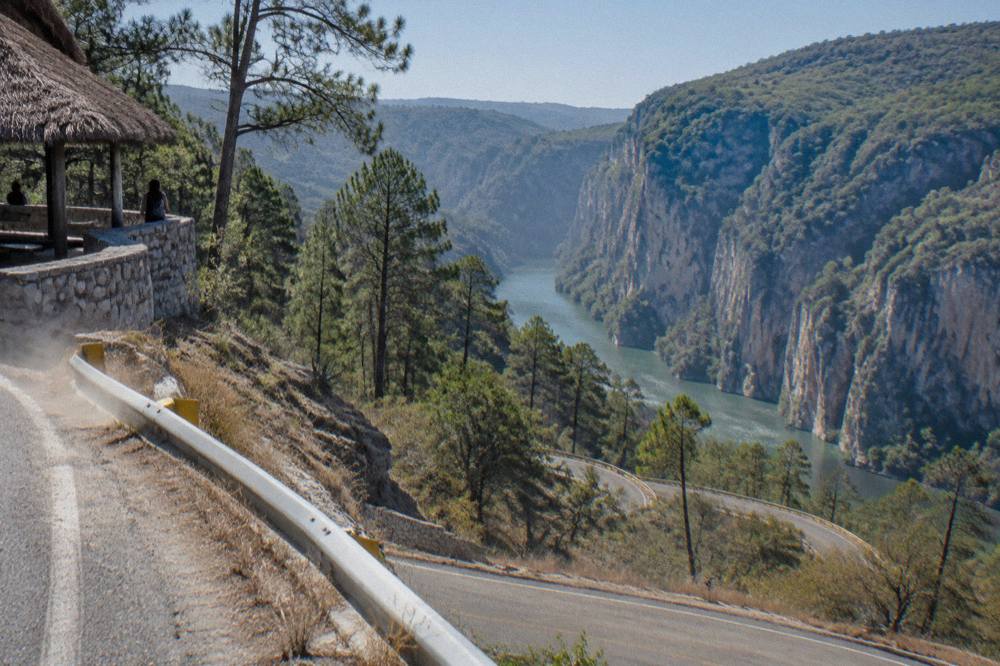
The first stretch out of San Cristobal climbs briefly through pine and then tips over the edge of the highlands. This is the part of the drive people remember: long curves, the temperature climbing with every switchback shed, and the vegetation flipping from conifer to dry tropical scrub in under an hour. The modernization work completed in late 2025 added lanes, bridges and safety features to 29.2 km of the corridor, and current reporting credits it with transforming connectivity for about a million users of the route.
The last miles are the slowest. Coming off the highway into Chiapa de Corzo means town streets, speed bumps and the small waterfront where the lancha cooperatives run their docks. The Chiapa de Corzo embarcadero sits one to two blocks from the central park, walkable from anywhere in the old center. The Cahuare embarcadero, an alternative launch point on the highway side near kilometer 1078 of the Tuxtla to San Cristobal road, sits about 7 km and a 6 minute drive from the Tuxtla ring road, which makes it the faster hit for traffic coming from the Tuxtla direction.
Which dock you land at matters less than people fear, because the boat route is the same river either way: up the Grijalva past the Belisario Dominguez bridge, the Cueva de Colores, and the Velo de Novia and Arbol de Navidad waterfalls to the dam wall and back, about two hours on the water. Our guide to getting to the canyon breaks down the dock choice in detail, and the comparison of Cahuare versus Chiapa de Corzo settles it if you are booking transport yourself.
One thing the drive does not include is any stop at the miradores, the five viewpoints above the canyon. Those sit on a separate road, the Calzada al Sumidero out of Tuxtla Gutierrez, with land access Wednesday to Monday and closed Tuesdays, per the official park page. Tours that include viewpoints add that road as a second driving chapter, which is why their itineraries show van legs stacking up beyond the simple out-and-back.
How Long Do Guided Day Trips Take In Total?
The San Cristobal departures run 6 to 9 hours total, against roughly 2 hours of which is driving. The rest is the boat, the viewpoints, and Chiapa de Corzo time. The EcoExperiencias bilingual day is the shortest at 6 hours; the budget OTISA fare, the Apasionado trip and the OTISA viewpoints tours run 9 hours; the premium Selva Azul day runs 8. Duration, not distance, is what you are choosing between.
The arithmetic explains why. Drive out, roughly an hour. Park fee and boarding, variable. Boat, about two hours round trip to the dam wall. Drive to the viewpoints road if the itinerary includes it, then 40 minutes to an hour at the lookouts. Chiapa de Corzo free time, 30 minutes to 100 minutes depending on the listing. Drive home, roughly an hour. Add a lunch stop on the longer days and you land at 6 hours at the minimum, 9 at the comfortable end.
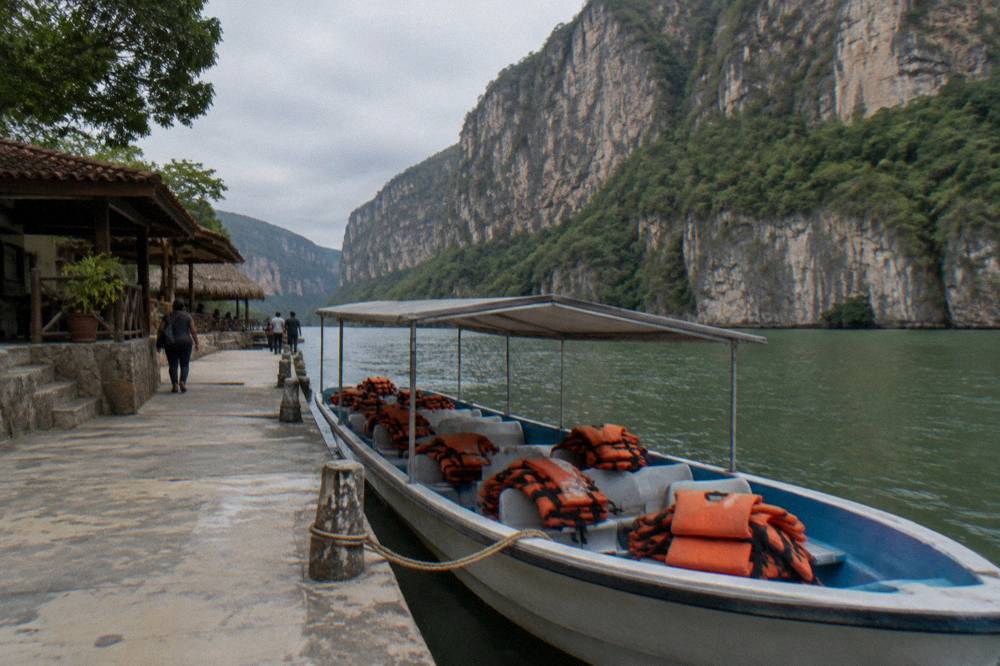
The featured listing, the Jalapeño full day, shows its cards openly: a 70 minute van to the first viewpoint scenic drive, 45 minutes there, another hour in the van, a 110 minute canyon experience, 75 minutes in Chiapa de Corzo, and the return to the Al Grano Cafe meeting point in San Cristobal. It is rated 4.6 from 268 reviews, the largest review pool among these tours, and priced from $85 per person with entrance and national park fees listed as included. You can read the full listing here or Check availability at the live listing.
At the other end of the price range, the budget Selva Azul day at from $40 per person runs 8 hours and lists park entrance fees, travel insurance and the boat ride as included, with travelers received at downtown hotels. And the premium Selva Azul Chiapas boat tour, from $155 per person with hotel pickup and drop-off, a driver, a 90-minute canyon boat tour, the park entrance fee and insurance included, squeezes its fuller service into 8 hours. Same road, same river, different packaging.
A comparison table:
| Listing (San Cristobal departures) | Duration | Price from | Rating | Hotel pickup |
|---|---|---|---|---|
| Jalapeño full day, viewpoints and Chiapa de Corzo | 8 - 9 hours | $85 per person | 4.6 from 268 reviews | Not stated |
| OTISA budget fare to Chiapa de Corzo | 9 hours | $46 per person | 4.6 from 104 reviews | Not stated |
| EcoExperiencias bilingual day | 6 hours | $135 per person | 3.4 from 20 reviews | Not stated |
| EcoExperiencias national park full day | 9 hours | $89 per person | 4.4 from 66 reviews | Listed |
| Selva Azul premium boat tour | 8 hours | $155 per person | 4.6 from 136 reviews | Listed |
| Selva Azul budget boat day | 8 hours | $40 per person | 4 from 80 reviews | Not stated |
Notice what the table does not show: a correlation between price and drive time. Every one of these listings covers the same hour of road. What the price buys is group size feel, language, pickup logistics and how much of the paperwork is done for you, which is the real decision, and our San Cristobal tour guide walks through it listing by listing.
Should You Take A Tour Or Go Alone?
Going alone costs less on paper, roughly the colectivo fare to Tuxtla plus a local connection, then the 125 MXN park fee and the 460 MXN foreign-visitor boat fare paid at the dock. A tour from $40 to $155 per person buys the hour of driving handled, the fee lines mostly prepaid, and a single accountable operator across the day. For a one-day visitor, the tour usually wins on time.
The solo route is entirely doable and plenty of people do it. You reach Chiapa de Corzo or Cahuare under your own steam, pay the cooperative fare at the dock, wear the conservation wristband, and board when the boat fills. The park is open 8:00 to 17:00 daily by water, with boats departing when full, and the standard ride is about two hours. The friction is the connections: the colectivo leg from San Cristobal to the embarcaderos has no listed fare, so budget with the Tuxtla colectivo fare, around 20 to 25 MXN from Tuxtla to Chiapa de Corzo, plus patience.
The tour route converts the same day into a single decision made the night before. Consider the budget boat day from Selva Azul, from $40 per person, which lists entrance fees, travel insurance and the boat ride as included: at that price the tour is competitive with doing it yourself once you price the transport, and the operator absorbs the dock queue.
There is a middle path worth naming: tours with hotel pickup. The EcoExperiencias national park full day, from $89 per person, 4.4 from 66 reviews, maximum 14 travelers, lists hotel pickup, round-trip transport, the Sumidero National Park admission fee and the boat trip as included. If your lodging is outside the historic center and the walk to the Al Grano Cafe meeting point is the difference between an 8:00 and an 8:45 start, pickup is worth paying for.
Whichever way you lean, one warning applies to both: Tuesdays. Land access to the miradores road is closed Tuesdays per the official CONANP page, so a viewpoints-plus-boat day booked on a Tuesday either skips the lookouts or turns into a boat-only day. The water access itself runs every day. Checking that single detail against the best time to visit guide before you book saves the most common itinerary disappointment on this route.
Ready to hand the hour of driving to someone who does it daily?
Is The Highway Reliable In 2026?
The highway itself is in the best shape it has been in years after the late-2025 modernization, but the route saw repeated reported blockades and closures in October 2026, including CNTE road blocks on the Tuxtla to San Cristobal corridor and a serious traffic accident near kilometer 41 to 44. None of it targeted tourists, and no canyon closures or advisories were in effect as of late October 2026, but confirm road status on the day.
The reported October 2026 incidents included blockades at points along the corridor, a concluded blockade at kilometer 46 followed by a march, and closures at Chiapa de Corzo area entries, with authorities at times advising the free alternate road. This is a living situation, not a fixed fact: it can change, and no one can promise the route is open. Tour operators monitor it because their whole day depends on it, which is a quiet argument for the guided option in blockade season.
On the security question, the US State Department's Mexico advisory places Chiapas at Level 3, reconsider travel, while noting no specific restrictions for Tuxtla Gutierrez, Chiapa de Corzo or San Cristobal beyond the general state-level advisory; the restrictions it names concern other parts of the state. In 2025 to 2026 there are no reports of crime targeting tourists at the canyon, Chiapa de Corzo, Tuxtla or San Cristobal, and the embarcaderos have had official patrols and real-time monitoring under a 2025 state security program. Our longer treatment of the question, with the advisory language quoted precisely, is in is it safe to go to Chiapas right now.
Two official sources are worth a minute before you commit a day: the CONANP park page for hours, fees and the Tuesday miradores closure, and the US State Department advisory for the current state-level language. Neither takes long, and both outrank anything you read secondhand.
Does Season Change The Distance Question?
No: the road hour is the same year round and boats run in every month, but the rainy season, roughly May to mid-October with June and September peaks per the national weather service, raises river levels, can add sediment to the water, feeds the seasonal waterfalls, and has brought reported navigation restrictions at the embarcaderos when conditions demand. The dry season, November to April, is the window current guides recommend for stable conditions.
The Tuxtla Gutierrez climate normals tell the story in two lines: the dry months of January through March average between 1 and 2.6 mm of monthly rainfall, while June averages 211.1 mm. That is the difference between a clear emerald-toned river, the description dry-season guides lean on, and the higher, faster, greener river of the wet months, when the Arbol de Navidad waterfall runs strongly enough to soak passing boats. Neither version is the wrong one; they are different trips over the same distance.
For the drive itself, rain is mostly a comfort variable, the highway is engineered for it, but fog on the highland climb out of San Cristobal can slow the first half hour in the wet months, and tour vans leave earlier in high season to beat the dock queues. If you are going alone in the rainy season, build in the possibility that boats pause: the restrictions are reported at the embarcaderos, they are safety-driven, and the operators resume when conditions allow. Our rainy season guide covers the whole trade-off.
The distance, in the end, is the least interesting fact about this trip. An hour of road separates a highland colonial town from a canyon the national park service protects across 21,789.41 hectares, decreed in December 1980, with walls commonly cited above 1,000 m and a boat route that dead-ends at one of Mexico's large hydroelectric dams. The question that actually shapes your day is not how far but how long: 6 hours or 9, boat only or boat plus viewpoints, bus or van. Answer those and the hour takes care of itself, as Sumidero Canyon Tours lays out across its comparisons.
If the reading has you leaning toward letting someone else handle the hour, these listings cover the range of ways to spend it:
Common Questions About The Distance From San Cristobal
How Long Is The Drive From San Cristobal To The Canyon Docks?
About an hour by road to the docks, a reported figure across current route guides; the featured tour's own itinerary shows a 70 minute van leg to the viewpoints and about an hour down to the dock. Route data puts the San Cristobal to Chiapa de Corzo and Cahuare dock area at roughly 63 to 69 km, taking about 58 minutes to 1 hour 23 minutes.
Can You Do Sumidero Canyon As A Day Trip From San Cristobal?
Yes, that is the standard way to do it. These tours' San Cristobal departures run 6 to 9 hours total, covering the drive, the two-hour boat ride, the viewpoints on most itineraries and free time in Chiapa de Corzo.
Which Dock Do Tours From San Cristobal Use?
Most guided days use the Chiapa de Corzo embarcadero or the Cahuare dock near the highway. The boat route is the same river either way: up the Grijalva to the Chicoasen dam wall and back, about two hours round trip.
Is The Road From San Cristobal To The Canyon Safe?
The highway was modernized in late 2025 and there are no reports of crime targeting tourists in 2025 to 2026 for the canyon area. October 2026 brought reported blockades and closures on the route, so check conditions on the day; tour operators track them closely.
Does The Drive Length Change With The Season?
Barely. The road hour is roughly constant year round, though wet-season fog on the highland climb can slow the start. Boats run in every month; rainy-season navigation pauses at the docks are reported when river conditions demand them.
Is It Cheaper To Go To Sumidero Canyon Without A Tour?
Going alone means the colectivo connections plus the 125 MXN park fee and the 460 MXN foreign-visitor boat fare paid at the dock. Guided days start from $40 per person with fees listed as included, so the gap is smaller than it looks once transport is counted.